Editorials
2027: Tinubu’s Renewed Hope under the weight of unfulfilled promises

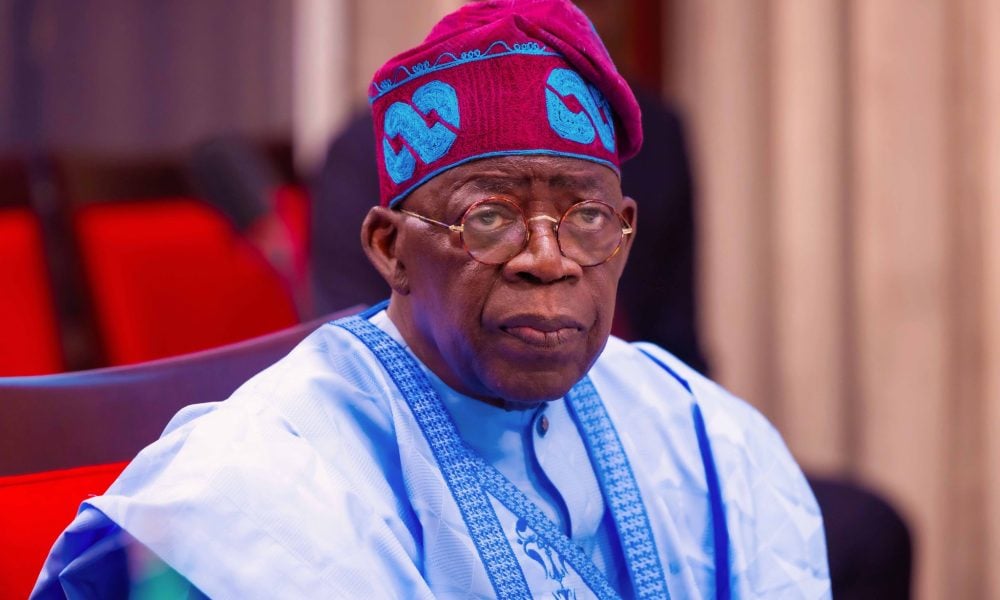
As Nigeria gradually enters another presidential election cycle, the promises that shaped the 2023 contest are returning to the centre of public debate.
With the January 16, 2027 presidential election approaching, presidential hopefuls and political parties are expected to unveil their manifestos, offering Nigerians fresh visions for the country. But before the electorate listens to another round of promises, questions are already being raised about what happened to the commitments made before the 2023 election.
At the centre of that debate is President Bola Tinubu and the All Progressives Congress (APC), whose campaign was built around an eight-point agenda and the promise of a “Renewed Hope” for Nigerians.
Tinubu assumed office promising to confront insecurity, revive the economy, create jobs, improve electricity supply, reduce poverty and ultimately raise the standard of living of ordinary Nigerians.
Three years into the administration, however, the assessment of that promise remains sharply divided.
While the Federal Government and its supporters insist that the administration’s economic reforms, infrastructure projects, investments and social intervention programmes are laying the foundation for a stronger economy, the opposition and sections of the public argue that the immediate consequences of the reforms have been rising hardship, higher living costs and worsening insecurity.
The disagreement is likely to become even more intense as political parties begin preparations for the 2027 election.
The promises that built the Renewed Hope campaign
In 2022, Tinubu released an 80-page policy document outlining an eight-point agenda for his proposed administration.
The document addressed issues ranging from employment and electricity to security, infrastructure, agriculture and economic development.
The underlying promise was straightforward: that a new administration would reverse the country’s economic difficulties and create better opportunities for Nigerians, particularly young people.
But the political significance of those promises is that Nigerians will not approach the 2027 election merely with new manifestos in their hands. They will also approach it with memories of the promises made four years earlier.
That is why the question of whether the APC has delivered on its 2023 commitments is already becoming a major political issue.
Jobs: falling unemployment, but a bigger question
Employment was one of the major areas highlighted in Tinubu’s campaign.
In 2022, he pledged to build a Nigeria “especially for our youth, where sufficient jobs with decent wages create a better life.”
He also promised to support young people and women by developing emerging sectors such as the digital economy, entertainment, culture and tourism.
Official unemployment figures from the National Bureau of Statistics indicate that the unemployment rate, which stood at 5.3 per cent in the fourth quarter of 2022, has declined to roughly 4.3 to 4.9 per cent in 2026.
On paper, that represents an improvement.
But the debate is no longer simply about the unemployment rate. The more difficult question is whether Nigerians who have jobs can afford to live on their incomes.
For many households, the reality of inflation, high food prices, transportation costs, housing expenses and other basic needs has made employment statistics only one part of the economic story.
The opposition has consequently continued to argue that the country remains in the grip of an employment and livelihood crisis despite the improvement in official unemployment figures.
Electricity: the promise Nigerians have not forgotten
Few of Tinubu’s campaign promises have remained as politically memorable as his pledge on electricity.
His 2022 policy document promised sufficient and affordable electricity capable of improving the lives, homes and businesses of Nigerians.
During the campaign, he went further, telling supporters that Nigerians should not vote for him for a second term if he failed to deliver constant electricity.
“By all means necessary, you must have electricity,” he said, adding that estimated billing would end.
“If I don’t keep the promise and I come back for the second term, don’t vote for me.”
The statement has since become one of the most frequently recalled promises of the 2023 campaign.
Although the Federal Government and the electricity sector have pointed to improvements in some areas and a reduction in the frequency of certain grid failures compared with previous periods, complaints about unreliable power supply remain widespread.
Some communities continue to experience prolonged blackouts, while businesses and households still rely heavily on alternative sources of power.
Consequently, the electricity promise could become more than an old campaign statement in 2027. It could become a test of political accountability.
Security: the promise facing its biggest test
Security was another major pillar of the Renewed Hope agenda.
Before his election, Tinubu promised to establish a “bold and assertive policy” capable of creating a strong national security architecture and eliminating terrorism, kidnapping, banditry and other forms of violent extremism.
Yet insecurity remains one of the most difficult challenges confronting the administration.
Reports cited in the debate indicate that at least 750 people were killed by terrorists in 2025, while thousands of Nigerians have continued to live under the threat of attacks, kidnapping and displacement.
Nigeria has also been ranked among the countries most severely affected by terrorism.
Since Tinubu assumed office in May 2023, thousands of kidnapping incidents have reportedly been recorded, with 12,365 incidents cited in recent reports.
A further 842 people were reportedly killed in 156 incidents recorded so far this year.
The abduction of schoolchildren has also remained a particularly troubling feature of the security crisis. At least nine mass abductions have reportedly occurred during the period, involving 551 schoolchildren and members of school staff.
For families living in communities affected by terrorism and banditry, the debate over security is therefore not an abstract political argument. It is a question of whether citizens can safely travel, farm, attend school or conduct their businesses.
Subsidy removal and the economic argument
Perhaps no policy has defined Tinubu’s presidency more than the removal of the petrol subsidy.
The President announced the policy immediately after his inauguration, triggering a sharp increase in petrol prices and setting off a chain of economic consequences that affected transportation, food prices and household spending.
The subsequent floating of the naira further reshaped the economic environment.
The government has consistently defended these measures as difficult but necessary reforms designed to eliminate costly distortions, improve fiscal sustainability and place the economy on a stronger footing.
The opposition sees it differently.
Critics argue that the reforms were introduced without adequate protection for vulnerable Nigerians and have consequently transferred the burden of adjustment to households already struggling with poverty.
The International Monetary Fund’s 2026 Article IV consultation, as cited in the debate, put poverty at 63 per cent at the national poverty line, underscoring the depth of the challenge confronting the country.
That figure gives the opposition a powerful political argument: that economic reforms cannot be judged solely by macroeconomic indicators if millions of citizens still struggle to afford food, transportation, electricity and other basic necessities.
“They made Nigerians poor” — opposition
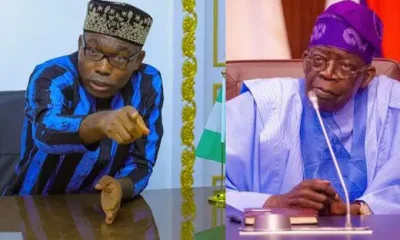
For Leader Sampson, the immediate past Chairman of the African Democratic Congress (ADC) in Rivers State, the Renewed Hope Agenda has failed to produce meaningful benefits for ordinary Nigerians.
He argued that the administration had instead enriched government officials while imposing greater hardship on the masses.
“Tinubu’s Renewed Hope Agenda has only succeeded in impoverishing Nigerians. They have only enriched themselves and that’s all about the hope agenda,” he said.
Sampson blamed the removal of the fuel subsidy for much of the hardship, arguing that the increase in petrol prices immediately affected the cost of living.
He also criticised the administration’s handling of insecurity and electricity, arguing that Nigerians remain unable to travel safely by road while airfares have become increasingly expensive.
His conclusion was that the President’s own campaign promise on electricity should ultimately be used to judge his performance.
“Are we expecting a new lie?”
Political analyst and grassroots mobiliser Aaron Akogwu offered an even more direct assessment.
According to him, the APC would face a difficult campaign because it would have to explain what happened to the promises that brought it to power in 2023.
“You can’t give what you don’t have. APC people have no single truth in their mouths,” he said.
Akogwu argued that the party would struggle to present a convincing message to voters who are already asking whether the previous promises were fulfilled.
“The campaign is going to be difficult for them because what are they going to say to the people? The promises you made before we brought you in, have you been able to keep them? Are we expecting a new lie?” he asked.
Subsidies for the rich?
Businessman Prince Isaac Fayose also rejected the argument that the economic reforms had substantially improved the lives of ordinary Nigerians.
He argued that the removal of fuel and electricity subsidies had disproportionately affected poorer citizens while the benefits were not sufficiently reaching them.
Fayose questioned the scale of government cash transfers and other interventions, arguing that the sums involved were inadequate in the face of the rising cost of living.
He also criticised the state of roads in parts of the country and questioned the government’s emphasis on cash transfers when many Nigerians require more sustainable means of improving their livelihoods.
His argument reflects a broader question confronting the administration: whether social intervention programmes can adequately cushion the effects of reforms that have substantially increased the cost of living.
Government’s counterargument
But the administration’s story is markedly different.
The Federal Government insists that the reforms were necessary to rescue the economy from longstanding structural weaknesses and place Nigeria on a more sustainable growth path.
It has pointed to infrastructure development, investments, social intervention programmes and reforms across various sectors as evidence that the country is gradually moving in the right direction.
Finance Minister Taiwo Oyedele reinforced that argument on Saturday following Moody’s Ratings’ decision to upgrade Nigeria’s economic outlook from “stable” to “positive”.
Oyedele described the rating as important external validation of what he called difficult but necessary reforms undertaken by the Tinubu administration.
He said the Federal Government’s next objective was to move Nigeria towards investment-grade status.
That argument presents the administration’s economic record from a different perspective: reforms that may be painful in the short term but are intended to create stronger foundations for investment, growth and fiscal stability.
The real 2027 question
The battle ahead, therefore, may not be simply between one political party and another.
It could become a contest between two competing interpretations of the Tinubu years.
The government will likely campaign on reforms, infrastructure, investment, economic stabilisation and what it describes as long-term gains.
The opposition will campaign on the immediate experience of Nigerians: food prices, fuel costs, electricity shortages, insecurity, unemployment, poverty and the declining purchasing power of households.
Both narratives will compete for the same electorate.
That is why the 2027 presidential election could become a referendum not only on Tinubu’s policies but also on the credibility of political promises in Nigeria.
The electorate will want to know whether the hardship being experienced today is the necessary price of a better tomorrow, as the government argues, or evidence that the promised Renewed Hope has failed to materialise, as the opposition insists.
Ultimately, the strongest campaign in 2027 may not be the one that makes the biggest promises.
It may be the one that most convincingly answers a much simpler question:
What happened to the promises made in 2023, and why should Nigerians believe the next ones?


 Follow Us on Google Discover






2027: Why I refuse to step down for Atiku – Peter Obi

‘INEC chairman worked against me in 2023 election’ – Peter Obi

‘I won 2023 poll, will accept defeat in 2027 if election is free, fair’ – Peter Obi

ASUU issues two-week ultimatum to Sokoto govt over unimplemented agreements

Tragedy in Lagos as two-storey building collapses, kills one, two rescued

Prof. Badejo to take over as LASU VC September 20

2027: Tinubu’s Renewed Hope under the weight of unfulfilled promises

Panic as container truck crashes into broken-down LAWMA truck in Lagos

US Midterms: Trump woos Americans, promises $5,000 payout if Republicans win election

Police apprehend culprit behind fake Opay shutdown notice

2027: Court withdraws four suits challenging Yayi’s APC candidacy in Ogun

2027: ‘NDC will contest elections under its own platform, not opposition’ coalition – Dickson

Seriake Dickson: I belong to NDC, not Obidient nor Kwankwasiyya

Court directs INEC to recognize NDC’s modified digital logo
JUST IN: Prof Badejo appointed as new LASU Vice-Chancellor

Peter Obi storms Plateau, meets victims of deadly Mangu attack

2026 Ballon d’Or: Dembélé, Messi, Mbappé, Bruno Fenandes, Yamal make 30-Man shortlist
More trouble for Tinubu as US Court accepts Lobby Firm’s motion, supplemental evidence in alleged drug case

‘Chinese syndicates establish fake product factories in Nigeria’ – NAFDAC

G-100 opposition consensus plan faces hurdles as Atiku, Obi, Makinde insist on 2027 ambitions

Peter Obi gains ground in Delta as over 1,000 APC members join NDC

2027 Election: SDP names Agboola as Oyo Governorship candidate

Jubilation as FG settles 8-month CATA allowance for University, Polytechnic lecturers

Like Tinubu, APC chairman Yilwatda jets out of Nigeria for two-week vacation

2027: Wike, Chinda, Rivers coalition stakeholders hold strategic meeting in Spain

Osun Poll: APC withdraws petition challenging Adeleke’s victory

NNPCL, oil firms face Reps probe over ₦432bn NMDPRA debt
Seriake Dickson: I belong to NDC, not Obidient nor Kwankwasiyya

Trump reportedly gifts three White House aides $45,000 each