Politics
2027: Tinubu took political risk to scrap fuel subsidy, deserves praise — Dele Alake

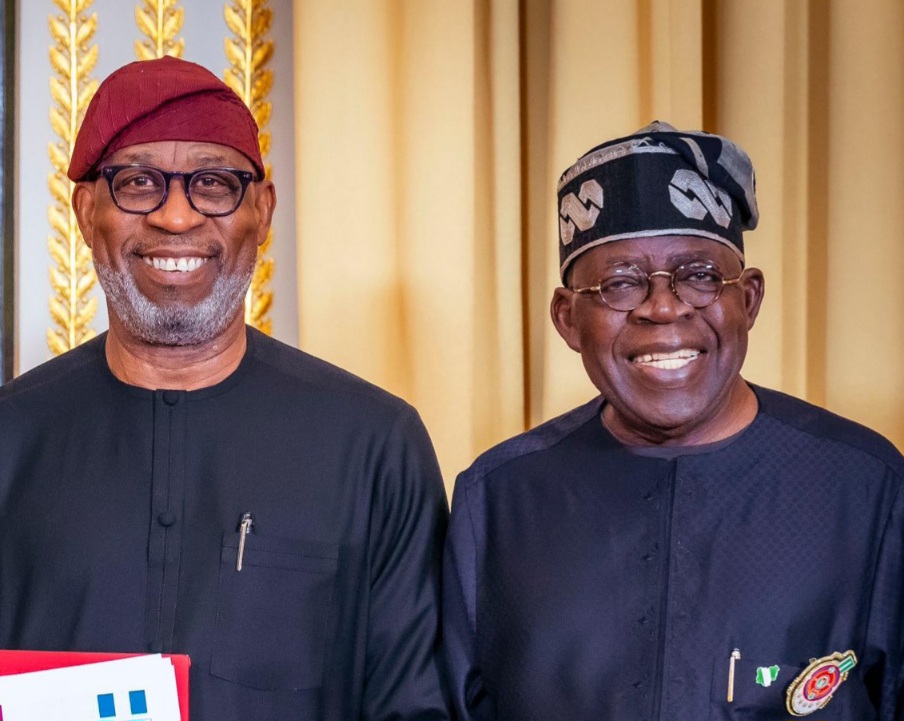
The Minister of Solid Minerals Development, Dele Alake, has defended President Bola Tinubu’s economic policies, particularly the removal of fuel subsidy, saying the President deserves commendation rather than criticism for taking difficult decisions.
Alake made the remarks on Wednesday during an interactive session with journalists in his office.
The minister, who was recently appointed lead spokesperson of the All Progressives Congress (APC) Presidential Campaign Council, said it took unusual political courage for Tinubu to implement reforms that previous administrations had avoided because of concerns about their impact on re-election prospects.
He argued that the distortions affecting the Nigerian economy before 2023 were already known to successive governments, but that previous administrations lacked the political will to implement the necessary reforms.
According to Alake, Tinubu chose to take what he described as the “bitter pill” of removing the fuel subsidy despite the potential political consequences.
He said previous governments had repeatedly considered subsidy removal but backed down when faced with public protests and approaching elections.
“The only thing lacking was the courage to take those decisions,” Alake said.
He added: “Because those previous governments lacked that courage to stop digging, for short-term political expedience, they were afraid of elections; they were afraid of bringing them back to office and all that.
“So they shifted those decisions — the hard decisions they ought to have taken.”
Alake recalled previous attempts to remove fuel subsidy, saying governments had faced protests over the policy but eventually abandoned the process.
“When there were protests, it backtracked because there was an election coming. And so people swallowed the bitter pill,” he said.
“But somebody came and decided to swallow the bitter pill, to take the bullets on behalf of Nigerians.”
The minister said Tinubu’s decision demonstrated a willingness to prioritise the country’s long-term economic interests over short-term political considerations.
He argued that such political courage was necessary to address longstanding economic problems.
“I think it shows in all senses of fairness and objectivity. If a man, who is a politician himself, who should be very sensitive to elections, his government back to office, decided to take the bullets, regardless of the consequences on his own political career, on behalf of the nation, because the nation had to be reset,” Alake said.
He said the administration had now taken the difficult decisions needed to restructure the economy.
Alake Accuses Subsidy Beneficiaries of Fighting Back
Alake also accused beneficiaries of the former fuel subsidy regime of attempting to undermine the gains of its removal.
He alleged that oil cartels benefited significantly from the subsidy system by purchasing fuel at subsidised prices and smuggling it across Nigeria’s borders for higher profits.
“The beneficiaries of the fuel subsidy were the cartels, the oil cartels. And they took to smuggling. They would buy the fuel at a lower price, cross the border, and immediately make humongous profits,” he said.
According to the minister, the removal of the subsidy affected those interests, prompting what he described as efforts to resist the reform.
“And they come back to Nigeria to oppress the rest of us. Those people who are benefiting from it, when the fuel subsidy was removed, did you think that they would fold their arms and be looking? No! They will fight back. They will push back,” he said.
Alake further alleged that sections of the media had, albeit unintentionally, helped to amplify criticism against the reform.
“And they are fighting back, and they are pushing back. And the media, unwittingly, has been helping them to amplify their own selfish pushbacks against the long-term progress of the society,” he said.
The minister also recalled the financial difficulties experienced by many states under the previous subsidy regime, claiming that several states struggled to pay salaries while the Federal Government also resorted to borrowing to meet its wage obligations.
“At that time when there was a fuel subsidy, you recall how many states couldn’t pay salaries. In fact, the federal government itself was borrowing to pay salaries,” he said.
He added that more than 18 states had at various points struggled to meet their wage obligations, with some allegedly resorting to paying workers partially or spreading salary payments.
Apart from the removal of fuel subsidy, Tinubu also announced the end of the multiple foreign exchange-rate regime at his inauguration on May 29, 2023, as part of the administration’s broader economic reforms.
Alake maintained that the government’s economic restructuring efforts should be assessed from a long-term perspective rather than solely through the immediate difficulties associated with the reforms.


 Follow Us on Google Discover





FG, Labour resume talks on minimum wage, petrol price dispute

Bandits abduct over 10 passengers, driver travelling from Kebbi to Abuja

Presidency tackles Atiku over economic policy, questions his qualifications

BREAKING: Harry Kane wins 2026 Ballon d’Or

‘Ebola may force postponement of 2027 elections’ – NCDC

‘Nomination Was Unlawful’ — NDC aspirant drags Omo-Agege, party to court

Prof Ochefu rejects NDC Campaign Council appointment, give reason

Burna Boy presents Socrates Award to Bukayo Saka at 2026 Ballon d’Or ceremony

NDC unveils new National Secretariat in Abuja

INEC bows to pressure, makes preliminary Voters’ Register available online for public inspection

‘Atiku wants to push Nigeria back into poverty’ — Shettima

Why data may be used even when mobile data is switched off – MTN

Fani-Kayode arrives in South Africa, pledges to strengthen bilateral ties

“I know what I came into office to do” — President Tinubu

Court remands man at Kuje prison over alleged threat to release nude videos of Kano Governor

BREAKING: NDC unveils 2027 National Campaign Council, names Babachir Lawal, Galadima to key roles (Full List)

2026 Ballon d’Or: Date, time, venue, streaming details revealed

US Pastor marries second wife, describes monogamy as unbiblical

Troops storm bandits’ hideout, rescue three kidnap victims in Kebbi

Blessing CEO regains freedom after four months in prison

BREAKING: NCDC identifies two additional suspected Ebola cases, tracks 53 primary contacts

Woman killed, two injured as gunmen attack groundnut farmers in Plateau

FIFA U-17 Women’s World Cup: Round of 16 fixtures, dates, kick-off times revealed

Lone Ebola patient to be flown out of Nigeria for further treatment

Outrage as viral video shows JIBWIS members demanding AK-47s, threaten to kill ‘Infidels’ in Enugu, Jos on a Sunday

Reaction trails as APC youth leader Dayo Israel gifts 2026 Toyota Prado SUVs to party officials
“I know what I came into office to do” — President Tinubu

Bandits storm Kaduna community, abduct two farmers
Why data may be used even when mobile data is switched off – MTN
