
Politics
Wike vs APC Governors: APC Campaign Council calls for Tinubu’s intervention
Speaking on the development, APC PCC spokesman, Ima Niboro, described the disagreement as an internal dispute among political allies,


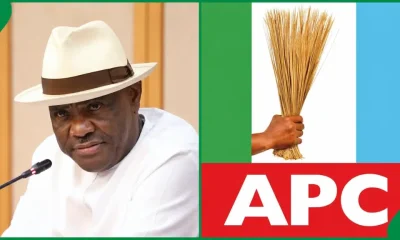
The All Progressives Congress (APC) Presidential Campaign Council (PCC) has urged President Bola Tinubu to intervene in the growing disagreement between Federal Capital Territory (FCT) Minister Nyesom Wike and APC governors over the minister’s proposed Rainbow Coalition ahead of the 2027 general elections.
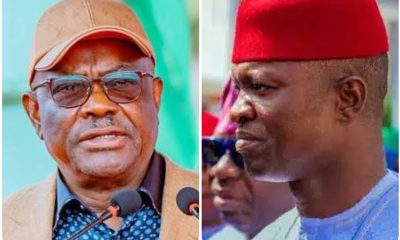
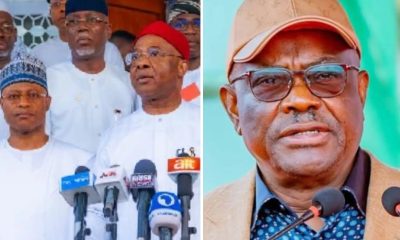
The call came amid an increasingly public exchange between Wike and members of the Progressive Governors Forum (PGF), with the governors expressing concern that the former Rivers State governor’s cross-party political initiative could affect APC candidates at various levels.
Speaking on the development, APC PCC spokesman, Ima Niboro, described the disagreement as an internal dispute among political allies, saying the various camps remained united in their support for Tinubu’s return to office in 2027.
“I consider this a quarrel among political siblings. They are all working in the same direction, but there are differences in the details. Both camps agree that President Tinubu must return in 2027,” Niboro said.
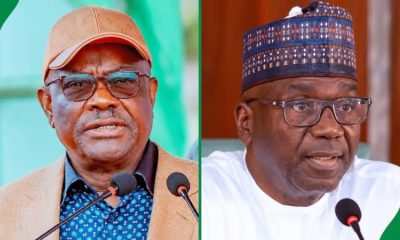
The disagreement escalated after Wike criticised APC governors opposed to his Rainbow Coalition, describing them as “politically lazy” and accusing some of them, including Kwara State Governor AbdulRahman AbdulRazaq and Imo State Governor Hope Uzodimma, of using the President as an excuse to oppose his political activities.
Wike made the remarks during an interview on Arise TV on Tuesday, insisting that his decision to support Tinubu did not amount to abandoning the Peoples Democratic Party (PDP) or preventing other political parties from fielding candidates in elections.
“They are politically lazy. When you have your local problems, don’t use Mr President as your excuse,” Wike said.
The FCT Minister said the disagreement over his political activities was not new, recalling that he faced opposition from some political actors when he was appointed minister and previously when he served as Rivers State governor.
“This thing did not start today. It started at my appointment as a minister. They were not happy that I was Minister of FCT. Also, they were unhappy when I was governor,” he said.
Wike also maintained that his understanding of the political situation was based on information available to him, suggesting that some of his critics might have a different view if they possessed the same information.
“If they know what I know, they would not come out to shout,” he said.
The minister further insisted that his support for Tinubu remained intact, arguing that backing the President was separate from the activities and internal politics of his party.
The APC governors, however, had earlier said they would not participate in, support or endorse any political alliance that could undermine Tinubu’s re-election bid or affect APC candidates at any level.
Responding to the disagreement, Niboro urged APC leaders to avoid prolonged public exchanges and concentrate on building their political structures at the grassroots.
“If you’re a political leader, stop talking, go and work. Go and establish authority in your political base,” he said.
He acknowledged concerns that the disagreement could affect the party’s structure ahead of the 2027 elections but expressed confidence that the matter would be managed internally.
According to him, the size and growing influence of the APC naturally create competing interests that require political management.
Niboro also said Tinubu had the political experience required to manage the differences among the various interests within the ruling party.
“The ultimate beneficiary of this entire process is the President. The quarrel we are talking about is a quarrel that is trickling down to states and local government areas. But both camps agreed on re-electing the President.
“I do not see it as a direct challenge to the President himself, beyond the fact that he is a leader and it’s in his interest to intervene for peace,” he said.
He recalled similar internal disagreements that occurred in the PDP when the party was dominant, saying large political parties often develop competing interests that must be carefully managed.
Meanwhile, APC chieftain Joe Igbokwe has urged Wike to meet with the party’s governors and explain the objectives of his proposed Rainbow Coalition.
Igbokwe described Wike as an important political stakeholder whose influence could not simply be disregarded.
“Wike is a critical stakeholder. You can ignore him to your own peril. He has a command. He has followers,” Igbokwe said.
However, he questioned the timing and approach of the Rainbow Coalition, urging Wike to consult with the APC governors and explain his plans to them.
“Coming at this time, to put this (Rainbow Coalition) on the table, it’s not… he has to listen to the majority, sit down with the governors and explain,” he said.
Igbokwe said the dispute should be resolved through dialogue rather than public exchanges.
“No man is an island. Explain to your colleagues what you are trying to do,” he added.
Also weighing in, former Director-General of the Voice of Nigeria (VON), Osita Okechukwu, cautioned Tinubu against what he described as attempts by some APC governors to persuade the President to distance himself from Wike.
Okechukwu said the disagreement should have been handled internally rather than through public statements.
“In my 48 years in party politics, I have never seen where such an elementary issue was pretentiously thrown open. May I ask the governors: don’t you have access to Mr. President, and what is the proverbial caucus meant for? My summation is simple: Mr. President, beware of pretenders,” he said.
The APC chieftain argued that the President should maintain a broad political coalition ahead of the 2027 elections, saying Wike’s support could provide additional political reach in some areas.
According to Okechukwu, the President had not sidelined APC governors but could benefit from additional political support beyond the structures controlled by the governors.
“Mr. President has never overlooked the governors. All he wants is supplementary votes from Wike, especially in states where the electorate is angry and where some of the FPGs have alienated the people,” he said.
He urged the governors to strengthen their relationships with their constituents rather than publicly opposing Wike’s political alliance with the President.
“The governors should concentrate on strengthening their relationship with the electorate rather than asking Mr. President to abandon a political alliance that could broaden the APC’s electoral reach,” Okechukwu added.
The growing disagreement has placed the APC’s internal political dynamics under renewed scrutiny as the 2027 elections approach, with party figures calling for dialogue and reconciliation to prevent the dispute from affecting the party’s wider electoral strategy.


 Follow Us on Google Discover




FAAC shares N2.338tn August revenue to FG, States, LGs

DSS re-arraigns five alleged Ansaru leaders over Oyo School kidnap, two deaths

Sanwo-Olu, Fashola, Ambode, Gbajabiamila named as Lagos APC unveils 2027 Campaign Council (Full List)

South African woman sentenced to 25 Years for smuggling Heroin into Nigeria

FCE Yola Recruitment: 48 Academic and Non-Academic vacancies open (How to Apply)

Moniepoint announces 2 job vacancies for qualified Nigerians (How to Apply)

KolaDaisi University opens recruitment for Engineers, Analysts, 7 others positions (How to Apply)

Anambra Debt Record: Breeze has blown fowl yansh, Obi lies per second, He got away with it in 2023, but not this time — Keyamo

Tinubu won’t be happy with Wike for calling our Govs ‘lazy’ – APC Chieftain

I will resign if I fail to end insecurity in Zamfara within 2 Years – NDC guber candidate Marafa

Cooking Gas price rises to N1,300 Per Kg

Atiku’s Suit: Tinubu denies submitting fake NYSC Certification to INEC

National Assembly sends 2026 constitution amendment bill to 36 State Assemblies

Wike vs APC Governors: APC Campaign Council calls for Tinubu’s intervention

Tinubu is a very good man, He took over the country in shambles, but didn’t blame Buhari – Shettima

Nile University of Nigeria announces recruitment for 9 vacancies (How to Apply)

Obi left N127.37bn external debt, he borrowed for Malaria, Erosion control, others – Anambra Govt

Philomath University announces recruitment for 22 vacancies (How to Apply)

BREAKING: Veteran Nollywood actor Olu Jacobs dies at 84

Aisha Buhari visits Atiku as 2027 politics intensifies
Moniepoint announces 2 job vacancies for qualified Nigerians (How to Apply)
FCE Yola Recruitment: 48 Academic and Non-Academic vacancies open (How to Apply)

Now that Soludo has exposed you over N127.37bn debt, quit 2027 race — Presidency dares Obi

2027: Students across 19 Northern states, FCT endorse Tinubu for re-election
KolaDaisi University opens recruitment for Engineers, Analysts, 7 others positions (How to Apply)
Atiku’s Suit: Tinubu denies submitting fake NYSC Certification to INEC

Nigerians now begging me to slow down because freezers are freezing due to constant power supply – Minister Tegbe

2027: Atiku secures Court order to serve Tinubu through APC

Only Six of Nineteen Northern Governors supported Tinubu in 2023, Shettima reveals
