News
Experts call for digital discipline as Nigeria battles fake news epidemic

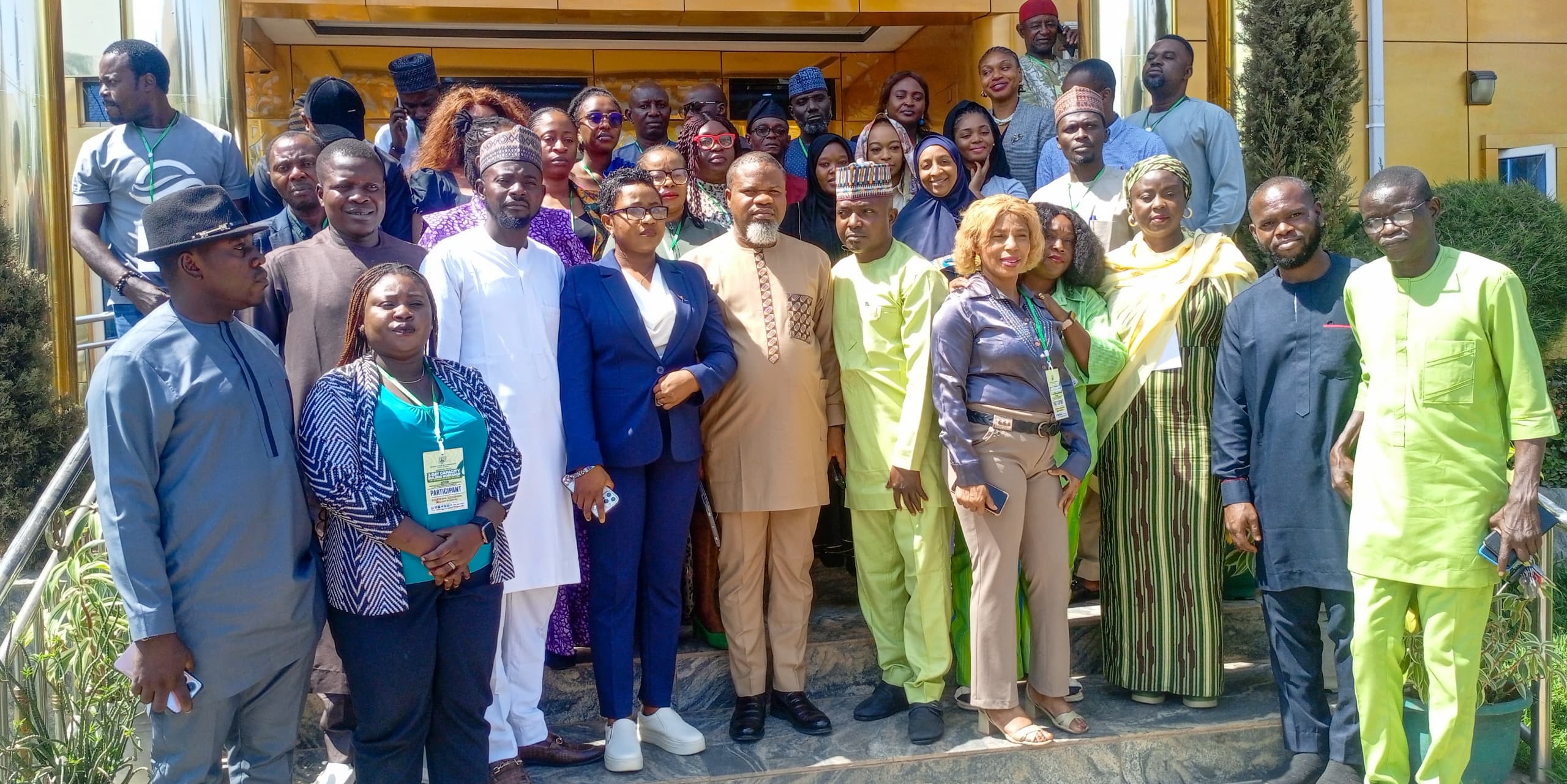
Former President of the Nigeria Union of Journalists (NUJ), Chris Isiguzo, has raised fresh concerns over the growing threats confronting professional journalism in Nigeria, warning that the unchecked rise of misinformation, unregulated online content, and the absence of legislative protection for journalists pose a grave danger to the country’s democracy.
Speaking at the NUJ FCT 2025 Capacity Building Programme for Information and Media Officers in Keffi, Nasarawa State, Isiguzo said digital disruption and the explosive growth of social media have handed the information space to non-professionals who often operate without ethics, structure, or accountability.
“We must tackle it headlong, otherwise we are going to be in trouble,” he cautioned.
“The tools we have now are available to our young stars and they can do anything with it. Professionals must invade the space, social media or whatever name you call it, to displace those who are operating freely without checks.
Social media influencers and content creators are churning out all sorts, and professionals must be there to control.”
Isiguzo noted what he described as the rise of the “fifth law of misinformation,” which he said is creating chaos, eroding trust, and fueling confusion across the country.
According to him, the danger has been amplified by the activities of citizen journalists who disseminate content without gatekeeping or adherence to ethical standards.
“Whatever you publish must contain the fundamentals,” he stressed. “So that anyone reading your work knows a professional is behind it.”
He expressed deep worry that Nigeria, unlike Ghana, Malawi, and the United States, still has no legal framework protecting journalists.
The absence of such legislation, he said, leaves reporters vulnerable in a political environment where democracy itself is fragile.
“There’s no piece of legislation that protects the practice of journalism in Nigeria,” he said.
“If the oxygen is plugged out and democracy begins to inhale what it should not inhale, carbon dioxide, then that becomes toxic for democracy, toxic for governance, and toxic for society.”
Isiguzo lamented that journalists in the country continue to perform their constitutional duty of holding power to account despite the constant threat of harassment, arrest, intimidation, or even imprisonment.
“These journalists are living in fear of the unknown, fear of how to feed their families, fear of how to protect their loved ones,” he said.
“The only thing that can protect them is legislation.”
In her keynote address, Chairman of the NUJ FCT Council, Comrade Grace Ike, described the capacity-building programme as a deliberate investment in strengthening professionalism within Nigeria’s communication ecosystem.
She said the theme, “Enhancing Image Making, Public Relations, Social Media Management, and Media Visibility in the Public Sector”, reflects the urgency of adapting to a world where information spreads faster than policy.
“We live in an age where information travels faster than policy, where perception precedes reality, and where a single headline, tweet, or video clip can redefine an institution,” she said.
Ike emphasized that today’s information officers must operate beyond the traditional role of issuing press releases.
They must understand strategy, crisis communication, content creation, digital engagement, and reputation management.
“To excel in this new system, training is no longer optional; it is foundational,” she said. “It is the difference between being reactive and being strategic, between managing information and shaping narratives.”
She urged participants from the Ministry of Information, the NCC, the military, NASENI, and several media organisations to take advantage of the training.
“Ask questions, challenge assumptions, interact with facilitators, and take back knowledge that can transform your work,” she said. “Let today mark the beginning of renewed commitment to professionalism.”
Also speaking, the Head of Corporate Communications at the Nigerian Communications Commission (NCC), Mrs Nnenna Ukoha, represented by the Principal Manager, Public Affairs, Mr Tunde Akpeji, said the workshop was designed to strengthen professional competence, enhance efficiency, and equip participants with the confidence to engage effectively in public communication.
He said the NCC considers its workforce its greatest asset and views capacity-building as central to driving positive change across the telecommunications sector.
According to him, information officers must be equipped to properly communicate the industry’s role in protecting national information infrastructure.
The capacity-building programme forms part of the FCT NUJ’s broader effort to strengthen ethics, improve government communication, and ensure journalists and information officers remain credible guardians of public interest amid rising misinformation threats.
The event, themed “Enhancing Public Image, Strategic Communication and Media Visibility in the Digital Era,” also featured presentations from top professionals, including the Chairman of the Nigerian Institute of Public Relations (NIPR), Mr Stanley Azuka Ogadigo; Deputy Director of the International Institute of Journalism (IIJ), Mr Nicholas Igwenagu; Dr Simon Sheyigar of Federal University Lokoja; and Mr Victor Habila Alaka, all of whom shared insights on building strong institutional reputations in a digital age.


 Follow Us on Google Discover







Opposition will front a single candidate against Tinubu, announcement will be made few days to election – Lukman

La Liga: Unstoppable Barcelona beat Real Betis 5-2 to extend winning run

EPL: Super Eagles star Iwobi fires Fulham to first league victory

Ogun hospital under fire as Nurse dies of asthma attack amid alleged oxygen failure

Maryam Babangida Center for Women Devt gets first wheel chair ramp after 34 years

Shettima inaugurates Arewa for Asiwaju campaign office in Abuja

2027: ‘APM will beat Tinubu in 12 battleground states’ – Makinde’s campaign team

Veteran Journalist, diplomat Dele Cole dies at 86

Suspended NSCDC commandant apologises over deaths of suspected illegal miners in Niger

EPL: Martinez rushed to hospital after head injury as Chelsea beat Everton

COAS arrives Borno as Military moves to clear terrorist camps, rescue abductees

Macky Sall quits race for UN Secretary-General position

Buhari backed Osinbajo’s presidential ambition four times, Akande tells Babachir Lawal

Dr. Benjamins‑Laniyi urges media to amplify women’s leadership, adopt gender‑sensitive reporting

Pope Leo XIV set to leave hospital after lung cancer surgery

Erisco Foods announces 13 job openings across Nigeria – Apply Now

2027: Step down if you are not working for Tinubu – Deji Adeyanju dares Obi, Kwankwaso

House Officers, Nurses, Radiographers, Others wanted as DELSUTH opens recruitment – Apply Now

Tinubu reappoints Bala Bila as INEC commissioner, nominates six others

Elon Musk unveils Tesla’s ‘flying’ car in stunning demonstration

2027: Kwankwaso a goat in sheep’s clothing, secretly working for Tinubu – Atiku Campaign Council

33 Governors cannot be wrong in supporting Tinubu – Bayo Onanuga

2027: Tinubu to miss rallies in over 20 States as APC releases campaign timetable

Gunmen storm Plateau, kill traditional ruler at residence

Atiku fully fit, ready to campaign in all 36 states, interact with Nigerians – ADC PCC

Security forces arrest five suspects over abduction of 20 NYSC members in Imo

Outrage as suspected cultists unveil renovated police post in Rivers

2027: ‘Don’t trust your destiny to ‘kalokalo’ people’ – Wike warns Rivers voters against Atiku, Amaechi, Obi

2027: ‘Atiku, Obi, Duke, Makinde are not threats to Tinubu’, says APC
