News
Abbas calls for inclusive SME policies to lift Women, Youth, Rural Entrepreneurs

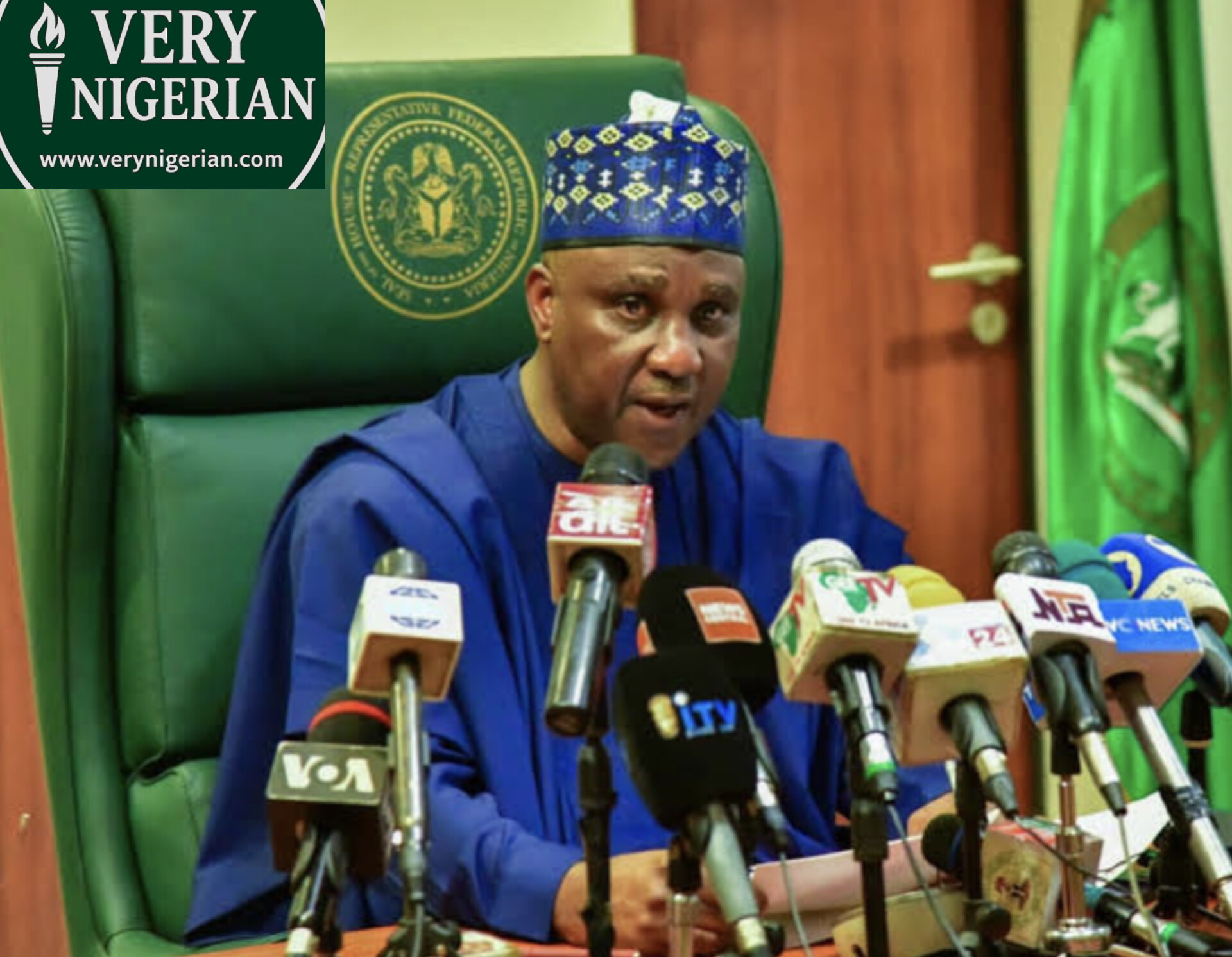
The Speaker of the House of Representatives, Rt. Hon. Abbas Tajudeen, has said that while Nigerian entrepreneurs are rich in ideas and courage, the country still lacks the supporting structures needed to match their drive, a gap the House is now working to bridge.
Speaker Abbas, represented by the Deputy Speaker, Rt. Hon. Benjamin Okezie Kalu, stated this in Abuja on Monday while delivering the keynote address at the Enterprise Nexus Summit, themed “Strengthening Local Enterprise Through Policy Support and Access.”
The summit drew a large audience of young innovators, business leaders, development agencies, policymakers and other stakeholders.
According to him, the summit was conceived not as another ceremonial conference but as a platform where “policy, ambition and opportunity meet in one room,” with practical outcomes that impact livelihoods, not just communiqués.
“We wanted an ecosystem conversation,” he said, “a space where the energy of entrepreneurs meets the responsibility of policymakers, a setting designed for solutions rather than speeches.”
Abbas maintained that Nigerian entrepreneurs are not short on creativity or determination, but have long operated without a system that aligns access, information, capital and supportive public policy.
He stressed that potential can only translate into prosperity when the environment is deliberately structured to support it.
He noted that the Enterprise Grant being introduced under the Office of the Speaker will be assessed not by the size of funds disbursed but by the number of viable businesses it helps stabilise and scale.
Beneficiaries, he added, must be properly mentored, tracked and linked to opportunities within broader value chains.
“If we do it right,” he said, “a small grant today becomes a job-creating enterprise tomorrow and a tax-paying employer soon after.”
Abbas reiterated that President Bola Ahmed Tinubu’s Renewed Hope Agenda places enterprise at the heart of Nigeria’s economic transformation and targets a trillion-dollar economy within five years by supporting small- and medium-scale enterprises.
He stressed the need for the legislature to ensure that national economic rules remain coherent, modern and reflective of a young, innovative population eager for progress.
The Speaker outlined three shifts he believes must shape conversations within Nigeria’s enterprise ecosystem:
a shift from fragmentation to coordination, a shift from improvisation to knowledge, and a shift from exclusivity to inclusion.
He observed that too many support initiatives currently operate in isolation, despite entrepreneurs facing multi-sector challenges spanning finance, taxation, logistics, technology and market access.
“Coordination is no longer optional,” he said. “When institutions align, impact multiplies.”
Drawing on his background as a university lecturer, Abbas emphasised that knowledge becomes transformative only when applied.
Nigeria, he said, cannot build a competitive economy on instinct and improvisation alone.
“Our goal is to raise a generation of businesses that can compete anywhere because their foundations are solid, in governance, financial literacy, production standards and digital competence,” he stated.
He also highlighted the importance of inclusion, insisting that a productive national economy must work for women, youth, rural creators, artisans and underserved communities.
“A nation cannot rise on a narrow base,” he cautioned.
While admitting that the government cannot single-handedly build the economy, Abbas said it must create the right conditions through legislation that protects innovation, oversight that ensures transparency, and collaboration that respects private-sector expertise.
He acknowledged the role of state governments, universities, development finance institutions and global partners in building a robust enterprise ecosystem, describing the summit as an invitation to coordinate, commit and innovate.
Reviewing the work of the 10th House, Abbas noted significant legislative advancements in support of SMEs, including funding, regulatory ease, innovation support and vocational programmes.
He singled out oversight visits by the House Committee on Commerce to SMEDAN and the Bank of Industry, which have jointly disbursed more than ₦100 billion in SME loans and grants under interventions such as AGSMEIS and the ₦75 billion MSME Fund.
He also referenced the House resolution pushing for speedy implementation of the ₦50 billion MSME cluster budget and ongoing work on the Innovation and Entrepreneurship Support Bill, which proposes tax breaks for start-ups, innovation hubs and private-sector-led mentorship schemes.
Another key reform is the proposed amendment to the Nigerian Export-Import Bank (NEXIM) Act, aimed at increasing capitalisation for SME export financing.
Abbas said the amendment could unlock up to $1 billion in new trade opportunities for small agricultural and manufacturing exporters. The House, he assured, “will definitely vote in concurrence.”
The Speaker further highlighted ongoing legislative work on the Factoring and Invoice Discounting Bill, which will help SMEs convert receivables to cash and overcome liquidity challenges.
Supported by regulators and the private sector, the bill is expected to address cash-flow constraints affecting thousands of micro and small businesses.
He added that increased funding for SMEDAN and MSME Clinics under the 2024 and 2025 Appropriation Acts has already enabled the disbursement of ₦576 million to 237 MSMEs by mid-2025.
Abbas stressed that Nigeria’s future enterprise ecosystem must be proactive, not reactive, with policies such as the Nigeria First Policy mandating ministries and agencies to prioritise local manufacturers and producers.
“Governments across the country must adopt policies that help start-ups flourish, financial institutions must drive innovation through improved access to finance and private-sector players must strengthen mentorship for SMEs,” he concluded.


 Follow Us on Google Discover






Opposition will front a single candidate against Tinubu, announcement will be made few days to election – Lukman

La Liga: Unstoppable Barcelona beat Real Betis 5-2 to extend winning run

EPL: Super Eagles star Iwobi fires Fulham to first league victory

Ogun hospital under fire as Nurse dies of asthma attack amid alleged oxygen failure

Maryam Babangida Center for Women Devt gets first wheel chair ramp after 34 years

Shettima inaugurates Arewa for Asiwaju campaign office in Abuja

2027: ‘APM will beat Tinubu in 12 battleground states’ – Makinde’s campaign team

Veteran Journalist, diplomat Dele Cole dies at 86

Suspended NSCDC commandant apologises over deaths of suspected illegal miners in Niger

EPL: Martinez rushed to hospital after head injury as Chelsea beat Everton

COAS arrives Borno as Military moves to clear terrorist camps, rescue abductees

Macky Sall quits race for UN Secretary-General position

Buhari backed Osinbajo’s presidential ambition four times, Akande tells Babachir Lawal

Dr. Benjamins‑Laniyi urges media to amplify women’s leadership, adopt gender‑sensitive reporting

Pope Leo XIV set to leave hospital after lung cancer surgery

Erisco Foods announces 13 job openings across Nigeria – Apply Now

2027: Step down if you are not working for Tinubu – Deji Adeyanju dares Obi, Kwankwaso

House Officers, Nurses, Radiographers, Others wanted as DELSUTH opens recruitment – Apply Now

Tinubu reappoints Bala Bila as INEC commissioner, nominates six others

Elon Musk unveils Tesla’s ‘flying’ car in stunning demonstration

2027: Kwankwaso a goat in sheep’s clothing, secretly working for Tinubu – Atiku Campaign Council

33 Governors cannot be wrong in supporting Tinubu – Bayo Onanuga

2027: Tinubu to miss rallies in over 20 States as APC releases campaign timetable

Security forces arrest five suspects over abduction of 20 NYSC members in Imo

Gunmen storm Plateau, kill traditional ruler at residence

Atiku fully fit, ready to campaign in all 36 states, interact with Nigerians – ADC PCC

2027: ‘Don’t trust your destiny to ‘kalokalo’ people’ – Wike warns Rivers voters against Atiku, Amaechi, Obi

Outrage as suspected cultists unveil renovated police post in Rivers

2027: ‘Atiku, Obi, Duke, Makinde are not threats to Tinubu’, says APC
