
World
Senegal moves to increase jail term for same-sex relations

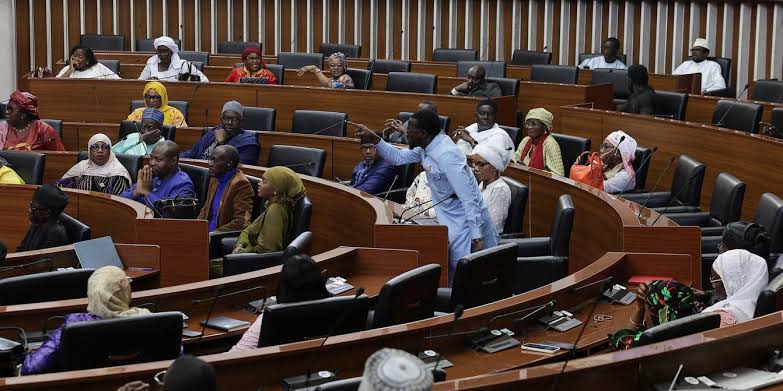
Senegal’s parliament has approved a new law that increases the maximum prison sentence for same-sex relations to 10 years, marking a major step in the country’s ongoing crackdown on members of the LGBTQ community.
The legislation was passed on Wednesday by lawmakers in the National Assembly with a large majority. The bill will now be sent to Bassirou Diomaye Faye, Senegal’s president, who must sign it before it becomes law.
Under the proposed law, individuals found guilty of engaging in same-sex relations could face up to a decade behind bars.
The legislation also introduces criminal penalties for people accused of promoting or providing financial support for same-sex relationships.
Reports from local media say several arrests have already been made under Senegal’s existing anti-LGBTQ laws. Since February, police have reportedly detained dozens of men.
In one widely reported case, authorities arrested 12 men, including two local celebrities, during what appeared to be the beginning of a series of recent detentions.
The bill punishes “acts against nature”, a term used to signify same-sex relations, by five to 10 years’ imprisonment, compared with one to five years previously.
It also provides for three to seven years in prison for anyone who engages in advocacy for same-sex relations.
Arrests have often been based on accusations and phone searches, which are reported almost daily, with the names of those detained made public.
The new law additionally penalises anyone who accuses another of same-sex offences “without proof”.
After debating for several hours, lawmakers approved the bill by a vote of 135 in favour, zero opposed and three abstentions.
“Homosexuals will no longer breathe in this country. Homosexuals will no longer have freedom of expression in this country”, lawmaker Diaraye Ba declared from the podium during the debate, to applause from some of her colleagues.
Under the bill, the maximum sentence will be handed down if the act was committed with a minor.
Punishment will additionally include fines from two million to 10 million CFA francs ($3,500 to $17,600), compared to 100,000 to 1.5 million CFA francs previously.
Some of those arrested have faced accusations of deliberately transmitting HIV, fuelling further fierce debate about same-sex relations.
– ‘Walking dangers’ –
In recent years, LGBTQ issues have stirred controversy in Senegal, where gay-rights advocacy is frequently denounced as a tool used by Westerners to impose foreign values.
Religious associations in the Muslim-majority west African country have staged demonstrations to demand tougher penalties.
Ousmane Sonko, before becoming the country’s highly influential prime minister in 2024, had promised to make same-sex relations a crime, upping the offence from its current classification as misdemeanour.
However, the new law, which Sonko himself presented to parliament, maintains the same misdemeanour status.
This has led the opposition to accuse Sonko of failing to follow through on his promise.
Social media in Senegal have been flooded in recent weeks with homophobic messages and calls to out individuals accused of same-sex activity.
The highly publicized arrests have spawned headlines such as “Big homo clean-up” and “Bisexuals, walking dangers”.
Stories in recent days have also conflated the arrests for same-sex relations with a separate child sex abuse affair.
In that case, investigators dismantled a gang accused of sexual violence against minors, arresting 14 people.
Repression of same-sex relations is politically advantageous in a country where homosexuality is widely regarded as deviant.
At least 32 out of Africa’s 54 countries have laws on the books prohibiting and punishing same-sex relations.
The death penalty is imposed in Uganda, Mauritania and Somalia.
Approximately 10 countries or territories impose sentences ranging from 10 years to life in prison, including Sudan, Kenya, Tanzania and Sierra Leone.


 Follow Us on Google Discover









La Liga: Unstoppable Barcelona beat Real Betis 5-2 to extend winning run

EPL: Super Eagles star Iwobi fires Fulham to first league victory

Ogun hospital under fire as Nurse dies of asthma attack amid alleged oxygen failure

Maryam Babangida Center for Women Devt gets first wheel chair ramp after 34 years

Shettima inaugurates Arewa for Asiwaju campaign office in Abuja

2027: ‘APM will beat Tinubu in 12 battleground states’ – Makinde’s campaign team

Veteran Journalist, diplomat Dele Cole dies at 86

Suspended NSCDC commandant apologises over deaths of suspected illegal miners in Niger

EPL: Martinez rushed to hospital after head injury as Chelsea beat Everton

COAS arrives Borno as Military moves to clear terrorist camps, rescue abductees

Macky Sall quits race for UN Secretary-General position

Buhari backed Osinbajo’s presidential ambition four times, Akande tells Babachir Lawal

Dr. Benjamins‑Laniyi urges media to amplify women’s leadership, adopt gender‑sensitive reporting

Pope Leo XIV set to leave hospital after lung cancer surgery

Gunmen kill four vigilantes in Plateau community

Erisco Foods announces 13 job openings across Nigeria – Apply Now

2027: Step down if you are not working for Tinubu – Deji Adeyanju dares Obi, Kwankwaso

House Officers, Nurses, Radiographers, Others wanted as DELSUTH opens recruitment – Apply Now

Tinubu reappoints Bala Bila as INEC commissioner, nominates six others

Panic in Rivers community as pipeline explosion injures 20, razes over 50 houses

Elon Musk unveils Tesla’s ‘flying’ car in stunning demonstration

2027: Kwankwaso a goat in sheep’s clothing, secretly working for Tinubu – Atiku Campaign Council

2027: Tinubu to miss rallies in over 20 States as APC releases campaign timetable

33 Governors cannot be wrong in supporting Tinubu – Bayo Onanuga

2027: ‘Atiku, Obi, Duke, Makinde are not threats to Tinubu’, says APC
Gunmen storm Plateau, kill traditional ruler at residence

2027: ‘Don’t trust your destiny to ‘kalokalo’ people’ – Wike warns Rivers voters against Atiku, Amaechi, Obi

Outrage as suspected cultists unveil renovated police post in Rivers

Atiku fully fit, ready to campaign in all 36 states, interact with Nigerians – ADC PCC
