
News
Banks raise prime lending rates despite CBN’s monetary policy cuts

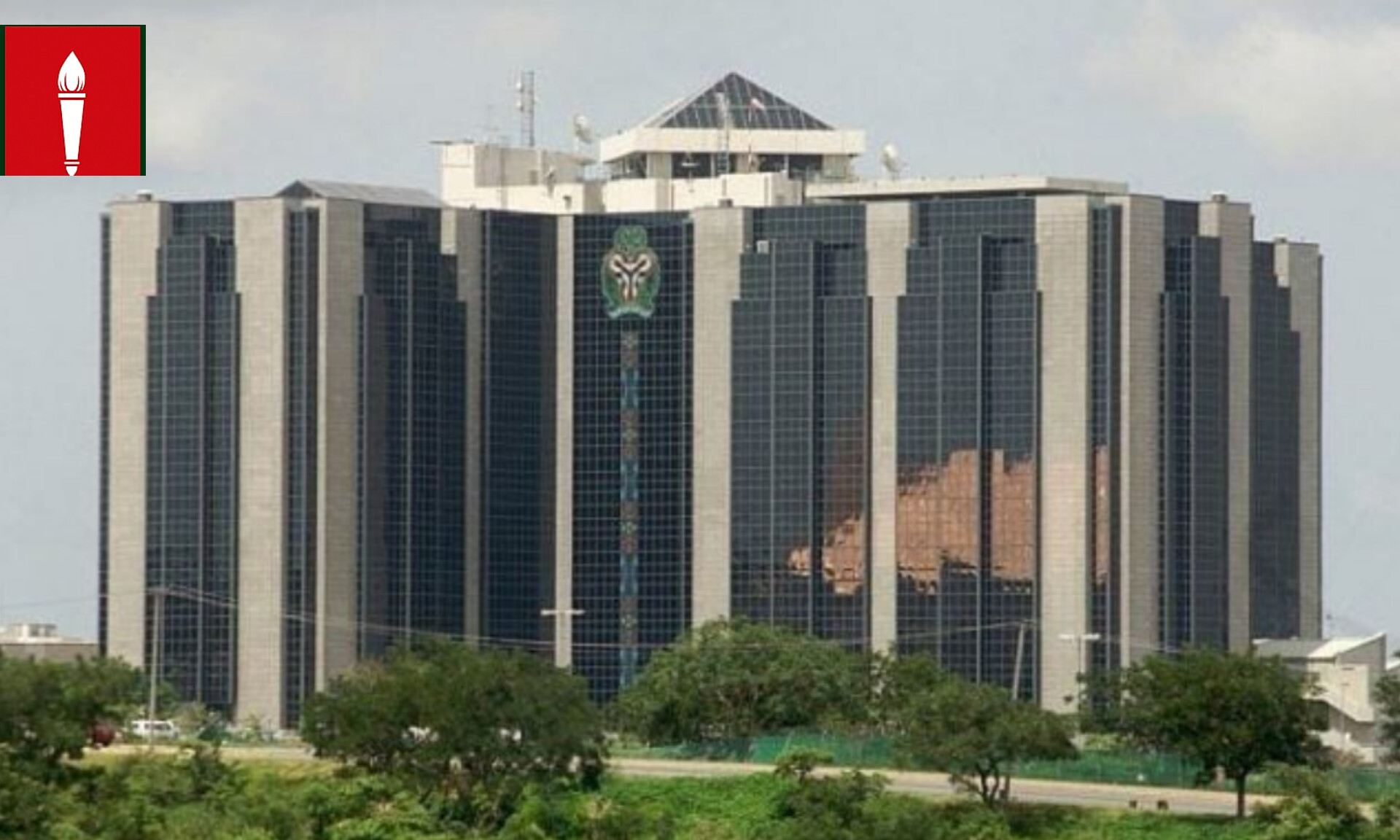
Despite successive reductions in the Central Bank of Nigeria’s (CBN) benchmark interest rate, banks have increased average prime lending rates in several key sectors, raising questions about how quickly monetary easing is translating into cheaper credit for businesses.
The CBN cut the Monetary Policy Rate (MPR) from 27.5 per cent to 27 per cent in September 2025, marking its first reduction in the period under review. It subsequently lowered the rate by 50 basis points to 26.5 per cent in February 2026, before announcing a further 350-basis-point cut to 23 per cent in September 2026.
The latest reduction followed a three-month decline in inflation, which fell from 15.93 per cent in May 2026 to 15.39 per cent in August. Inflation moderated further to 14.63 per cent in September.
The cumulative 450-basis-point reduction in the MPR over the 13 months to September 2026 had raised expectations that banks would lower lending rates, providing relief for businesses and households.
However, Financial Vanguard’s analysis of CBN interest-rate schedules for August 2025 and October 2026 shows that average prime lending rates — preferential rates offered to creditworthy corporate borrowers — increased in eight of 11 key economic sectors.
The sectors were agriculture, forestry and fishing; construction; government; human health and social work; real estate; manufacturing; education; and finance and insurance. The increases ranged from 0.33 percentage points in finance and insurance to 1.33 percentage points in agriculture, forestry and fishing.
Prime lending rates in agriculture, forestry and fishing rose to 24.77 per cent from 23.44 per cent, while construction rates increased to 26.40 per cent from 25.25 per cent.
Government borrowing rates climbed to 26.49 per cent from 25.52 per cent. Rates in human health and social work rose to 26.96 per cent from 26.11 per cent.
In real estate, the average prime rate increased to 26.57 per cent from 25.82 per cent, while manufacturing rates rose to 24.36 per cent from 23.79 per cent.
Education recorded an increase to 26.85 per cent from 26.33 per cent, while finance and insurance rose to 25.88 per cent from 25.55 per cent.
By contrast, prime lending rates declined in arts, entertainment and recreation; oil and gas; and information and communication, falling by 0.66, 0.24 and 0.08 percentage points, respectively.
The trend differed from movements in average maximum lending rates, which declined across 10 sectors: arts and entertainment, government, education, human health, finance and insurance, manufacturing, oil and gas, agriculture, information and communication, and construction.
Average maximum lending rates fell from 33.78 per cent to 32.58 per cent, a reduction of 1.20 percentage points.
The analysis suggests that while some borrowers may be benefiting from lower quoted lending rates, preferred customers in important parts of the productive economy have yet to experience a uniform reduction in borrowing costs.
Uneven transmission of rate cuts
Tunde Abioye, Head of Equity Research at Quest Merchant Bank, said the divergence between the MPR and sectoral prime lending rates did not necessarily indicate a breakdown in monetary policy transmission.
He explained that lending rates are influenced not only by the policy rate but also by banks’ funding costs, liquidity conditions, borrower profiles and risk-adjusted pricing.
“Lending rates reflect not only the policy rate but also banks’ funding costs, liquidity conditions, borrower mix and risk-adjusted pricing considerations.
“What the data may be showing is a lagged and uneven transmission of monetary easing across sectors rather than an outright failure of the easing cycle to lower borrowing costs,” Abioye said.
Nnamdi Nwizu, Co-Founder of Lagos-based investment bank Comercio Partners, also attributed the divergence to uneven transmission and differences in how banks price credit.
He said commercial banks determine lending rates based on several factors, including funding costs, liquidity requirements, operating expenses, credit risks and competitive conditions.
According to Nwizu, an independent analysis of CBN rate publications by his firm showed that increases in average prime lending rates were not widespread across banks.
Of 174 comparable bank-sector prime lending rate observations across seven identified sectors, 65 recorded reductions, 79 remained unchanged and 30 increased.
He said the findings suggested that the rise in average prime lending rates was driven by relatively large upward adjustments at a smaller number of banks, rather than a general increase across the banking system.
Savings and deposit rates also decline
The movement in lending rates has coincided with a reduction in the rates banks offer depositors.
Financial Vanguard’s analysis showed that the average savings deposit rate declined to 6.61 per cent in October 2026 from 7.81 per cent in August 2025, representing a decrease of 1.20 percentage points.
Average time-deposit rates recorded a sharper decline, falling by 2.24 percentage points to 12.28 per cent from 14.52 per cent. Average demand deposit rates also edged down to 1.48 per cent from 1.59 per cent.
For savings deposits, the prevailing benchmark rate offered by major commercial lenders fell to 6.90 per cent from 8.25 per cent.
The average rate on time deposits dropped from 14.52 per cent, within a reported range of 6.91 to 21.51 per cent, to 12.28 per cent. The range also narrowed, from 6.91–21.51 per cent to 0.10–17.04 per cent.
Nwizu said the findings pointed to uneven monetary policy transmission, but cautioned against concluding that monetary easing had failed to translate into cheaper credit.
He noted that the decline in average maximum lending rates, alongside lower deposit quotations and reductions in some bank-level prime lending rates, indicated that repricing had already begun.
“Nevertheless, the increase in the average quoted prime lending rate across six of the seven highlighted sectors suggests that these benefits have not been uniformly reflected in the lending terms available to preferred borrowers,” he said.
Nwizu added that the CBN’s 350-basis-point MPR adjustment took place on September 22, 2026, just 17 days before the October lending-rate observation.
He said it could therefore be premature to assess the full impact of the cut on borrowing costs, particularly as the CBN had described the adjustment as an operational recalibration.
Nwizu said the trend was consistent with a June 2026 International Monetary Fund study highlighting asymmetric interest-rate transmission in Nigeria, where lending rates respond more quickly to monetary tightening than to easing.
“The benefits of lower policy rates may take longer to materialise,” he said.
He added that the decline in maximum lending rates and deposit quotations suggested some repricing had occurred, although the transmission to prime borrowers remained incomplete.
Implications for businesses
Abioye and Nwizu said the divergence between prime and maximum lending rates could affect companies planning to expand production, acquire equipment or finance working capital.
Abioye warned that persistently high lending rates for prime borrowers could increase financing costs beyond what businesses would typically expect during an easing cycle.
“If lending rates for prime borrowers remain elevated or continue to rise, affected firms could face higher financing costs than would otherwise be expected during an easing cycle.
“This may moderate the appetite for new borrowing, particularly for discretionary expansion projects, capital expenditure, and long-term investments.
“However, the impact is likely to vary across sectors and borrowers,” he said.
Nwizu warned that sustained high borrowing costs could weaken private investment, corporate profitability and employment creation, while limiting improvements in productive capacity.
He said expensive credit could raise the cost of financing raw materials, inventories and working capital for manufacturers and agricultural businesses.
In real estate, higher financing costs could affect project viability and delay new developments. Businesses in education, information technology and financial services could also reconsider expansion plans or capital expenditure, he added.
At the macroeconomic level, Nwizu said sustained high borrowing costs could weaken private investment, slow employment creation and constrain improvements in productive capacity.
He warned that these supply-side pressures could complicate efforts to achieve sustainable disinflation, while noting that the impact was not uniform across the banking system.


 Follow Us on Google Discover







Nigeria’s Adegbuyi, Akekoromowei, Super Falcons make 2026 CAF women’s awards list

Iran issues deadly threat against US president in Tehran, displays massive ‘We will kill Trump’ billboard

Gunmen kidnap two visually impaired travellers in Plateau, demand N50m ransom

Spanish striker Jesús de Miguel dies at 30 after on-pitch collision

EPL: West Ham fires Nuno Espírito Santo as head coach

DSS has been gracious to Sowore, says Ughegbe

DSS releases four suspected IPOB members, pays N20m compensation

NDC appoints Ifeanyi Ibezi Anambra campaign coordinator ahead of 2027 elections

2027: ‘Vote ADC to at all levels’ – El-Rufai orders supporters

Peter Obi’s wife is Godmother to one of my children – Solution finally admits

Gwagwalada is burning up—and unchecked deforestation made it worse: by Oladosu Adebola Oluwaseun

Zamfara North: Kaura secures APC ticket after fresh primary election

Osun APC snubs Adeleke’s campaign council, announce parallel 168-Member campaign list for Tinubu’s re-election

14 Islamic school students kidnapped in Niger state

Customs names Mamman Ali acting Comptroller of Adamawa/Taraba command

Tinubu hosts Ribadu, Gbaja, Govs to dinner in Mecca

FG unveils USSD loan code for Nigerians to access credit for food, solar, others

2027: Rig and say your final prayer – Dino Melaye sends strong warning to INEC

BREAKING: Sokoto Gov’t seals ADC Office, hours to presidential campaign rally

INEC flags 268 voter records over suspected AI-generated photos, begins cleanup

Yahaya Bello vows to relocate to Kano for two weeks, mobilize support for Tinubu

‘Tinubu Is An Infidel’ – Islamic Cleric faults Tinubu’s Mecca trip, Egypt statement

‘Allah has answered my prayer to continue serving as Nigeria’s President’ – Tinubu

Tragedy as APM Chairman dies in fatal crash after Bauchi meeting

South-East has unanimously endorsed Tinubu, Shettima for 2027 – Ben Kalu

Arsenal end Anfield hoodoo With 1-0 win over Liverpool to reclaim top spot

Tinubu failed Nigerians on constant power supply; I will ensure steady electricity if elected — Atiku

N70,000 transport allowance: Civil Servants insist FG-labour deal will proceed despite TUC rejection

Banks raise prime lending rates despite CBN’s monetary policy cuts
