Editorials
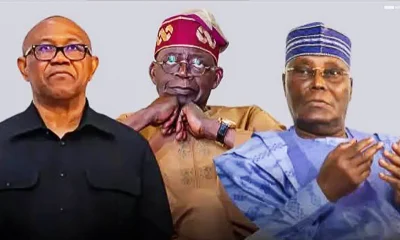
Beyond Sentiment: Why Obi, Kwankwaso must decide quickly

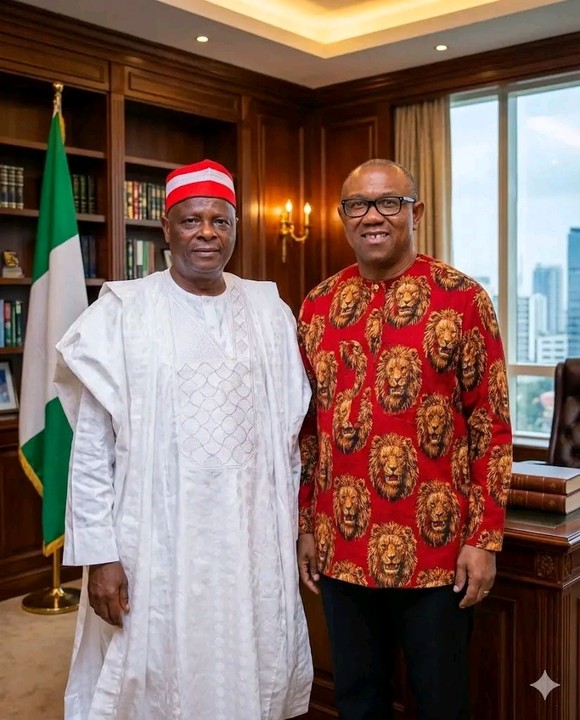
There is a familiar rhythm to Nigerian politics. Just when the dust of one election has barely settled, the elders return, the alliances are reimagined, and the chessboard is reset.
The reported moves by former President Olusegun Obasanjo to bring Peter Obi and Rabiu Musa Kwankwaso together ahead of 2027 fits neatly into this enduring pattern.
This is not mere gossip. It is power politics in its rawest, most Nigerian form.
Obasanjo’s reported intervention is significant, not because it is new, but because of what it signals.
Whenever Baba speaks, Nigeria listens, not always in agreement, but never in indifference.
From military rule to civilian transition, from installing leaders to distancing himself from them, Obasanjo has remained a recurring variable in the country’s political equation.
His renewed interest in opposition realignment suggests a growing concern that the current political architecture may not self-correct without deliberate engineering.
At the heart of the matter is a simple but uncomfortable truth: Nigeria’s opposition remains fragmented, and fragmentation is President Bola Tinubu’s greatest political insurance going into 2027.
Peter Obi and Rabiu Kwankwaso represent two powerful but incomplete political forces.
Obi commands moral capital, youth appeal, and an image of prudence that resonates deeply in a country exhausted by excess.
Kwankwaso, on the other hand, brings structure, grassroots machinery, and a fiercely loyal northern base cultivated over decades. Individually, they excite; together, they threaten.
That, at least, is the theory driving the current calculations.
Obasanjo’s reported persuasion of Kwankwaso to accept a vice-presidential role under Obi is politically instructive.
It acknowledges the current momentum around Obi while also conceding that momentum alone does not win elections in Nigeria.
Elections here are won by coalitions, geography, numbers, and negotiation. No candidate, no matter how popular online or on the streets, survives without these fundamentals.
Yet, this is where the arithmetic becomes complicated.
Former Vice President Atiku Abubakar remains a towering presence in opposition politics.
Love him or loathe him, Atiku understands party structures, delegates, and primaries better than most.
Any coalition platform, particularly within the ADC, that underestimates Atiku’s internal strength does so at its own peril.
Obi and Kwankwaso, acting separately, risk being outmaneuvered. Acting together, they may finally pose a credible internal challenge.
But Nigerian politics is not just about logic; it is about ego, history, and ambition.
Kwankwaso is not a small political player, and accepting a vice-presidential slot is not a minor concession.
It requires not just persuasion, but guarantees, of relevance, respect, and real power. Obi, for his part, must also confront the reality that moral authority does not automatically translate into political dominance within party structures. Compromise is not weakness; it is survival.
Obasanjo understands this terrain well. His interest in Obi’s political future is not accidental.
He recommended Obi to Atiku in 2019, and history is repeating itself, this time with higher stakes and a more fractured opposition landscape.
However, Nigerians must be careful not to romanticise this moment.
Opposition unity is not, by itself, a solution to Nigeria’s problems. Coalitions built solely to “remove” rather than to “replace with purpose” often collapse under the weight of governance.
Nigerians have seen this movie before. The question is not just who defeats Tinubu in 2027, but what replaces the current order if power changes hands.
Still, the urgency is undeniable.
Insecurity persists, economic hardship deepens, and public trust in institutions continues to erode.
These conditions create fertile ground for political reconfiguration. Obi–Kwankwaso, if properly negotiated and sincerely pursued, could represent more than electoral arithmetic; it could symbolise a generational and regional bridge long overdue in Nigerian politics.
Yet, time is the enemy.
Every delay, every ambiguity, every “we are consulting stakeholders” statement chips away at momentum.
Politics rewards decisiveness, not endless consultations. If this alliance is serious, it must move from whispers to structure, from speculation to strategy.
Obasanjo has thrown the stone into the water.
The ripples are visible. Whether they become waves capable of altering the political shoreline of 2027 depends on the courage of the actors involved, not the elders advising them.
In Nigerian politics, opportunity does not knock twice.
It announces itself once, quietly, before moving on.


 Follow Us on Google Discover




Opposition will front a single candidate against Tinubu, announcement will be made few days to election – Lukman

La Liga: Unstoppable Barcelona beat Real Betis 5-2 to extend winning run

EPL: Super Eagles star Iwobi fires Fulham to first league victory

Ogun hospital under fire as Nurse dies of asthma attack amid alleged oxygen failure

Maryam Babangida Center for Women Devt gets first wheel chair ramp after 34 years

Shettima inaugurates Arewa for Asiwaju campaign office in Abuja

2027: ‘APM will beat Tinubu in 12 battleground states’ – Makinde’s campaign team

Veteran Journalist, diplomat Dele Cole dies at 86

Suspended NSCDC commandant apologises over deaths of suspected illegal miners in Niger

EPL: Martinez rushed to hospital after head injury as Chelsea beat Everton

COAS arrives Borno as Military moves to clear terrorist camps, rescue abductees

Macky Sall quits race for UN Secretary-General position

Buhari backed Osinbajo’s presidential ambition four times, Akande tells Babachir Lawal

Dr. Benjamins‑Laniyi urges media to amplify women’s leadership, adopt gender‑sensitive reporting

Pope Leo XIV set to leave hospital after lung cancer surgery

Erisco Foods announces 13 job openings across Nigeria – Apply Now

2027: Step down if you are not working for Tinubu – Deji Adeyanju dares Obi, Kwankwaso

House Officers, Nurses, Radiographers, Others wanted as DELSUTH opens recruitment – Apply Now

Tinubu reappoints Bala Bila as INEC commissioner, nominates six others

Elon Musk unveils Tesla’s ‘flying’ car in stunning demonstration

2027: Kwankwaso a goat in sheep’s clothing, secretly working for Tinubu – Atiku Campaign Council

2027: Tinubu to miss rallies in over 20 States as APC releases campaign timetable

33 Governors cannot be wrong in supporting Tinubu – Bayo Onanuga

Atiku fully fit, ready to campaign in all 36 states, interact with Nigerians – ADC PCC

Security forces arrest five suspects over abduction of 20 NYSC members in Imo

Gunmen storm Plateau, kill traditional ruler at residence

Outrage as suspected cultists unveil renovated police post in Rivers

2027: ‘Atiku, Obi, Duke, Makinde are not threats to Tinubu’, says APC

2027: ‘Don’t trust your destiny to ‘kalokalo’ people’ – Wike warns Rivers voters against Atiku, Amaechi, Obi
