
Special Features
Christa Pike: Meet the American woman who survived execution after two doses of lethal injection

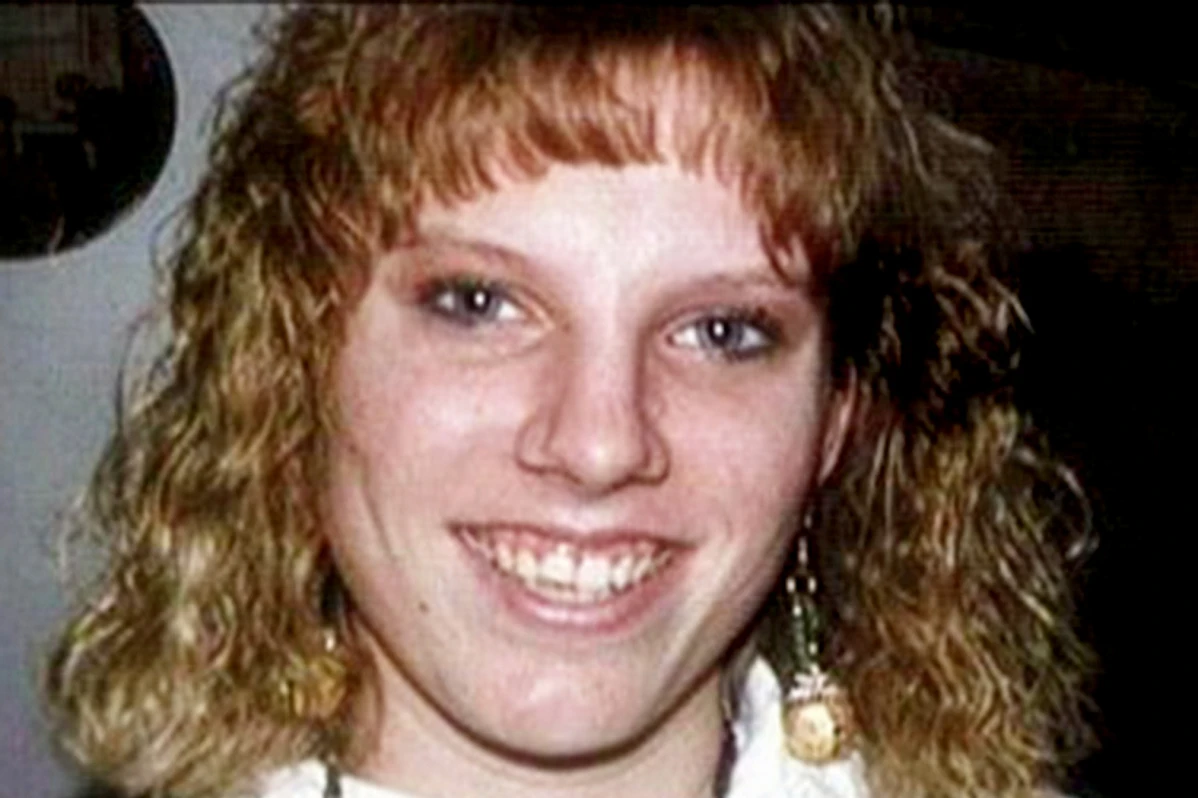
Christa Pike, an American woman sentenced to death for the 1995 murder of 19-year-old Colleen Slemmer, has survived an attempted execution in Tennessee after receiving two doses of the lethal injection drug.
Pike was strapped to a gurney on Wednesday night at the Riverbend Maximum Security Institution in Nashville, Tennessee, after a series of last-minute legal challenges delayed the execution.
However, the execution did not go as planned.
According to journalists who witnessed the procedure, Pike remained alive after receiving two doses of pentobarbital, a drug used by Tennessee for lethal injections.
Witnesses reported that she was breathing, talking, moaning and loudly snoring during the procedure.
Catherine Sweeney, a reporter with WPLN who witnessed the execution, described the incident as unlike anything she had previously seen.
Pike was later taken to an off-site medical facility, where her lawyers said she was receiving life-saving treatment and remained in critical condition.
Her attorney, Randy Spivey, subsequently called on Tennessee Governor Bill Lee to commute her death sentence, arguing that Pike had endured an ordeal worse than any other person subjected to the American death penalty.
What happened during the execution?
Pike’s execution was initially scheduled for Wednesday morning but was delayed following last-minute legal appeals.
According to WKRN journalist Tori Gessner, media witnesses entered the execution witness chamber at about 6:41 p.m.
The blinds separating the witnesses from the execution chamber were opened at 7:26 p.m., allowing witnesses to see Pike before she made her final statement.
At about 7:34 p.m., Pike reportedly complained that her arm felt as though it was about to burst.
Witnesses subsequently observed her talking, breathing, moaning and snoring.
The blinds were closed and reopened several times during the procedure, leaving witnesses with limited visibility of what was happening inside the execution chamber.
The witnesses were eventually escorted from the area at about 8:53 p.m., while Pike had not been declared dead.
Her legal team later said the execution team spent about an hour trying to establish an intravenous line and used at least seven needles in her left arm.
Spivey said he was deeply affected by what he witnessed.
Another member of Pike’s legal team, Stephen Ferrell, said her greatest fear had not been death itself but the possibility of experiencing a prolonged, painful and traumatic death.
State insists execution protocol was followed
The Tennessee Department of Correction said officials followed the state’s approved execution procedure throughout the attempted execution.
The department said Pike was transported to an off-site medical facility after the procedure.
Tennessee’s lethal injection protocol permits the use of pentobarbital as a single-drug method. The 44-page protocol outlines procedures for preparing and administering the drug, including provisions for a backup dose if an inmate is not initially declared dead.
However, the protocol does not specify what should happen if the backup dose also fails.
Pike’s lawyers have pointed to several possible problems, including difficulty accessing her veins, what they described as blown veins, concerns over the condition of the pentobarbital and the absence of emergency medical treatment during the execution.
Those claims have not been independently established, and the state has said it followed the approved procedure.
Governor orders review
Following the failed execution, Tennessee Governor Bill Lee announced that the state’s remaining execution scheduled for this year would be halted pending an independent review.
The review is expected to establish what happened during Pike’s execution attempt and whether there were problems with the state’s procedures.
Lee previously paused executions in Tennessee in 2022 after saying he had learned that proper procedures for testing lethal injection drugs had not been followed.
The latest incident has also renewed debate over the use of lethal injection in the United States.
Legal scholars and death penalty opponents have raised concerns about complications associated with lethal injection, while several US states have adopted or considered alternative execution methods, including nitrogen gas and the firing squad.
Austin Sarat, an Amherst College professor who has written extensively about capital punishment, said Pike’s case was highly unusual because executions generally proceed to death even when problems occur.
He noted that there is limited historical precedent for an inmate surviving an execution attempt.
One notable case occurred about 80 years ago, when Willie Francis survived an attempt to execute him in Louisiana’s electric chair before being executed on a second attempt.
Pike’s case, however, presents a different circumstance because she survived an attempted lethal injection in which the execution drugs were administered.
The incident has left questions over what happens next for Pike, who remains under a death sentence while authorities investigate the failed execution.


 Follow Us on Google Discover

2027: Ogun NNPP guber candidate withdraws suit challenging Yayi’s eligibility

Court remands man in Kuje prison over alleged impersonation of JAMB Registrar

FIFA rejects Argentina’s bid to retire Messi’s legendary No. 10 shirt

JUST IN: WAEC names Amos Dangut as new Registrar, CEO

Man City file appeal against Premier League verdict

Nollywood Actress Chioma Chukwuka-Akpotha loses father

Christa Pike: Meet the American woman who survived execution after two doses of lethal injection

BREAKING: Veteran Actor Olu Jacobs laid to rest in Lagos

Nigerians groan as transport fares remain high despite Tinubu’s October 1 promise

‘Muslims Don’t Own Nigeria’ — Oyedepo tackles those opposed to Christian President

‘Rescue my daughter, 18 others’ — Ibadan woman begs Tinubu, Police after NYSC abduction

Dangote Foundation offers Nigerian students free refinery shares

Zulum hosts five North-East governors for key regional meeting in Maiduguri

Hardship: Workers begin 3-day warning strike nationwide today

Taiwan boosts air defence with first F-16V fighter jets from US

Access Bank announces recruitment for 9 positions across Nigeria – Apply Now

First Bank announces recruitment for 14 positions across Nigeria – Apply Now

Nigeria@66: Full text of President Tinubu’s independence day speech

BREAKING: I will resign as FCT Minister if Tinubu loses Rivers, FCT in 2027 – Wike

Listen to Nnamdi Kanu, release El-Rufai, Sheikh Zaria — Atiku Tells Tinubu

Explain to Nigerians how you transferred N750bn to people without phones?’ — Atiku tackles APC Chairman

Saudi Arabia grants Nigeria additional 10,000 slots for 2027 Hajj

Nollywood mourns again as actor CJay Nwoks passes away

Hardship: Public sector workers begin three-day warning strike nationwide

66th Independence: Tinubu to address Nigerians Thursday at 7am
Hardship: Workers begin 3-day warning strike nationwide today

Atiku to Tinubu: Address Kanu’s grievances, release El-Rufai, Sheikh Zaria

‘If elected, I will make life more affordable’ – Atiku

Nigerian Navy, NDLEA nab three suspected drug traffickers, recover 80,000 litres of crude
