Editorials
Nigerians groan as transport fares remain high despite Tinubu’s October 1 promise
Checks across several states showed that commuters continued to pay existing fares, while some reported increases on certain routes…

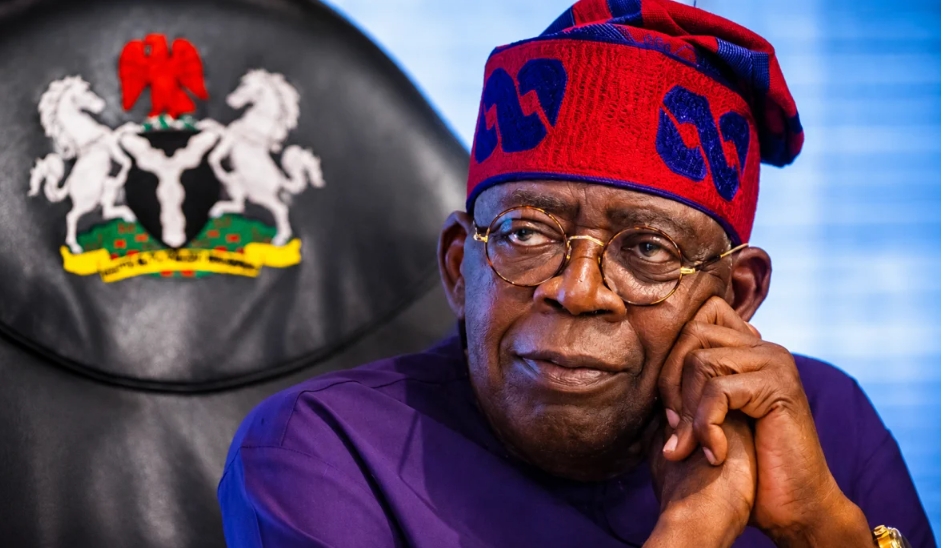
President Bola Tinubu’s directive for transportation fares to begin falling from October 1 through the deployment of Compressed Natural Gas (CNG)-powered and electric buses has yet to translate into widespread reductions across Nigeria.
Checks across several states showed that commuters continued to pay existing fares, while some reported increases on certain routes despite the Federal Government’s plan to use cheaper alternative fuels to reduce transportation costs.
While some state governments have introduced subsidised, free or reduced-fare CNG and electric transportation schemes, their limited coverage means that millions of commuters still depend on commercial buses whose operators continue to contend with high fuel, spare parts and maintenance costs.
Transport operators in several states also cited inadequate CNG infrastructure, including a shortage of refuelling stations and vehicle conversion centres, as obstacles to reducing fares.
States where fares were reported to have remained largely unchanged include Enugu, Anambra, Delta, Imo, Sokoto, Kebbi, Jigawa, Gombe, Edo, Plateau, Ondo, Osun, Oyo and Ogun.
Tinubu’s October 1 target
Tinubu had on September 19 urged state governments to ensure that savings from the use of cheaper CNG-powered transportation translated into lower fares for Nigerians from October 1.
The President made the call while providing an update on the National Affordable CNG Transit Programme, following a meeting with the 36 state governors on August 27.
He said the objective agreed with the governors was to ensure that more Nigerians experienced measurable reductions in transportation costs from October 1.
“I encourage every state to maintain the momentum towards October 1. Work with transport unions and commercial operators. Support conversion and fleet deployment.
“Facilitate the infrastructure required. Above all, ensure that savings from cheaper energy reach Nigerian citizens through lower fares,” Tinubu said.
The President also said some states had already begun recording reductions through CNG-powered and electric buses.
Federal Government says rollout has started
Chairman of the Presidential Initiative on Compressed Natural Gas and Electric Vehicles, Ismaeel Ahmed, said several states, including Borno, Kaduna, Zamfara and Ebonyi, had begun reducing transport fares through the deployment of CNG and electric vehicles.
Ahmed, however, clarified that October 1 was not a deadline for every state to implement fare reductions simultaneously.
According to him, the date marked the beginning of Federal Government monitoring of fare reductions on routes where CNG and electric vehicles were being deployed.
“The 1st of October is not a day that everything would happen at the same time,” Ahmed said.
He explained that fare reductions had already started on some routes and that the Federal Government would continue to monitor the implementation.
Ahmed cited Abuja, where he said CNG buses had operated on high-traffic routes for several years, as an example of an area where commuters had benefited from lower fares.
He also disclosed that 20 CNG buses had been donated to the Lagos Metropolitan Area Transport Authority (LAMATA) for deployment on routes within Lagos and towards Ibadan.
According to him, Kaduna had recorded significant fare reductions through the use of CNG buses, while Zamfara had launched 100 electric taxis.
In Ebonyi, Ahmed said the government was providing free transportation for civil servants and students.
He also cited Borno State, where electric vehicles were reportedly providing transportation at fares substantially below those charged by conventional commercial vehicles.
Ahmed acknowledged that the programme had not yet reached every part of the country but said the Federal Government intended to expand the initiative.
Anambra
In Anambra State, transport fares remained unchanged on October 1.
Commuters paid about N700 from Upper Iweka to Oba, while the fare from Awka to Onitsha remained around N2,000.
Some drivers said they were unaware of the Federal Government’s CNG buses, while inadequate gas infrastructure was also cited as a challenge.
A commercial transport operator, Uche Daniel, attributed the difficulty in reducing fares to the high cost of spare parts and poor roads.
He also cited the closure of the First Niger Bridge, saying motorists were being forced to use longer and poorly maintained alternative routes.
Delta and Imo
In Delta State, transport operators said fares had not been reduced.
Checks at the Commissioner for Transport’s lodge in Asaba reportedly found only five CNG-branded buses parked there.
Chairman of the NURTW Summit Motor Park, Asaba, Emeka Okoro, said the union had not received CNG buses.
“They have not given us any buses, and we have not reduced transport fare. We cannot reduce transport fare when the cost of buying fuel is still high,” he said.
A similar situation was reported in Imo State, where commercial transporters said they had not received Federal Government CNG buses.
A driver said passengers were paying about N4,500 from Owerri to Akokwa and as much as N9,000 from Owerri to Awka.
“The CNG bus is not in Imo, and we have not seen anyone,” he said, urging the Federal Government to focus on reducing the pump price of petrol.
Another operator said the dominance of privately owned buses in the state also needed to be considered in the implementation of the programme.
Sokoto, Kebbi and Jigawa
Transport fares also remained unchanged in Sokoto and Kebbi states.
At the Central Motor Park in Sokoto, passengers travelling to Kebbi continued to pay between N5,000 and N6,000, while journeys to Kano and Kaduna cost about N20,000 on commercial vehicles.
In Kebbi, the fare to Sokoto remained around N5,000 on commercial buses, although state-owned vehicles charged about N3,500 on the same route.
In Jigawa State, commuters in Dutse also reported no reduction in fares.
A passenger travelling to Kano, Isa Hamisu, said he paid N3,500 on October 1, the same amount he had paid the previous week.
“I don’t know which one is a CNG bus,” he said.
Another commuter, Abba Garba, said the fare from Dutse to Hadejia remained N5,000.
However, Jigawa State Chairman of the National Association of Road Transport Owners, Bello Usman Dunaro, said about 100 vehicles belonging to the union had been converted to CNG under the government initiative.
He said the objective was to reduce fares but added that the process was still ongoing.
Gombe and Edo
In Gombe State, commuters reported that fares had also remained unchanged on routes operated by both private companies and the state transport service.
A passenger, Naomi Sambo, said she expected the Federal Government’s intervention to translate into cheaper fares.
“Transportation to Abuja is still as it has been. I came to pick a bus expecting to see changes. What they said is in the papers,” she said.
The Managing Director of the Gombe State Transport Service, Dr Sani Sabo, said the agency was exploring ways to prevent further increases and was working towards converting some buses to CNG.
In Edo State, short-distance journeys in Benin remained between N200 and N300, while longer trips cost between N500 and N600.
Even some vehicles already converted to CNG had reportedly not reduced their fares.
A transport union official attributed the situation to the high cost of spare parts and inadequate gas infrastructure, saying some operators had to wait for hours or days to refill their vehicles.
The Edo State Government, however, announced plans to launch 50 52-seater CNG buses later in October.
Enugu and Kaduna
In Enugu State, government-owned CNG buses were already operating, but their limited routes and operating hours restricted their impact.
The government buses charge a flat fare of N300, compared with about N600 for a regular commercial bus on a route such as Emene to Old Park.
The CNG buses, however, mainly operate on major routes during morning and evening periods, leaving commuters with commercial vehicles as an alternative outside those periods.
An official of the Road Transport Employers Association of Nigeria said the union had not received information about the lower fares promised under the Federal Government initiative.
Kaduna, on the other hand, has recorded wider use of CNG-powered buses.
The state government operates a free CNG-powered mass transit scheme on selected routes. It has deployed 100 buses across eight routes and about 200 bus stops.
The state government said the buses carried approximately 3.2 million passengers during their first year of operation, saving commuters more than N3.5bn in transport costs.
However, commercial fares outside the CNG network remain higher, meaning commuters who cannot access the designated routes continue to pay conventional fares.
Plateau and Ondo
In Plateau State, transport fares in Jos remained largely unchanged despite the October 1 target.
CNG buses were not yet operating in the state, while government-owned metro buses charged N200.
A resident, Moses Gyang, said he paid N1,000 from Bukuru to Terminus, the same fare he paid before October 1.
The state Commissioner for Transport, Davou Jatau, said Plateau had already been subsidising transportation, with government-supported buses carrying about 13,000 commuters daily for N200.
He said the state was also working with the National Institute of Transport Technology in Zaria to establish a CNG and hybrid vehicle conversion centre in Jos.
According to him, the absence of a refuelling station remained one of the challenges to the state’s CNG rollout.
In Ondo State, commercial transport fares also remained unchanged, with no CNG buses reportedly operating across the state.
The state government said it was working on CNG conversion centres and additional gas outlets.
Osun, Oyo and Ogun
In Osun State, intra-city and interstate fares remained unchanged.
The state Commissioner for Information and Public Enlightenment, Kolapo Alimi, said Osun was still awaiting CNG buses promised by the Federal Government.
He also cited the state’s financial constraints as a limitation on its ability to immediately introduce subsidised transportation.
In Oyo State, fares on major routes in Ibadan also remained at levels introduced following previous increases in petrol prices.
For instance, the fare from Ojoo to Mokola remained around N600, while Ojoo to Iwo Road cost between N400 and N500.
A trader, Bisi Ogunade, said commuters were yet to experience any reduction.
“President Bola Tinubu said October 1, and today is that day. Let’s wait and see from this weekend whether the president was lying or not. But today, I boarded it at the same price,” she said.
Ogun State similarly recorded no immediate reduction.
A journey from Kuto to Ijebu Ode remained around N3,500, while Kuto to Ita Oshin cost between N600 and N700. The fare from Kuto to Sagamu was N2,000 or more.
A commercial driver attributed the situation to high fuel prices, maintenance costs and other operating expenses.
The state government, however, said it would announce additional measures to respond to the Federal Government’s directive.
Mixed picture across the country
The findings indicate that the implementation of the CNG transportation initiative varies significantly from state to state.
While states such as Kaduna have established relatively extensive subsidised or free CNG transport networks, other states are still awaiting buses, conversion facilities or refuelling infrastructure.
The Federal Government maintains that October 1 marked the beginning of a nationwide monitoring process rather than a requirement for all states to introduce fare reductions simultaneously.
For millions of commuters who continue to rely on commercial transport, however, the immediate impact remains limited, with fares on several major routes largely unchanged despite the government’s target of reducing transportation costs through cheaper alternative fuels.


 Follow Us on Google Discover






2027: Ogun NNPP guber candidate withdraws suit challenging Yayi’s eligibility

Court remands man in Kuje prison over alleged impersonation of JAMB Registrar

FIFA rejects Argentina’s bid to retire Messi’s legendary No. 10 shirt

JUST IN: WAEC names Amos Dangut as new Registrar, CEO

Man City file appeal against Premier League verdict

Nollywood Actress Chioma Chukwuka-Akpotha loses father

Christa Pike: Meet the American woman who survived execution after two doses of lethal injection

BREAKING: Veteran Actor Olu Jacobs laid to rest in Lagos

Nigerians groan as transport fares remain high despite Tinubu’s October 1 promise

‘Muslims Don’t Own Nigeria’ — Oyedepo tackles those opposed to Christian President

‘Rescue my daughter, 18 others’ — Ibadan woman begs Tinubu, Police after NYSC abduction

Dangote Foundation offers Nigerian students free refinery shares

Zulum hosts five North-East governors for key regional meeting in Maiduguri

Hardship: Workers begin 3-day warning strike nationwide today

Taiwan boosts air defence with first F-16V fighter jets from US

Access Bank announces recruitment for 9 positions across Nigeria – Apply Now

First Bank announces recruitment for 14 positions across Nigeria – Apply Now

Nigeria@66: Full text of President Tinubu’s independence day speech

BREAKING: I will resign as FCT Minister if Tinubu loses Rivers, FCT in 2027 – Wike

Listen to Nnamdi Kanu, release El-Rufai, Sheikh Zaria — Atiku Tells Tinubu

Explain to Nigerians how you transferred N750bn to people without phones?’ — Atiku tackles APC Chairman

Saudi Arabia grants Nigeria additional 10,000 slots for 2027 Hajj

Nollywood mourns again as actor CJay Nwoks passes away

66th Independence: Tinubu to address Nigerians Thursday at 7am

Hardship: Public sector workers begin three-day warning strike nationwide
Hardship: Workers begin 3-day warning strike nationwide today

Atiku to Tinubu: Address Kanu’s grievances, release El-Rufai, Sheikh Zaria

‘If elected, I will make life more affordable’ – Atiku

Nigerian Navy, NDLEA nab three suspected drug traffickers, recover 80,000 litres of crude
