Politics
G100: Atiku, Obi, six opposition parties to meet In Abuja over 2027 cooperation to defeat Tinubu

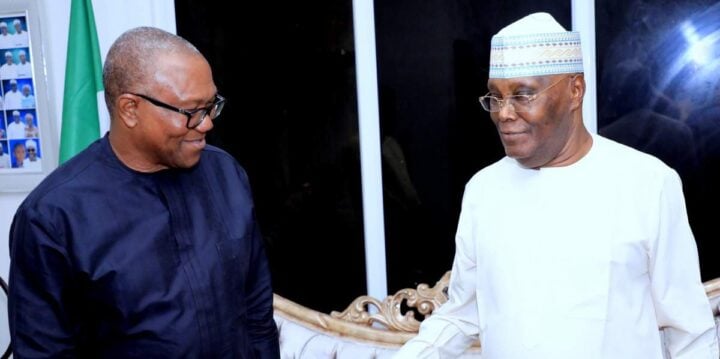
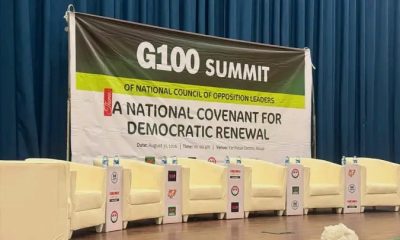
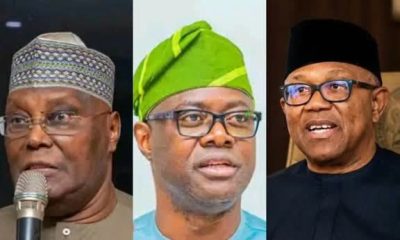
Former Vice President Atiku Abubakar and former Anambra State Governor Peter Obi are among opposition leaders expected to attend the First Summit of Nigeria’s Opposition Political Parties scheduled to hold in Abuja on Monday, August 31, 2026.
The summit, convened by the G100, will take place at the Yar’Adua Centre and is themed, “A Framework for Opposition Cooperation and Coordination.”
The meeting is expected to bring together leaders of six major opposition parties to begin structured discussions on possible cooperation ahead of the 2027 general election.
The parties are the African Democratic Congress (ADC), Allied Peoples Movement (APM), Nigeria Democratic Congress (NDC), Peoples Democratic Party (PDP), Peoples Redemption Party (PRP) and Social Democratic Party (SDP).
In a statement signed by G100 Convener, Salihu Moh. Lukman, the group said the summit would not be used to determine a presidential candidate or settle all questions surrounding an opposition alliance in one sitting.
Rather, it would establish a formal framework for transparent negotiations among the participating parties.
“The first question before party leaders is not who leads the ticket. It is what we are, together, prepared to do for this country,” Lukman said.
The summit follows the publication by the G100 on August 2, 2026, of the Doctrine of a Necessary Democratic Opposition, as well as weeks of consultations with the six political parties.
According to Lukman, the consultations produced a shared briefing document outlining areas of agreement while recognising the different histories, interests and structures of the participating parties.
“At the centre of the consultations was a common recognition of the need for a credible, organised and competitive democratic opposition, and a willingness to engage the difficult questions that meaningful cooperation ahead of 2027 will require,” he said.
Proposed Working Groups
One of the proposals to be considered at the summit is the establishment of five specialised Working Groups to drive the negotiation process.
If approved by the participating parties, the groups will have four weeks to develop the major documents and agreements required to establish an institutional framework for opposition cooperation.
The G100 stressed that cooperation among the parties would not necessarily require any of them to dissolve or merge into another political platform.
“Cooperation does not require any party to disappear into another. The first question before party leaders is not who leads the ticket. It is what we are, together, prepared to do for this country,” the statement said.
The group said the immediate objective of the summit was to create an architecture through which issues surrounding opposition cooperation could be negotiated collectively, transparently and in good faith.
“The First Summit is not intended to determine, in a single sitting, questions of presidential candidacy or the final form that opposition cooperation may take,” it said.
“Its immediate purpose is more fundamental, to establish and authorise a formal architecture through which those questions can be negotiated collectively, transparently and in good faith.”
Each participating party is expected to attend with a delegation comprising members of its National Working Committee (NWC) and representatives of other relevant constituencies.
The G100 said the arrangement was intended to ensure that the negotiations extend beyond the principal party leaders and incorporate wider political experience and perspectives.
Who Will Attend?
Expected participants include national chairmen and NWC members of the ADC, APM, NDC, PDP, PRP and SDP.
Presidential candidates and running mates of the participating parties are also expected to attend, alongside G100 signatories and members of the Minority Caucus of the House of Representatives.
The summit comes amid growing political activity among opposition figures as parties and political actors position themselves for the 2027 presidential election.
Atiku and Obi are among the prominent opposition figures whose political movements have attracted significant attention as discussions around possible opposition cooperation continue.
The G100 said it was acting strictly as a facilitator and observer of the process and would not assume the constitutional responsibilities of the participating political parties.
“The decisions arising from this process will remain the responsibility of the parties themselves,” the group said.


 Follow Us on Google Discover





INEC sets October 24 deadline for parties to challenge missing 2027 candidates

Viking stun Bayern Munich with thrilling 3-3 draw in Champions League

Arsenal hit Lille for three in seven minutes to maintain perfect Champions League start

Lookman scores as Atletico Madrid beat Manchester United 2-0 in Champions League

Super Falcons Thrash Comoros 5-0, advance to Third Round of Olympic qualifiers

Pope Leo XIV undergoes successful lung surgery at Rome hospital

Shell exits Nigeria gas distribution business in deal with Vaaris Energy

Tinubu seeks Senate’s approval of five bills on drug enforcement, safety, others

Osimhen, Lookman face Champions League tests against Barcelona, Man United

Digital Postcode: How to check your address, correct errors online

Reps back PINL contract renewal, seek dismissal of petition over lack of evidence

Ogun State: List of LGAs, population, land mass, government, other key facts

NAFDAC busts fake alcoholic, energy drinks factory in Lagos, arrests two suspects

Ekiti State: List of LGAs, population, land mass, government, other key facts

2027 Grammy awards: Davido submits ‘Oriade’ album, multiple entries

Dangote Group opens 86 vacancies in Engineering, Finance, Logistics, HR, other fields

ECOWAS Bank opens applications for 2026 Young Professionals Programme

BREAKING: Police arrest former Imo governor Rochas Okorocha in Abuja

BREAKING: APC revises Tinubu Campaign Council, names Wike, Adeleke, Soludo as FCT, Rivers, Osun, Anambra coordinators (Full List)

Christopher University announces staff recruitment for academic, administrative positions

Obafemi Awolowo University (OAU) opens 51 non-academic job vacancies in healthcare, other sectors – Apply Now

Names of 68 lawyers elevated to SAN rank (Full list)

2027: Economic hardship, appointments threaten Tinubu’s support in Northern Nigeria

Ex-Akwa Ibom University SUG President dies at Enugu NYSC camp

INEC disowns fake notice on six states as parties seek candidates’ inclusion

JUST IN: Segun Ogunwuyi steps down as Makinde’s chief of staff

BREAKING: Makinde appoints Wolekanle as new Chief of Staff

Real reason INEC excluded Adebutu, Pantami, others from final governorship candidates’ list

Ayra Starr makes African history, headlines NFL international game halftime show in London
