Editorials
INEC’s Revalidation Gamble: Reform or road to disenfranchisement?

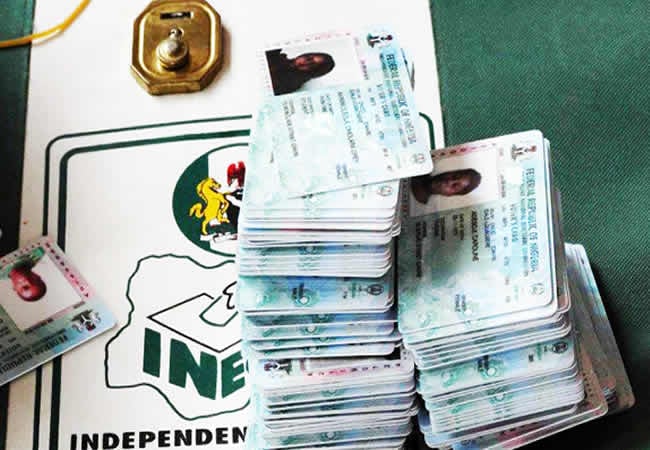
At a time when Nigeria should be steadily rebuilding confidence in its electoral process, the recent controversy surrounding the proposed voter revalidation exercise by the Independent National Electoral Commission has once again exposed the fragile state of public trust in democratic institutions.
The idea, in principle, is neither novel nor misplaced.
A credible voters’ register remains the backbone of any functional democracy, and the need to eliminate ineligible entries, including deceased persons, multiple registrations, and underage voters, cannot be contested.
INEC’s stated objective to sanitise the register ahead of future elections is therefore understandable and, indeed, necessary.
However, governance is not judged by intention alone. It is measured by timing, execution, and, most critically, public perception.
The proposed exercise, initially scheduled to run from mid-April to late May 2026, arrived at a politically sensitive moment, less than a year to the next general election cycle.
In a country where electoral processes are already viewed with scepticism, such a move was always going to attract scrutiny.
That it drew immediate resistance from major stakeholders, including the African Democratic Congress, the Peoples Democratic Party, the Obidient Movement, and several civil society organisations, underscores the depth of concern it generated.
Critics have not necessarily questioned INEC’s legal authority to undertake the exercise. Rather, their apprehension lies in its feasibility and potential consequences.
Across Nigeria’s vast rural landscape, where access to information, digital infrastructure, and even basic amenities remains inconsistent, the expectation that millions of citizens would seamlessly participate in a revalidation process appears optimistic at best.
For many, daily survival takes precedence over administrative compliance, and any policy that fails to account for this reality risks excluding those it ought to protect.
Beyond the question of access lies the more enduring issue of trust. Nigeria’s electoral history has been shaped as much by perception as by process.
The gap between registered voters and actual turnout in recent elections is not merely a statistical anomaly; it is a reflection of widespread doubt about the system’s fairness.
In such an environment, even well-intentioned reforms can be interpreted through a lens of suspicion.
This is the dilemma INEC now faces.
Voices from across the political and civic spectrum have warned that, rather than strengthening the integrity of the electoral register, the exercise could inadvertently suppress participation.
Concerns have also been raised about the commission’s logistical capacity to execute a nationwide operation of this scale within such a limited timeframe.
Nigeria’s electoral challenges have historically been less about policy design and more about implementation, and there is little evidence to suggest that this reality has fundamentally changed.
Even more troubling is the perception, strongly held in some quarters, that the exercise could be weaponised, intentionally or otherwise, to the disadvantage of certain segments of the electorate.
Whether or not such fears are justified, their mere existence speaks to a deeper institutional problem.
In a democracy, legitimacy is not derived solely from constitutional backing; it is earned through transparency, inclusivity, and consistency.
The decision by INEC to suspend preparations for the exercise, pending further consultations, may therefore be seen as both prudent and necessary.
It suggests a willingness to listen, but it also raises an important question: why was such a consequential policy introduced without broader stakeholder engagement from the outset?
Electoral reforms, particularly those with far-reaching implications, demand careful sequencing and consensus-building.
They must be introduced early, communicated clearly, and implemented gradually. Anything less risks undermining the very credibility they seek to enhance.
As Nigeria inches closer to another electoral cycle, the priority must remain clear, not just to improve the system, but to restore faith in it.
Policies that appear hurried, poorly timed, or insufficiently inclusive will only deepen existing doubts and further alienate voters.
Ultimately, the success of any electoral reform lies not in its technical soundness, but in the confidence it inspires among the people.
For INEC, the challenge is not merely to clean the register, but to convince Nigerians that the process is fair, transparent, and genuinely in their interest.
Until that confidence is secured, even the most well-intentioned reforms will struggle to achieve their purpose.


 Follow Us on Google Discover






2027: Kwankwaso a goat in sheep’s clothing, secretly working for Tinubu – Atiku Campaign Council

DSS arrests Maina’s fugitive son in Abuja, hands him over to EFCC

2027: Step down if you are not working for Tinubu – Deji Adeyanju dares Obi, Kwankwaso

2027: ‘I wont join my Uncle to support Tinubu’ – Davido says

Enugu NYSC death: NAFDAC debunks claims linking corps members death to fake drugs

33 Governors cannot be wrong in supporting Tinubu – Bayo Onanuga

Security forces arrest five suspects over abduction of 20 NYSC members in Imo

Rugby star Hyron Andrews dies at 31 after accidental fall in South Africa

LAUTECH Resident Doctors halt 50-day strike as Makinde intervenes

House Officers, Nurses, Radiographers, Others wanted as DELSUTH opens recruitment – Apply Now

FG raises health fund allocation to N40.76bn, extends insurance to prison inmates

Erisco Foods announces 13 job openings across Nigeria – Apply Now

Tinubu reappoints Bala Bila as INEC commissioner, nominates six others

2027: ‘Don’t trust your destiny to ‘kalokalo’ people’ – Wike warns Rivers voters against Atiku, Amaechi, Obi

BREAKING: Cross River PDP Chairman Venatius Ikem resigns, cites leadership crisis
Erisco Foods announces 13 job openings across Nigeria – Apply Now

2027: Atiku, Obi, Makinde, Adebayo, Duke hold talks with six opposition parties
‘You Betrayed Osun People’ — Adeleke, Davido face backlash over support for Tinubu

Ex-Senator Bello Mandiya’s body found in Abuja home three days after he slipped, hit his head in the bathroom
Tinubu reappoints Bala Bila as INEC commissioner, nominates six others

JUST IN: Finnish Appeal Court reduces Simon Ekpa’s jail term to four years, upholds terrorism conviction

Zamfara govt set to empower 36,176 residents with Dangote shares

Over 10 soldiers, four civilians feared dead as Boko Haram terrorists attack Borno military base

‘I love Islam, I’ve sent people to Mecca to pray for me, Nigeria for 25 years’ – Akpabio

Umahi reopens first Niger bridge after emergency repairs, displays Tinubu’s photos

Lagos govt announces 3-day traffic diversion on Independence bridge for emergency repairs

Elon Musk unveils Tesla’s ‘flying’ car in stunning demonstration

Panic in Rivers community as pipeline explosion injures 20, razes over 50 houses

Tension escalates as thugs attack NDC secretariat in Edo, destroy properties
