Editorials
Malami, El-Rufai and the optics of justice in Nigeria

There are moments in Nigeria when events stop being just news, and start raising deeper questions.
What happened in Abuja this week is one of those moments.
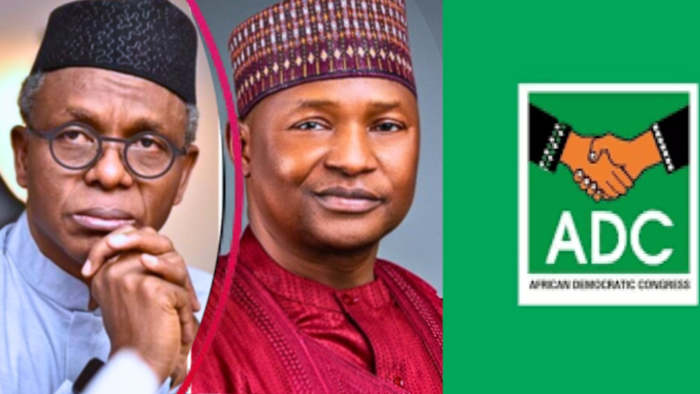
Operatives of the Economic and Financial Crimes Commission stormed and marked properties belonging to former Attorney General of the Federation, Abubakar Malami.
At the same time, the Independent Corrupt Practices and Other Related Offences Commission is moving to arraign former Kaduna governor, Nasir El-Rufai, over alleged financial misconduct.
On the surface, it looks like accountability.
But in Nigeria, things are rarely that simple.
When Justice Becomes a Public Spectacle
Videos and reports from Maitama showed a dramatic scene.
Armed officials.
Marked buildings.
A former Attorney General demanding to see a valid court order.
“Is this how it is done?” Malami asked.
That question matters.
Because beyond guilt or innocence, Nigerians are watching how justice is being carried out, not just who is being targeted.
There is a difference between enforcing the law and staging it.
And too often, the line looks blurred.
The Familiar Nigerian Suspicion
Let’s be honest.
Many Nigerians no longer react to corruption cases with shock.
They react with suspicion.
Why now?
Why this person?
Who is next?
And who is untouchable?
These are the real questions people ask in buses, in offices, in barber shops.
Because history has taught Nigerians something uncomfortable:
Justice in Nigeria sometimes appears selective.
Rule of Law or Rule of Power?
Malami insists the court order used against him had expired.
Lawyers have also weighed in, saying an expired order cannot be enforced unless renewed.
If that is true, then this is not just about corruption anymore.
It becomes about process.
About legality.
About whether institutions are playing by the rules.
Because once due process is ignored, even against the powerful, it sends a dangerous message:
That power can bend the law.
El-Rufai and the Long Road to the Dock
Then there is the case of Nasir El-Rufai.
After weeks in custody, public pressure, and multiple agency involvement, he is finally set to be arraigned.
Again, the question is not just about the allegations.
It is about timing.
Why does it often take public outcry before due process is followed?
Why do high-profile cases in Nigeria move in fits and starts?
To many Nigerians, it feels less like a system — and more like a struggle between forces behind the scenes.
Nobody Is Above the Law — But the Law Must Be Above Everyone
Let’s be clear.
If anyone, no matter how highly placed, has questions to answer, they should answer them.
No one is above the law.
But the law itself must also remain above politics, above pressure, and above personal interests.
Because when institutions lose neutrality, the fight against corruption loses credibility.
And once credibility is gone, even genuine cases begin to look like vendettas.
The Real Danger
The real danger here is not just what happens to Malami or El-Rufai.
It is what Nigerians begin to believe.
If people start to see anti-corruption agencies as tools rather than institutions, something deeper breaks.
Trust.
And in a country already struggling with trust in leadership, that is a risk Nigeria cannot afford.
Final Word
This moment should not just be about sealing houses or filing charges.
It should be about proving something to Nigerians:
That justice in this country still has integrity.
That due process still matters.
That institutions are stronger than individuals.
Because at the end of the day, Nigerians are not just watching who is being investigated.
They are watching how it is being done.
And from that, they are drawing their own conclusions.


 Follow Us on Google Discover







2027: Kwankwaso a goat in sheep’s clothing, secretly working for Tinubu – Atiku Campaign Council

DSS arrests Maina’s fugitive son in Abuja, hands him over to EFCC

2027: Step down if you are not working for Tinubu – Deji Adeyanju dares Obi, Kwankwaso

2027: ‘I wont join my Uncle to support Tinubu’ – Davido says

Enugu NYSC death: NAFDAC debunks claims linking corps members death to fake drugs

33 Governors cannot be wrong in supporting Tinubu – Bayo Onanuga

Security forces arrest five suspects over abduction of 20 NYSC members in Imo

Rugby star Hyron Andrews dies at 31 after accidental fall in South Africa

LAUTECH Resident Doctors halt 50-day strike as Makinde intervenes

House Officers, Nurses, Radiographers, Others wanted as DELSUTH opens recruitment – Apply Now

FG raises health fund allocation to N40.76bn, extends insurance to prison inmates

Erisco Foods announces 13 job openings across Nigeria – Apply Now

Tinubu reappoints Bala Bila as INEC commissioner, nominates six others

2027: ‘Don’t trust your destiny to ‘kalokalo’ people’ – Wike warns Rivers voters against Atiku, Amaechi, Obi

BREAKING: Cross River PDP Chairman Venatius Ikem resigns, cites leadership crisis
Erisco Foods announces 13 job openings across Nigeria – Apply Now

2027: Atiku, Obi, Makinde, Adebayo, Duke hold talks with six opposition parties
‘You Betrayed Osun People’ — Adeleke, Davido face backlash over support for Tinubu

Ex-Senator Bello Mandiya’s body found in Abuja home three days after he slipped, hit his head in the bathroom
Tinubu reappoints Bala Bila as INEC commissioner, nominates six others

JUST IN: Finnish Appeal Court reduces Simon Ekpa’s jail term to four years, upholds terrorism conviction

‘I love Islam, I’ve sent people to Mecca to pray for me, Nigeria for 25 years’ – Akpabio

Zamfara govt set to empower 36,176 residents with Dangote shares

Over 10 soldiers, four civilians feared dead as Boko Haram terrorists attack Borno military base

Umahi reopens first Niger bridge after emergency repairs, displays Tinubu’s photos

Lagos govt announces 3-day traffic diversion on Independence bridge for emergency repairs

Panic in Rivers community as pipeline explosion injures 20, razes over 50 houses

Tension escalates as thugs attack NDC secretariat in Edo, destroy properties

‘Local champion’ – Donald Duke takes fresh swipe at Gov Diri over Lagos-Calabar coastal highway
