
Editorials
Inside state police bill: Governors to appoint police commissioners, FG to fund operations

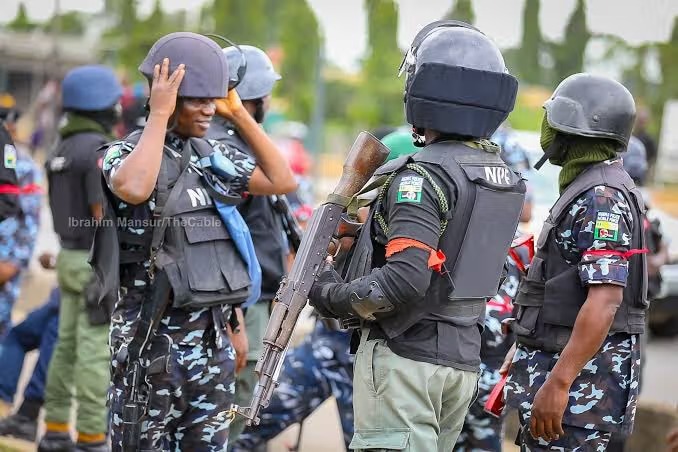
The House of Representatives on Thursday passed a landmark constitutional amendment bill seeking to establish state police across Nigeria, in what is seen as one of the most significant restructuring moves in the country’s internal security framework in recent years.
The bill, which proposes wide-ranging amendments to the 1999 Constitution, sets out a legal and institutional framework for the creation, funding, regulation and operation of state police services, while retaining the federal police as a national security institution.
Lawmakers say the proposal is aimed at addressing Nigeria’s worsening security challenges, especially the rising wave of kidnappings, banditry and violent crimes that have stretched federal policing capacity.
Under the proposed arrangement, governors will have the authority to appoint commissioners of police for their respective states, subject to recommendations from a National Police Council and confirmation by state assemblies. Each state will also establish a State Police Service Commission to oversee recruitment, discipline and administration.
However, the bill makes it clear that state police cannot be created arbitrarily. The National Assembly will prescribe minimum standards for structure, training, operations and accountability, and only states that meet these benchmarks will be allowed to operationalise their police services.
This means state governments will not have unrestricted powers, as all state police formations must comply with national standards to ensure uniformity across the federation.
The bill also retains the federal police, which will continue to operate nationwide and carry out federal policing responsibilities. The federal force may also intervene in states under limited conditions, such as a breakdown of law and order or at the request of a governor, but such intervention must receive approval from the National Police Council.
One of the most consequential provisions is the restriction on federal interference in state policing. Under the amendment, federal authorities will no longer have routine control over state police operations, deployments or disciplinary matters, except in constitutionally defined emergencies.
Governors are also empowered to issue lawful directives to state police commissioners. However, where such directives are considered unlawful or inconsistent with policing standards, commissioners may escalate the matter to the National Police Council, whose decision will be final.
At the federal level, the President will continue to appoint the Inspector-General of Police (IGP), subject to advice from the National Police Council and confirmation by the National Assembly. The IGP will remain the head of the federal police structure and oversee national deployments.
To prevent arbitrary removal of top police officials, the bill introduces stricter safeguards. The IGP can only be removed on specified grounds such as misconduct, criminal conviction or incapacity, and only with approval from the National Assembly. Similar protections apply to state commissioners of police, who can only be removed through a structured process involving state assemblies.
The amendment also introduces federal grants for state police, allowing the central government to provide financial support to states that may struggle with funding, subject to approval by the National Assembly.
In a bid to strengthen oversight, the bill replaces the existing Nigeria Police Council with an expanded National Police Council, which will include representatives from the federal police, state attorneys-general, human rights bodies, professional associations such as the NBA and NUJ, labour unions, traditional rulers and retired police officers.
A parallel structure, the State Police Service Commission, will also be created in each state, involving civil society actors and professional bodies in recruitment and disciplinary processes for lower-ranking officers.
The bill further allows states limited access to modern policing tools, including biometric data, forensic records and criminal intelligence systems, while maintaining federal coordination over national security databases.
Lawmakers say the reform seeks to strike a balance between decentralised policing and national unity, ensuring that while states gain more control over internal security, the federal government retains oversight over standards and coordination.
The bill now moves to the Senate for concurrence before it can proceed to state assemblies for approval, as required for constitutional amendments.
If eventually adopted, the reform would mark a major shift in Nigeria’s security architecture, creating a dual policing system that could redefine how law enforcement operates across the federation.


 Follow Us on Google Discover








BREAKING: ‘I have nothing to hide, release my academic records’ – Peter Obi tells UNN

Shettima returns to Nigeria after BRICS summit in India

2027: Big battle for Wike as APC Govs move against Rainbow Coalition, parallel structures capable of undermining Tinubu, APC candidates

2027: Support Tinubu as he supported Buhari, Yari urges Northerners

2027: ‘Tinubu will win, Atiku second, Obi third’ – Afegbua

FG signs N729bn bond to offset power sector debts

LASUTH Resident Doctors embark on indefinite strike over unpaid allowances

Show proof I left Anambra with debts, I’ll stop my 2027 campaign – Obi dares Soludo

‘I Don’t Want to Be Called Africa’s Richest Man Again’ — Dangote

600 Northern Lecturers who attended Tinubu endorsement show must be bared 2027 election duties – ADC warns INEC

BBNaija S11: Barry wins HoH title, becomes first finalist

Ondo students set 14-day deadline for Aiyedatiwa over ASUU strike

Nigeria, India target $15bn trade as Modi pushes for more crude imports

2027: Oba of Lagos backs Tinubu, says ‘ no vacancy in Aso Rock’

2027: NDC says Nigerians can fund party with contributions as low as N1,500

International Breweries Recruitment: 5 Job vacancies across Nigeria (How to Apply)

Food and Agriculture Organization Of the United Nations (FAO-UN) announces 4 recruitment vacancies across Nigeria (How to Apply)

2027 Elections: INEC publishes final list of 1,195 Senate, 3,213 Reps candidates (Full List)

2027: Over 600 Northern Lecturers endorse Tinubu’s re-election bid

15 feared killed as gunmen strike Plateau communities
2027: NDC says Nigerians can fund party with contributions as low as N1,500

Average Nigerian can survive on N3,000 daily, says Reno Omokri

Yamal double fires Barcelona to 4-2 victory over Levante

Hon. Desmond Elliot kneels down, begs Gbajabiamila for forgiveness

Haaland scores as 10-man Man City beat Manchester United 1-0

Tinubu’s FBI records are not evidence of criminal history, it won’t be released – Reno Omokri

BBNaija Season 11: Abi, Araga evicted from ‘Show Ya Sef’ House
‘I Don’t Want to Be Called Africa’s Richest Man Again’ — Dangote

Tinubu lands in Paris for second leg of holiday
