
Editorials
Northern Govs cannot keep sacrificing children at the altar of fear

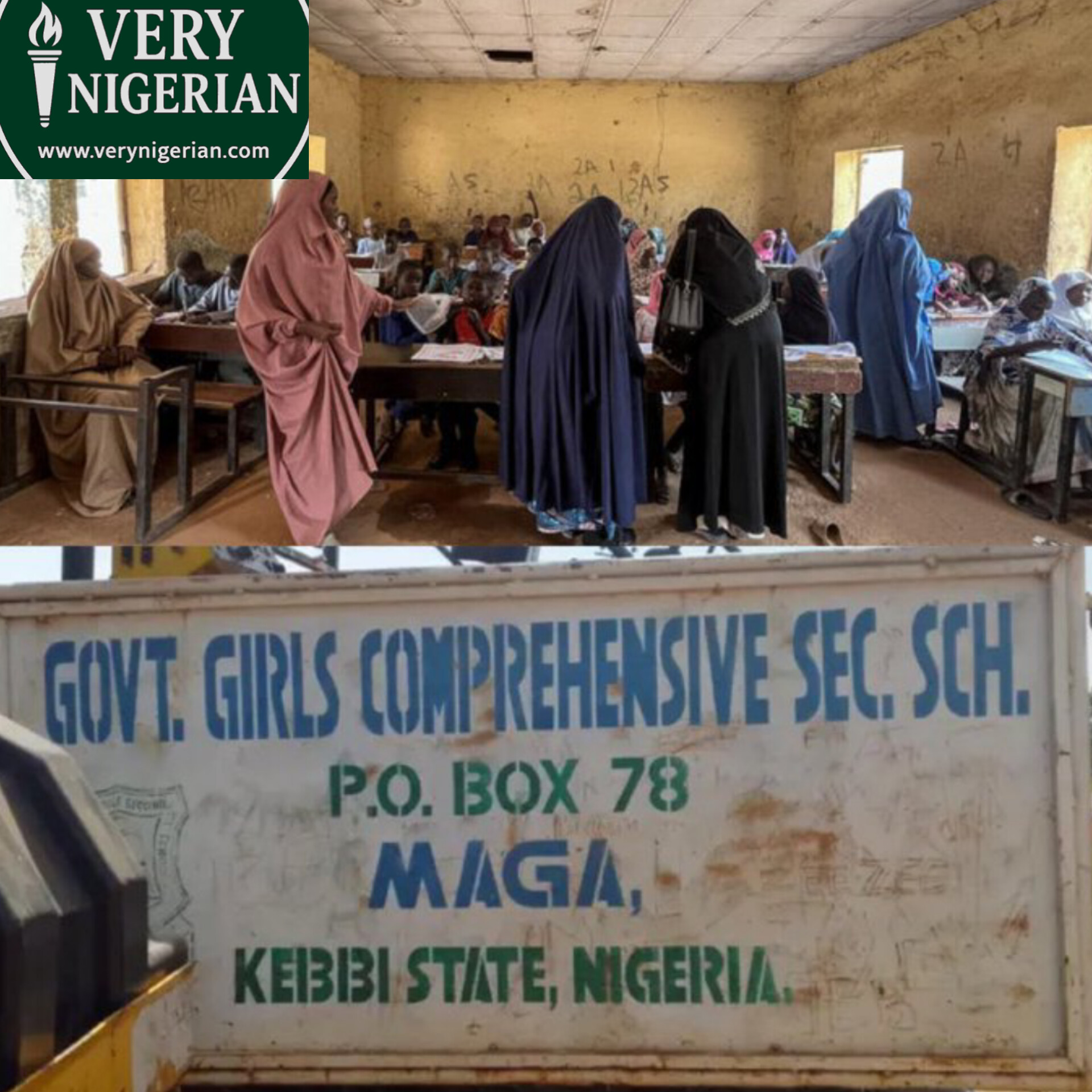
Nigeria is once again confronted with a painful and familiar tragedy: the renewed mass abduction of schoolchildren across the northern region.
Yet, instead of responding with the courage and urgency this moment demands, too many governors have chosen the path of retreat, shutting down schools, shifting blame, and surrendering to criminals without a fight.
School closures may appear tactical, but in reality, they represent a catastrophic failure of leadership.
They hand victory to terrorists without resistance.
They validate the murderous campaign of Boko Haram, whose founding aim was clear: destroy education, especially Western education, and leave an entire generation in darkness.
To close schools is to assist terrorists in achieving their mission.
It is not just a policy misstep; it is a moral collapse, a surrender that deepens the wounds of insecurity and plants the seeds for future crises.
At a time when the North urgently needs vision, courage and innovation, what it gets instead is timid governance wrapped in excuses.
A Region Already at Breaking Point
The statistics paint a bleak picture. Nigeria has an estimated 18.3 million out-of-school children.
Of this, over 10.2 million are of primary school age. And of that grim number, the North bears the heaviest burden.
In 2025, UNICEF revealed that Kano, Katsina and Jigawa alone account for 16% of Nigeria’s primary-age out-of-school population, nearly 1.5 million children.
Girls are even worse off: more than half of out-of-school children nationwide are female, and their attendance is lowest in the North.
It is within this frightening landscape that governors choose to close schools altogether.
At this rate, in 10 to 20 years, the North risks producing a generation more deprived, less literate, and more vulnerable than any in recent history.
No society advances on the back of illiteracy. No region escapes poverty when its children are denied education.
The Ghosts of Chibok Still Haunt Us
Since the 2014 abduction of 276 Chibok schoolgirls, the North has faced unending attacks on schools, in Buni Yadi, Borno, Kaduna, Kogi, Niger and beyond.
Yet, despite the trauma, children kept studying. Communities stood firm. Teachers carried on.
Today’s governors, however, are surrendering where others held the line.
Instead of fortifying schools, they flee from responsibility. Instead of innovative solutions, they settle for panic-driven closures that embolden kidnappers.
Governors Cannot Claim Power and Reject Responsibility
Yes, Nigeria’s security architecture is centralised.
But the same governors who receive billions in security votes cannot argue they lack the means to protect children.
These are leaders who deploy enormous resources to shield themselves and their families, yet abandon public schoolchildren to fate.
Security is expensive, but ignorance is costlier.
The governors’ argument that “security is a federal matter” rings hollow when they:
control state legislatures
influence local governments
manage state security funds
block reforms that would remove bottlenecks
Leadership is not about excuses — it is about results.
What Real Leadership Would Look Like
Rather than closures, responsible leadership would prioritise:
secure fencing and fortified dormitories
solar lighting and CCTV
early-warning systems and safe-school protocols
trained community vigilantes
rapid response security teams
relocation of pupils into safer mega-schools
investment in infrastructure, not political largesse
Former Borno governor and now Vice President, Kashim Shettima, demonstrated this when he built secure mega-schools at the height of the Boko Haram insurgency.
Children were protected not by fear, but by strategy.
You Don’t Save a Region By Abandoning Its Children
Education remains the surest escape from poverty, violence and exploitation. For millions of northern children, particularly those in rural communities and IDP camps, school is not merely a building. It is a lifeline.
To deny them access is to condemn them to lifelong hardship.
Governors who prefer fear over responsibility are not just surrendering to terrorists.
They are surrendering the future of the region.
A Parallel Call for Responsibility in Northern Leadership
This week’s meeting of the Northern Governors’ Forum and Northern Traditional Rulers’ Council in Kaduna refocused attention on accountability, and Governor Muhammadu Inuwa Yahaya of Gombe State emerged as one of the few voices in the region willing to speak truth to power.
His address was a sober reminder that insecurity in the North is an existential threat fed by years of neglect, poverty, and policy failures.
The establishment of a N1 billion monthly Regional Security Trust Fund, unanimously adopted, was a rare moment of decisive action.
He placed the crisis of out-of-school children at the centre of the discussion, describing it as “a stain on our collective conscience.”
He called for state police. He called for investment in human capital. He called for unity and regional responsibility.
Inuwa Yahaya’s leadership, firm, honest, and people-centred, stands in stark contrast to the governors who would rather close schools than confront criminals.
The North Must Choose Its Future
Northern Nigeria is at a crossroads. On one path is fear, closure, and decline. On the other is courage, reform, and renewal.
The region must decide whether to continue enabling insecurity through inaction, or to defend its children with the seriousness they deserve.
The future of millions depends on that choice.


 Follow Us on Google Discover


2027: Kwankwaso a goat in sheep’s clothing, secretly working for Tinubu – Atiku Campaign Council

DSS arrests Maina’s fugitive son in Abuja, hands him over to EFCC

2027: Step down if you are not working for Tinubu – Deji Adeyanju dares Obi, Kwankwaso

2027: ‘I wont join my Uncle to support Tinubu’ – Davido says

Enugu NYSC death: NAFDAC debunks claims linking corps members death to fake drugs

33 Governors cannot be wrong in supporting Tinubu – Bayo Onanuga

Security forces arrest five suspects over abduction of 20 NYSC members in Imo

Rugby star Hyron Andrews dies at 31 after accidental fall in South Africa

LAUTECH Resident Doctors halt 50-day strike as Makinde intervenes

House Officers, Nurses, Radiographers, Others wanted as DELSUTH opens recruitment – Apply Now

FG raises health fund allocation to N40.76bn, extends insurance to prison inmates

Erisco Foods announces 13 job openings across Nigeria – Apply Now

Tinubu reappoints Bala Bila as INEC commissioner, nominates six others

2027: ‘Don’t trust your destiny to ‘kalokalo’ people’ – Wike warns Rivers voters against Atiku, Amaechi, Obi

BREAKING: Cross River PDP Chairman Venatius Ikem resigns, cites leadership crisis
Erisco Foods announces 13 job openings across Nigeria – Apply Now

2027: Atiku, Obi, Makinde, Adebayo, Duke hold talks with six opposition parties
‘You Betrayed Osun People’ — Adeleke, Davido face backlash over support for Tinubu

Ex-Senator Bello Mandiya’s body found in Abuja home three days after he slipped, hit his head in the bathroom
Tinubu reappoints Bala Bila as INEC commissioner, nominates six others

JUST IN: Finnish Appeal Court reduces Simon Ekpa’s jail term to four years, upholds terrorism conviction

Zamfara govt set to empower 36,176 residents with Dangote shares

Over 10 soldiers, four civilians feared dead as Boko Haram terrorists attack Borno military base

Umahi reopens first Niger bridge after emergency repairs, displays Tinubu’s photos

‘I love Islam, I’ve sent people to Mecca to pray for me, Nigeria for 25 years’ – Akpabio

Lagos govt announces 3-day traffic diversion on Independence bridge for emergency repairs

Elon Musk unveils Tesla’s ‘flying’ car in stunning demonstration

Panic in Rivers community as pipeline explosion injures 20, razes over 50 houses

Tension escalates as thugs attack NDC secretariat in Edo, destroy properties
