National News
Presidency signals fresh review of ₦70,000 minimum wage

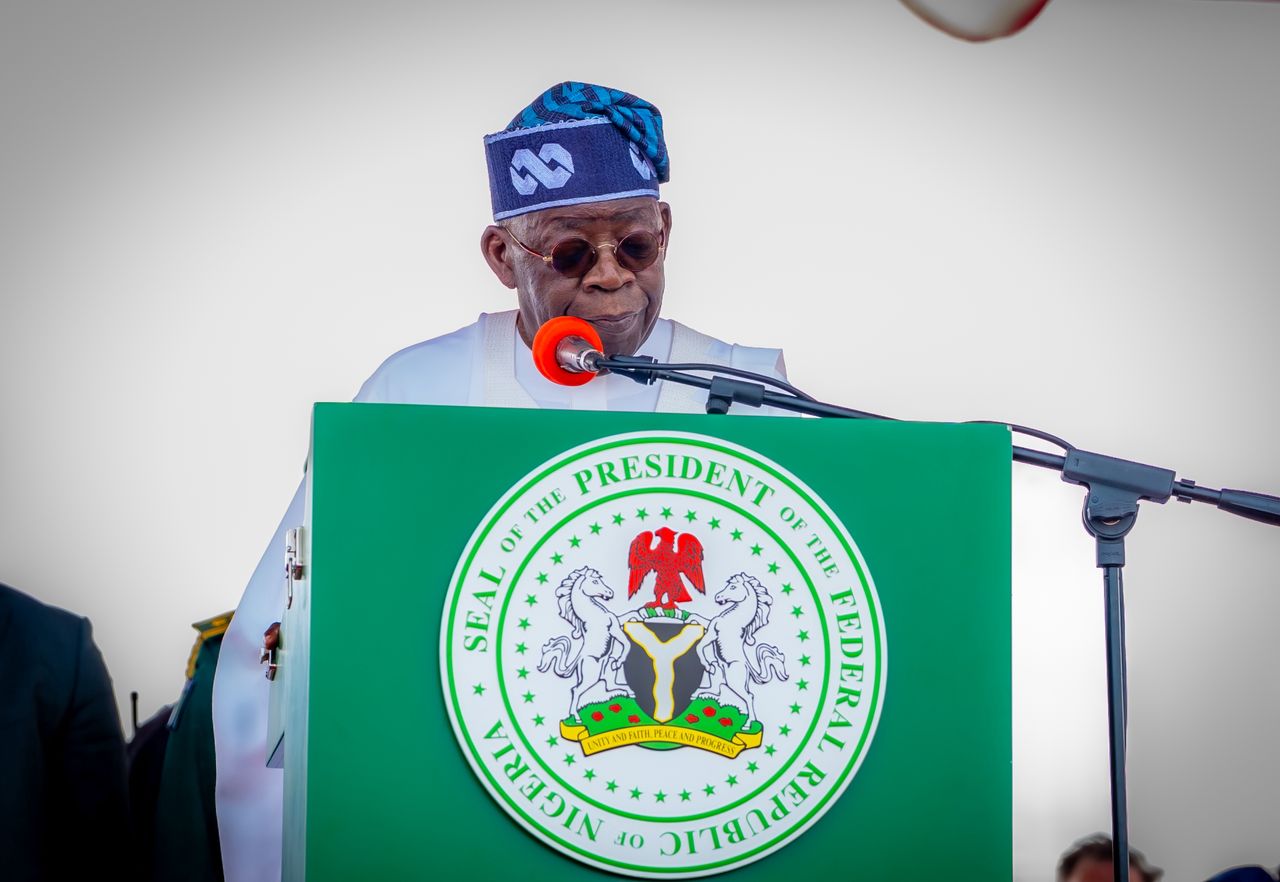
The Presidency has confirmed that plans are underway to review Nigeria’s current national minimum wage, admitting that the existing ₦70,000 benchmark may no longer be sustainable in the face of prevailing economic realities.
Chief of Staff to President Bola Ahmed Tinubu, Femi Gbajabiamila, made the disclosure on Thursday in Abuja during an event organised by Working People United.
According to Gbajabiamila, the ₦70,000 minimum wage introduced by the Tinubu administration in 2024 represented a significant milestone but now requires a fresh assessment due to changing economic conditions and the rising cost of living.
“The ₦70,000 wage, which was a milestone in 2024, must be honestly reassessed against today’s realities,” he said.
The former Speaker of the House of Representatives noted that the current economic environment has made it necessary to re-evaluate what constitutes a fair and living wage for Nigerian workers.
He assured organised labour that the Federal Government would approach future wage negotiations as a partner rather than an opponent.
“I can confirm to you that when the time comes to begin the process of reviewing the national minimum wage, this administration will approach that endeavour not as an adversary of labour, but as a partner,” he stated.
Gbajabiamila reiterated President Tinubu’s commitment to workers’ welfare, stressing that the administration recognises the critical role of workers in national development.
“President Tinubu has said time and again that the custodians of the nation’s machinery deserve a fair and commensurate wage, and as you all well know by now, this is the president who means precisely what he says and does exactly what he means,” he added.
The Chief of Staff also called on labour leaders to prioritise dialogue and engagement over industrial actions, arguing that cooperation between government and workers remains essential for national progress.
“Good governance is not a performance stage by government for the benefit of a passive audience. It is a partnership between those who govern and those who are governed,” he said.
He further stressed that industrial harmony can only be achieved through sustained collaboration between government and organised labour.
Meanwhile, labour unions and public sector workers have continued to demand a review of the minimum wage, arguing that inflation and rising living costs have significantly eroded the purchasing power of the current ₦70,000 wage.
Civil servants under the umbrella of the Joint National Public Service Negotiating Council (JNPSNC) have recently intensified calls for a substantial increase, insisting that many workers can no longer cope with current economic realities.


 Follow Us on Google Discover




Osun Guber: Aregbesola denies ADC alliance with Adeleke, says no party buy ADC support base

Osun Election: Atiku, ADC leaders storm Osogbo for campaign finale

BBNaija Season 11: Neche emerges Head of House for week three

Osun 2026: Adeleke made ‘unbelievable mistake’ leaving PDP for Accord — APC chieftain Joe Igbokwe

2027: EU accepts INEC invitation, to deploy 2–4 electoral experts to Nigeria

‘I never lobbied for APC campaign DG job’ — Wike reaffirms support for Tinubu

BREAKING: NERC dissolves KAEDC board, names new seven-man team

Osun 2026: First lady leads protest against alleged voter intimidation (Photos)

2027: Atiku, Obi, Kwankwaso, Makinde meet August 18 to discuss alliance against Tinubu

BREAKING: ASUU declares indefinite strike at Imo State University

2027 polls: ‘Tinubu will lose to Atiku’ – Kenneth Okonkwo

Ogun Police nab 23 foreigners over alleged ponzi, visa scam

Harry Kane bags European Golden Shoe for 2025/26 season

‘I have never cheated on my wife – Aregbesola reveals

‘Obi never discriminated against us’ — Anambra Northern leaders reject claims of profiling, Mosque demolition
2027: Atiku, Obi, Kwankwaso, Makinde meet August 18 to discuss alliance against Tinubu

Atiku’s presidential ambition a ‘cheap product from Temu’ — Babachir Lawal

Adeola Ajayi and the quiet reinvention Of Nigeria’s intelligence community

Osun 2026: Oyinlola, Omisore endorse Oyebamiji ahead of August 15 poll

‘Temitope Osoba died at Police station, not from cancer’ – Fiancé

Tinubu treks to office, eats once daily, hasn’t travelled in Three Months — NRS boss Adedeji

BREAKING: Super Falcons crash out of WAFCON after 1-0 loss to Cameroon

Osun Guber: APGA candidate steps down for APC’s Oyebamiji

Osun election: Farmers, butchers back Adeleke for second term

‘Your lies are collapsing’ – Atiku fires back at Obasanjo

Troops rescue 33 abducted passengers in Zamfara

APC rally shooting: Police release Osun environment commissioner

NYSC announces release of call up letters for Batch B stream II in Niger, Sokoto

Tears, white caskets as Benue community buries 16 victims of herdsmen attack
