
Editorials
State Police: Solution to insecurity or political tool for Governors?

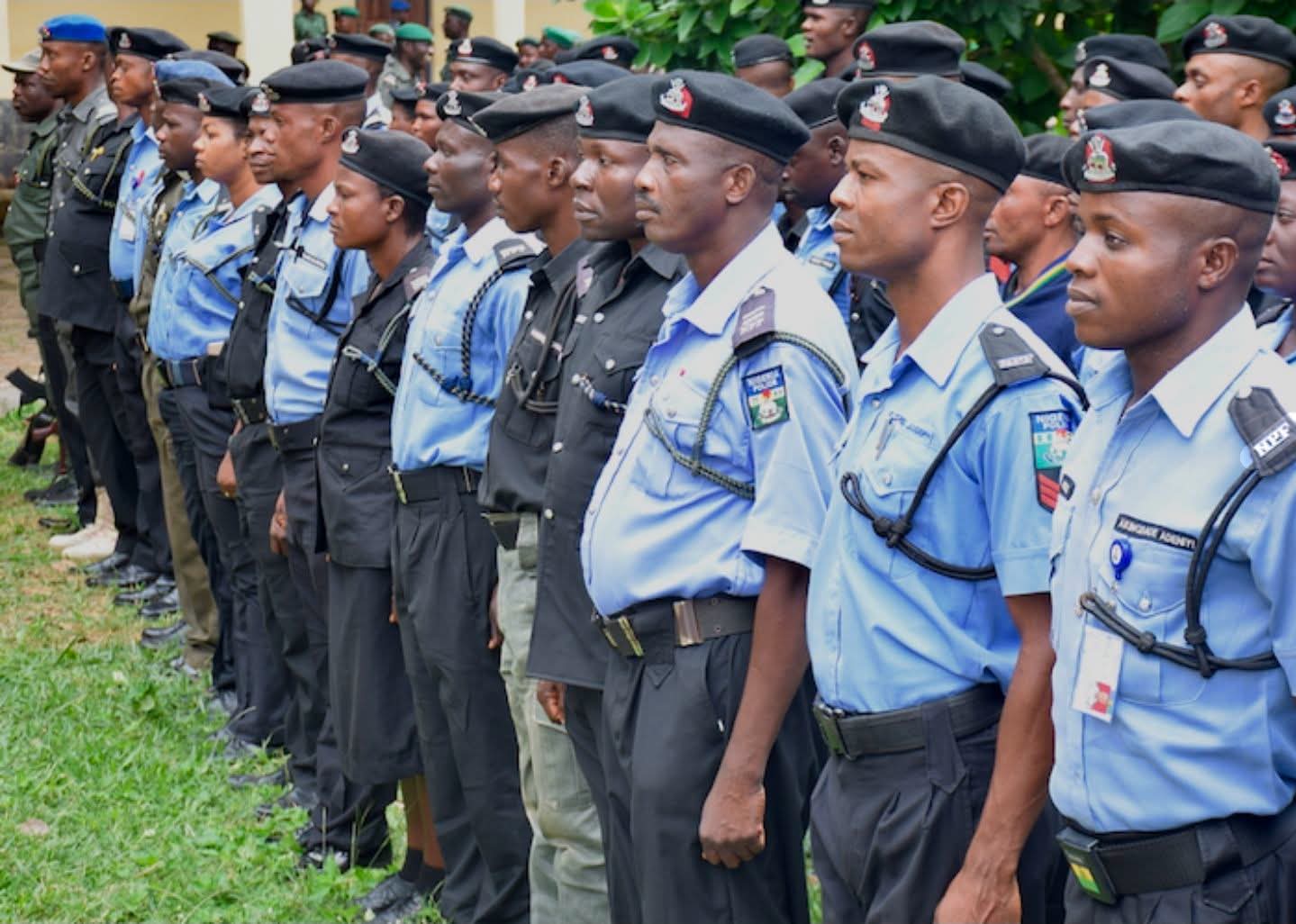
The growing excitement surrounding the proposed creation of state police across Nigeria is understandable, given the worsening insecurity confronting the country.
However, many Nigerians may be placing excessive faith in a solution that could ultimately create more problems than it solves.
Nigeria does not merely have a security problem; it has a governance and political will problem.
The assumption that insecurity will disappear simply because a Yoruba officer is policing a Yoruba community, or an Igbo officer is policing an Igbo community, misses the fundamental issue. The challenge has never been about ethnicity or geographical location. It is about leadership, accountability, and the willingness of those in authority to enforce the law without fear or favour.
The same officers currently serving under the federal police structure will, in many cases, form the backbone of any future state police organisations. Simply changing the command structure does not automatically improve professionalism, effectiveness, discipline, or integrity.
Funding also presents a serious challenge.
Many state governments are already struggling to pay salaries, pensions, and fulfil basic developmental obligations. If the responsibility for maintaining police forces is transferred to the states, the financial burden could become overwhelming.
One of the major factors driving corruption within the Nigeria Police Force is poor welfare and inadequate remuneration. If financially constrained states become responsible for paying police personnel, there is a real possibility that welfare conditions could deteriorate further, potentially worsening corruption, extortion, and misconduct.
Supporters of state police argue that it will help address insecurity more effectively. Yet insecurity has persisted despite trillions of naira allocated annually to defence and security agencies.
If the Federal Government, with significantly greater resources, continues to struggle with the problem, it is reasonable to ask how individual states will fund the sophisticated weapons, intelligence infrastructure, surveillance technology, training programmes, and logistics required for effective modern policing.
Security operations are expensive, and many states simply lack the financial capacity to sustain such commitments.
Beyond funding concerns lies an even greater risk: political abuse.
Nigeria’s political environment remains highly polarised, and governors already wield enormous influence within their respective states. Granting direct control of armed security personnel to state governments could create opportunities for abuse.
Political opponents, activists, critics, and opposition parties may become vulnerable to intimidation and harassment. State police could easily become tools for settling political scores, suppressing dissent, and influencing electoral outcomes.
The popular saying remains true: he who pays the piper dictates the tune.
The fear is that some governors may prioritise political survival over public safety, using state police as instruments of control rather than law enforcement. Such a development could weaken democratic institutions and encourage authoritarian tendencies at the sub-national level.
This is not to suggest that the concept of state police is entirely flawed. In many federal systems around the world, decentralised policing works effectively. However, successful policing models depend on strong institutions, independent oversight, robust accountability mechanisms, and a political culture that respects the rule of law.
Nigeria is yet to fully establish many of these safeguards.
Introducing state police under current conditions may be akin to handing over a powerful tool to a system that lacks the institutional maturity required to manage it responsibly. The idea may be sound in theory, but the structures needed to support it remain weak.
The real solution to Nigeria’s insecurity lies not merely in restructuring policing but in addressing the deeper issues of governance, corruption, intelligence gathering, judicial efficiency, border control, economic hardship, and, most importantly, political will.
Ultimately, the responsibility for securing the country rests with its leadership. Until there is genuine commitment to confronting insecurity decisively, structural reforms alone may not deliver the results Nigerians seek.
State police may look attractive on paper, but without strong institutions, effective oversight, and genuine accountability, it risks becoming yet another expensive experiment, one that could leave the country worse off than before.
Put together by Very Nigerian editorial team.


 Follow Us on Google Discover




I never borrowed money or issued bonds as Anambra Governor – Peter Obi insists

A Litre of petrol costs over ₦3,000 in UK, Nigerians are enjoying — Gov. Okpebholo

FG unveils online discount platform for Nigerian military personnel, veterans

Six arraigned over alleged defilement, sexual assault in Anambra

Enugu govt announces movement restriction for Saturday’s LG polls

One killed as sand-laden truck rams into motorcycle on Lagos expressway

BREAKING: Atiku appoints Akobundu DG of ADC Presidential Campaign Council, names El-Rufai Deputy Chairman (Full List)

After 61 days in captivity, Zamfara LG chairman regains freedom from abductors

2026 NECO: Step by step guide on how to check results online

City Boy Movement takes Tinubu 2027 campaign to Anambra
NECO announces release of 2026 internal SSCE results

Atiku donates ₦20m to families of 37 Miners who died in NSCDC custody

BREAKING: Court nullifies Pantami’s PDP ticket, orders fresh Primary in Gombe

NIMC dismisses claims of NIN database breach

FIFA picks Nigerian referee for U-17 world cup

ECOWAS opens recruitment for qualified nationals across multiple sectors – Apply Now
BREAKING: Atiku appoints Akobundu DG of ADC Presidential Campaign Council, names El-Rufai Deputy Chairman (Full List)

British Council opens recruitment opportunities across Nigeria – Apply Now

Julius Berger opens recruitment for 6 positions across Nigeria – Apply Now

EXCLUSIVE: Some APC Governors move to align with Atiku, ADC amid rift with Wike’s Rainbow Coalition

Former Super Eagles captain William Troost-Ekong converts to Islam, recites Shahadah in Doha

‘You will know what it means to stay hungry’ – Defence Minister Musa suggest military training for Nigerians

Five killed as suspected Boko Haram, ISWAP terrorists attack Borno community

2027: We have new tactics in place to checkmate Atiku, Obi – Wike

OK Movement rejects Dickson’s position, insists it is independent political organisation

Nigeria named among African voters for 2026 Ballon d’Or (Full list)

Umahi: FG to deploy 4,000 influencers to highlight Tinubu’s projects

I’ve never seen a President with better plans for Nigeria than Tinubu — Masari
Atiku donates ₦20m to families of 37 Miners who died in NSCDC custody
