
Opinion
Trump, Christian genocide, and terrorism in Nigeria: Farooq A. Kperogi

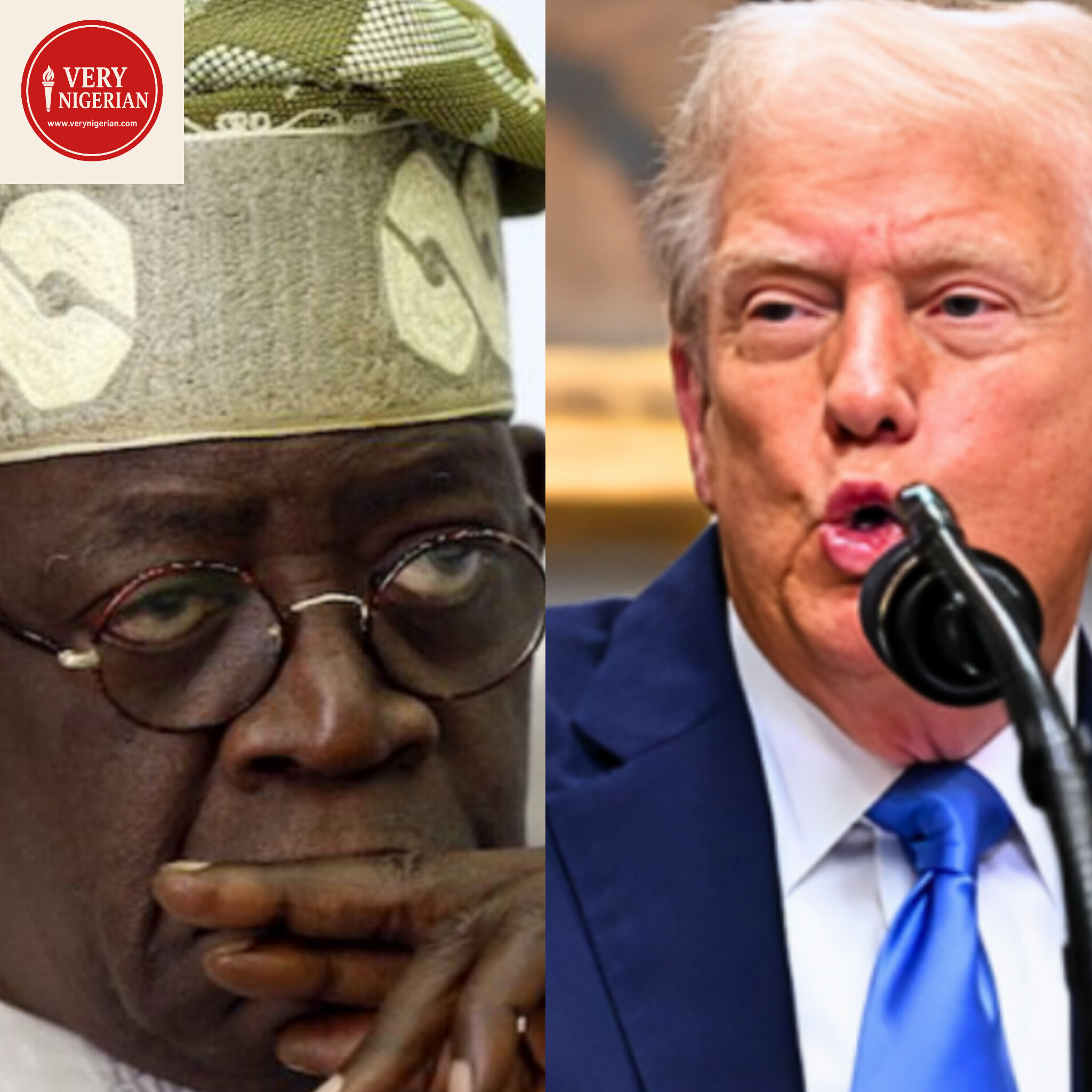
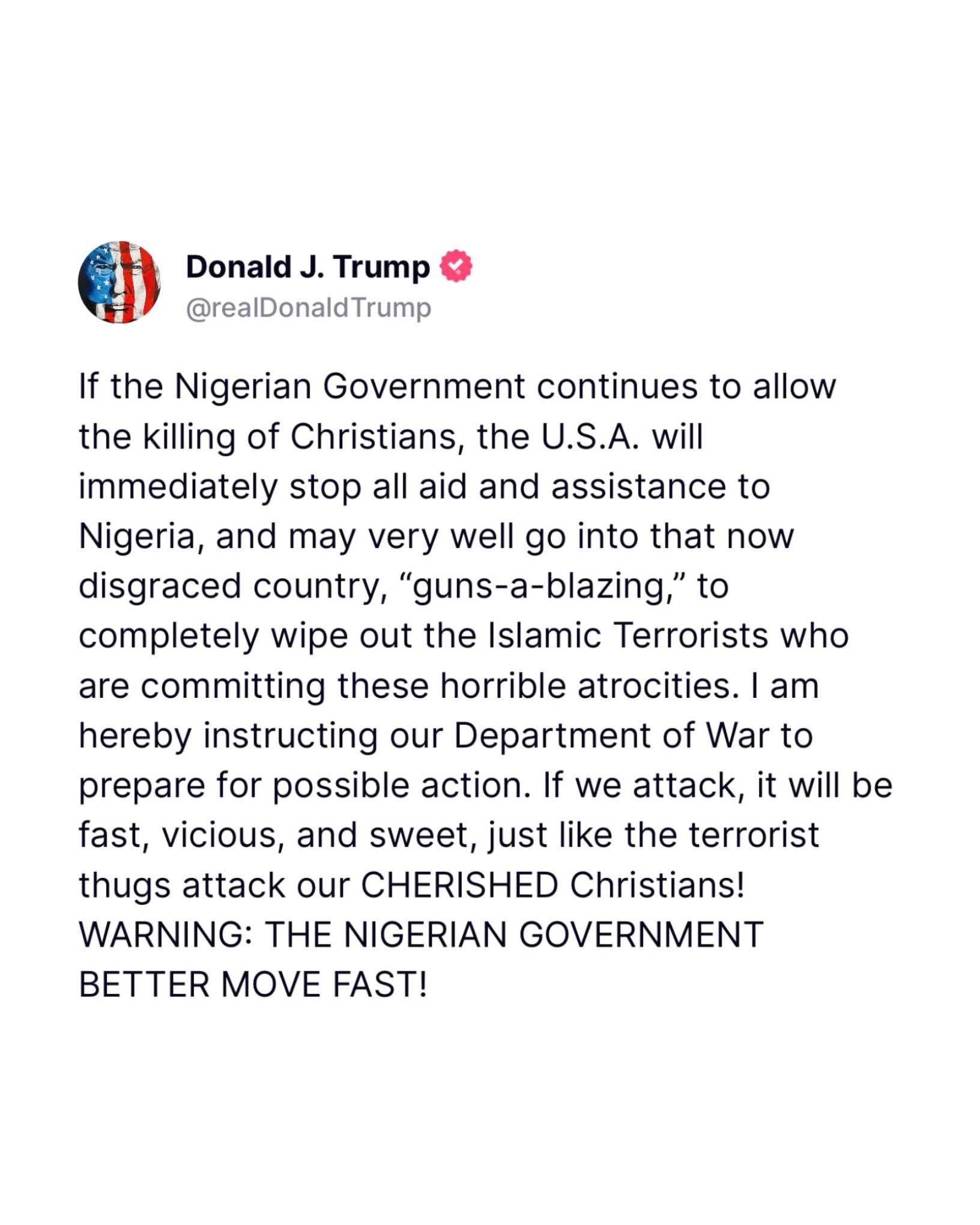
Nigeria’s online and offline discursive arenas have been suffused with frenetic, impassioned, and intensely heightened dialogic exchanges in the aftermath of President Donald Trump’s designation of Nigeria as a “Country of Particular Concern” and this threat to militarily invade the country to stop what he called a “Christian genocide.”
Nigerians are predictably divided largely along the country’s familiar primordial fissures. But beyond the surface disagreements, there’s actually a deeper congruence of opinions we miss in moments of hyper-aroused emotions.
And this revolves around the recognition that Nigeria faces an inexcusable existential threat from the intractable murderous fury of terrorists and that the earlier it is contained by any means necessary, the better Nigeria’s chances of survival.
The major areas of disagreement among conversational sparring partners (i.e., whether, in fact, there’s a Christian genocide; what really actuates Trump’s intervention; the question of what foreign intervention means for Nigeria’s sovereignty) actually have a convergence point.
For example, Muslims who question the factual accuracy of the existence of a Christian genocide in the central states point to the continuing mass slaughters of Muslims (both at home and in mosques) in the far north. But they don’t deny that the nihilistic, blood-thirsty thugs who murder both Christians and Muslims in their homes and places of worship identify as Muslims, even if they are a poor representation of the religion they identify with.
I honestly struggle to fault Christians who perceive the episodic mass murders in their communities by people who profess a different faith from them as deliberate, systematic, premeditated acts designed to exterminate them because of their faith.
If the situation were reversed, it would be perceived the same way.
If murderous outlaws who profess the Christian faith (even if they don’t live by the precepts of the religion) continually commit mass slaughters of both Christians and Muslims, Muslim victims of these slaughters would instinctively read religious meanings to the murders.
As I noted in my April 12, 2025, column titled “Selective Outrage Over Mass Murders in Nigeria,” human beings derive their sense of self from belonging to collective identities, so when members of an out-group attack that collective, it provokes a powerful emotional reaction.
Even in such states as Zamfara, Sokoto, and Katsina, where more than 90 percent of the population is Muslim and where clashes between sedentary farmers and itinerant herders are age-old, the persistence of mass slaughters has ruptured the centuries-old ethnic harmony between the Hausa and the Fulani that Nigerians had taken for granted.
BBC’s July 24, 2022, documentary titled “The Bandit Warlords of Zamfara” captures this dynamic powerfully.
It doesn’t matter if people in the Middle Belt perceive the homicidal ferocity of the terrorists as “Christian genocide” or people in the Northwest see it as “ethnic cleansing.”
What matters is that they shouldn’t be allowed to kill anyone.
I understand Muslim anxieties behind the “Christian genocide” narrative. It unwittingly exteriorizes the crimes of a few outlaws to the many who are also victims of the outlaws’ crimes.
But if it takes calling these blood-stained bastards “Christian genocidaires” to eliminate them, the accuracy of the description is immaterial.
If an equal-opportunity murderer of Christians and Muslims is killed only because he kills Christians, it still benefits Muslims because the murderer won’t be alive to kill Muslims.
Of course, people who question Trump’s motive are justified.
In 2016, Trump enthusiastically endorsed Ann Coulter’s book Adios America, which claimed that the growth of Nigerians in the United States from virtually zero to 380,000 was problematic because, in her words, “every level of society [in Nigeria] is criminal.”
Most Nigerians in the United States are Christians.
By December 2017, in his first term, Trump was reported to have said that people from Haiti and Nigeria should be denied visas because “15,000 Haitians who received U.S. visas all have AIDS,” and that 40,000 Nigerians who visited the U.S. that year would never “go back to their huts” after seeing America.
In January 2018, he was widely quoted as saying he didn’t want immigrants from “shithole countries” like Nigeria and Haiti but preferred “more people coming in from places like Norway,” a statement that made clear his racial preference for white immigrants.
That same racial logic was evident when he described white South Africans as victims of “white genocide” and offered them asylum but has not extended the same offer to Nigerians he claims are facing “Christian genocide.”
Unsurprisingly, by 2019, toward the close of his first term, Nigeria experienced the steepest decline in visitors to the United States of any country, according to data from the National Travel & Tourism Office.
Given this record, skepticism about Trump’s sudden concern for Nigeria is entirely warranted.
Anyone familiar with his long-documented hostility toward Black people would reasonably question why he now professes to care enough about them to “intervene” on their behalf.
His intervention is probably the product of three forces: powerful lobbying from Nigerian Christian groups who got through to the right people, a way to get Nigeria to scale down its embrace of China in the service of rare earth mineral exploration in the country, and an appeal to his evangelical Christian base even if he himself isn’t a believing, churchgoing Christian.
But given the direness of the depth and breadth of bloodletting in the country, who cares what his motivations are? If Trump’s intervention causes the Nigerian government to more seriously take its responsibility to protect all Nigerians, I would salute him.
In fact, if direct, targeted hits at terrorist enclaves become inevitable because the government is either unwilling or unable to act, most people (Muslims, Christians, southerners, northerners, supporters or critics of the government, etc.) who are genuinely worried about the unchecked expansion of the theaters of insecurity in the country would be happy.
When it comes to questions of life and death, we can’t afford the luxury of pointless partisanship and primordial allegiances.
Most Nigerians I know would accept help from Satan if that were what it would take to stop the unending blood-stain communal upheavals in the country.
What is the point of our sovereignty if we can’t stop perpetual fratricidal bloodletting? In any case, most Nigerian governments and opposition politicians in my lifetime have not only routinely sought America’s intervention in Nigeria’s internal affairs when it suits them, they serve as willing informants to America, leading me to once posit that the CIA doesn’t need secret agents.
In a May 20, 2017, column titled, “Xenophilia, Fake Sovereignty and Nigeria’s Slavish Politicians,” I said the following:
“Many Nigerian leaders seem to have an infantile thirst for a paternal dictatorship.”
“The United States is that all-knowing, all-sufficient father-figure to whom they run when they have troubles.”
“We learned from the US embassy cables that our Supreme Court judges, Central Bank governors … and governors routinely ran to the American embassy like terrified little kids when they had quarrels with each other.”
If the undermining of our sovereignty is what it would take to provide peace to everyday Nigerians, most people won’t miss it.
The urgent task, therefore, is not to litigate the purity of motives abroad or to indulge in perfunctory moralizing at home, but to force Nigerian institutions to perform.
Whether pressure comes from international actors, diasporic lobbying, or domestic outrage, it must translate into concrete reforms: a security strategy that protects civilians, accountable and professional security forces, transparent investigations of atrocities, and long-term efforts to address the economic, political, and environmental drivers of violence.
Nigerians must insist that any external attention be channeled into strengthening the state’s capacity to protect all citizens and into justice for victims, not into new forms of dependency or political theatre.
Only by combining unity of purpose with institutional competence can Nigeria begin to end the killing and reclaim the dignity of its sovereignty.


 Follow Us on Google Discover







Opposition will front a single candidate against Tinubu, announcement will be made few days to election – Lukman

La Liga: Unstoppable Barcelona beat Real Betis 5-2 to extend winning run

EPL: Super Eagles star Iwobi fires Fulham to first league victory

Ogun hospital under fire as Nurse dies of asthma attack amid alleged oxygen failure

Maryam Babangida Center for Women Devt gets first wheel chair ramp after 34 years

Shettima inaugurates Arewa for Asiwaju campaign office in Abuja

2027: ‘APM will beat Tinubu in 12 battleground states’ – Makinde’s campaign team

Veteran Journalist, diplomat Dele Cole dies at 86

Suspended NSCDC commandant apologises over deaths of suspected illegal miners in Niger

EPL: Martinez rushed to hospital after head injury as Chelsea beat Everton

COAS arrives Borno as Military moves to clear terrorist camps, rescue abductees

Macky Sall quits race for UN Secretary-General position

Buhari backed Osinbajo’s presidential ambition four times, Akande tells Babachir Lawal

Dr. Benjamins‑Laniyi urges media to amplify women’s leadership, adopt gender‑sensitive reporting

Pope Leo XIV set to leave hospital after lung cancer surgery

Erisco Foods announces 13 job openings across Nigeria – Apply Now

2027: Step down if you are not working for Tinubu – Deji Adeyanju dares Obi, Kwankwaso

House Officers, Nurses, Radiographers, Others wanted as DELSUTH opens recruitment – Apply Now

Tinubu reappoints Bala Bila as INEC commissioner, nominates six others

Elon Musk unveils Tesla’s ‘flying’ car in stunning demonstration

2027: Kwankwaso a goat in sheep’s clothing, secretly working for Tinubu – Atiku Campaign Council

2027: Tinubu to miss rallies in over 20 States as APC releases campaign timetable

33 Governors cannot be wrong in supporting Tinubu – Bayo Onanuga

Atiku fully fit, ready to campaign in all 36 states, interact with Nigerians – ADC PCC

Gunmen storm Plateau, kill traditional ruler at residence

2027: ‘Atiku, Obi, Duke, Makinde are not threats to Tinubu’, says APC

2027: ‘Don’t trust your destiny to ‘kalokalo’ people’ – Wike warns Rivers voters against Atiku, Amaechi, Obi

Outrage as suspected cultists unveil renovated police post in Rivers

BREAKING: Oyebanji makes history as first Ekiti Governor to win second consecutive term
