News
FBI, DEA withhold court-ordered files on alleged drug trafficking investigation involving Tinubu ahead of Trump meeting

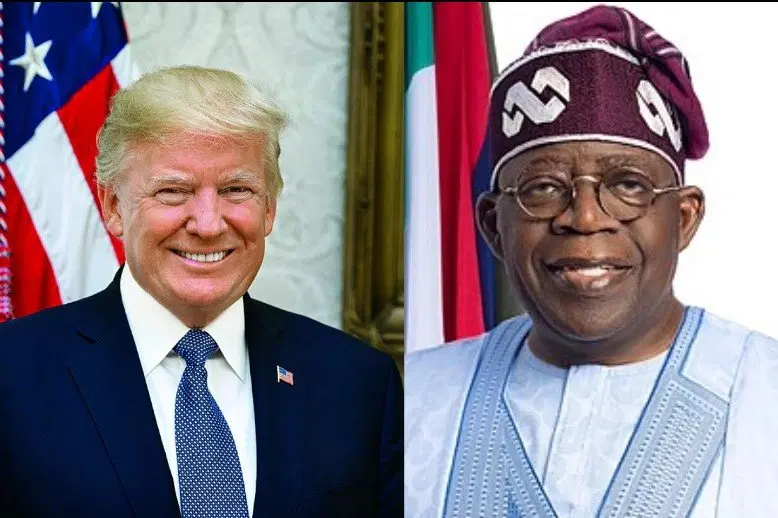
Records relating to an alleged United States investigation involving President Bola Tinubu remain unreleased more than a year after a federal judge directed the Federal Bureau of Investigation (FBI) and the Drug Enforcement Administration (DEA) to search for and process relevant documents under the Freedom of Information Act (FOIA).
The development has continued to attract attention as Tinubu is reportedly seeking a meeting with United States President Donald Trump.
In April 2025, a US District Court directed the FBI and DEA to search for and process records linked to Tinubu after FOIA requests filed in 2023 by US transparency advocate Aaron Greenspan were denied by the agencies.
However, according to a joint status report filed in May 2026, Greenspan said no document containing Tinubu’s name had been released despite the court order.
He described the prolonged process as a “farce,” alleging that the agencies had delayed compliance while protecting the political interests of a foreign leader.
“After four years, I have still not received a single produced page from Defendants that contains the word ‘Tinubu,'” Greenspan stated in the court filing.
He further argued that the agencies had extended the litigation unnecessarily, contrary to the objectives of the Freedom of Information Act.
The delay comes amid reports that Tinubu is pursuing diplomatic engagement with President Trump. Nigeria’s ambassador to the United States recently suggested that both leaders could meet soon, while another Nigerian official reportedly said arrangements were being made for Tinubu to sit alongside Trump at the forthcoming United Nations General Assembly.
The records being sought are connected to a 1993 civil forfeiture case in the United States involving funds allegedly linked to a heroin trafficking and money laundering network in Chicago.
Court documents from that case, previously reported by journalist David Hundeyin, included an affidavit by Internal Revenue Service Special Agent Kevin Moss, who alleged that Tinubu maintained bank accounts connected to addresses associated with individuals under investigation.
The affidavit claimed there was probable cause to believe funds moving through accounts bearing Tinubu’s name were traceable to proceeds of drug trafficking.
Tinubu was never criminally charged in connection with the matter, and the civil forfeiture proceedings did not result in a criminal conviction against him.
Following Tinubu’s election as Nigeria’s president in 2023, Greenspan and Hundeyin filed fresh FOIA requests seeking records relating to the investigation and any prosecutorial decisions involving him.
When several US agencies declined the requests, the pair filed a lawsuit.
Judge Beryl Howell dismissed claims against some agencies, including the Central Intelligence Agency (CIA), but ordered the FBI and DEA to search for and process any responsive, non-exempt records.
Since then, the agencies have sought multiple extensions, while lawyers representing Tinubu have reportedly intervened in the case, arguing against the release of the records on privacy grounds.
Hundeyin has also alleged that the release process could continue to face delays.
The next joint status report in the case is expected in September.
Neither the FBI, DEA nor the Nigerian Embassy in Washington had publicly responded to requests for comment on the matter at the time of the latest filings.


 Follow Us on Google Discover



2027: ‘Obi will defeat Tinubu by a wider margin in Lagos’ — NDC

NDC disowns OK Movement campaign council, refers John Ugulu for discipline

Raphinha set to sign new Barcelona contract until 2030

Four Nigerians receive UNGA Humanitarian, Goodwill Ambassador honours in New York

‘We Won’t Go Back to Egypt’ — Showunmi rejects Atiku’s petrol subsidy proposal

NSCDC names new Niger commandant following death of miners in custody

ECOWAS court set to hold 2026 international conference in Dakar

Nigerians already seeing reductions in transport fares – Tinubu

PL: Brighton thrash Arsenal 3-0, end Gunners’ winning run

Sowore as best president Nigeria refuses to have: by Farooq A. Kperogi

‘Before lecturing Tinubu, you must answer questions from your past’ — Presidency to Atiku

Why EFCC must prosecute Atiku – Agbonayinma

NSCDC detains suspended Niger commandant, 21 officers over deaths of 37 miners

‘The Site Belongs To Babangida’ – Survivor links deaths of miners in NSCDC custody to ex-Military Ruler

Deji Adeyanju, Buhari others appointed as FG constitutes committee to probe NSCDC custody deaths (Full List)

Nigerian Army opens 92 regular recruits intake recruitment (Guide to Apply)

BREAKING: Court of Appeal overturns Lokoja ruling, upholds NDC’s registration

Atiku’s World Press Conference: Address on fuel prices, palliatives and the cost of living (FULL TEXT)
Nigerians already seeing reductions in transport fares – Tinubu

‘Life of Every Nigerian Matters’ — Tinubu orders probe into miners’ deaths in NSCDC custody

Soludo pardons native doctor Akwa Okuko Tiwara Aki, appoints him Youth Reformation Ambassador

Obi will honour his word, step down if Anambra debt claims are proven — Tanko

Tinubu may shun UN General Assembly in New York – Fresh details emerge

I would resist alternative candidate sponsored against me as Governor – Orji Kalu speaks on Wike, APC Govs feud

Charly Boy celebrates daughter Adaeze’s engagement to female partner

Don’t be ashamed, steal my idea and crash petrol price to reduce hardship for Nigerians — Atiku to Tinubu

Dangote IPO: ‘Don’t sell your house, usse school fees to buy shares’ — Emir Sanusi advises Nigerians

Gov. Bago imposes 24-Hour curfew in Minna after unrest over Miners’ deaths

Atiku to address World Press Conference in Abuja Today
