
News
‘Underground rock fractures behind gas leaks in Ogun schools’ – Commissioner


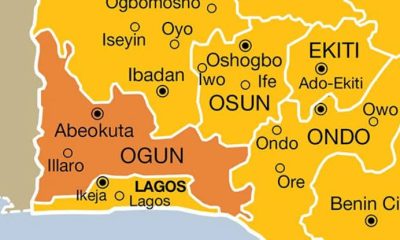
The Ogun State Government has said recurring gas leak incidents affecting schools in Ijebu-Ode may be connected to geological fractures beneath the town.
Speaking on Friday during Morning Brief, a programme on Channels Television, the Commissioner for Environment, Ola Oresanya, explained that investigations carried out by the state government revealed that the affected schools are located along the same fault line within the earth’s crust.
Oresanya said that when the first incident occurred about two months ago, authorities initially suspected industrial activities or possible sabotage as the cause.
However, findings from ongoing investigations have increasingly pointed to underground geological formations as the likely source of the gas leaks.
According to the commissioner, the government is continuing its assessment of the situation to better understand the phenomenon and ensure the safety of residents, particularly students and staff in the affected schools.
“The schools affected are all sitting on the same fracture from the earth’s crust,” he said.
“We eventually found out that the series of schools are linked. They are all on the same fault line from the earth’s crust.
“Ijebu-Ode is having a mixture of sedimentary and basement rocks, and we have fractures on the ground. Those schools were lying on the same fracture.”
According to Oresanya, monitoring devices installed after the first incident detected methane concentrations of up to 15,000 parts per million (ppm) during the second occurrence, prompting further investigations into the source of the emissions.
He said authorities considered whether the methane was coming from gas pipelines, mining activities, sabotage, or natural underground sources before concluding that the emissions were likely emerging through geological fractures.
The commissioner said drilling and soil sampling exercises are ongoing to determine whether the gas releases are natural occurrences or triggered by human activities such as quarrying or mining.
“We now know this is coming from the earth’s crust. It is not an artificial thing,” he said.
Oresanya added that Ijebu-Ode lies along a fault system connected to geological structures extending from the Atlantic region.
The commissioner said the state government had ruled out nearby gas pipelines as the source of the emissions because the nearest pipeline is about five kilometres away from the affected schools.
“Ijebu-Ode sits on the southwest fault line that comes from the Atlantic. That’s why when we had tremors in Nigeria between 1984 and 1985, Ijebu-Ode and parts of Oyo felt them because they are sitting on that fault line,” he said.
“If methane was travelling that distance at the concentrations we recorded, people much closer to the pipeline would have been affected first.”
The latest incident occurred on Wednesday when students and staff of Our Lady of Apostles Secondary School were hospitalised after inhaling a pungent gas suspected to be methane. It was the third such occurrence in the community within two months.
On April 1, at least 30 students at the same school were hospitalised after a suspected gas leak caused breathing difficulties among students and teachers. Investigators initially suspected fumes from nearby bushes in the area.


 Follow Us on Google Discover











‘Where is my house?’ – Ortom questions Alia over denial of ex-governor’s benefits

NCDC: FCT Ebola patient is a diplomat suffering multi-organ failure

AAC writes Tinubu, seeks approval to host presidential campaign council inauguration at Aso Rock

Reps pass bill to boost local drone manufacturing in Nigeria

10 injured in Third Mainland bridge crash as rescuers avert train collision in Lagos

Macron arrives in Saudi Arabia for surprise solidarity visit amid Houthi attacks

NDC rejects inclusion of C’River Chairman in APC campaign council

Gov Otu presents N987.8bn 2027 budget to Cross River Assembly

Fresh crisis hits Awka Anglican Diocese as Chancellor demands N5bn damages

Plateau Indigenous Youth Coalition defends DSS, Police, Operation Rainbow

Ebola: Senate urges FG to release emergency funds, enforce screening at entry points

Seven-year-old boy found dead after suspected kidnappers demand N2.5m ransom in Plateau

2027 Election: Court rejects suit to compel INEC to register new party

Cross River Assembly backs constitutional amendment for state police

Rivers Police arrest four suspected Robbers, kidnappers, recover rifles

Proten International opens 18 job positions across states in Nigeria

TeamAce announces 64 job openings across Nigeria, with salaries up to ₦2 Million – Apply Now

R & R recruitment announces 31 job openings across Nigeria – Apply Now

BREAKING: DSS arraigns five suspects over abduction of 20 Prospective Corps Members in Imo

If Buhari a General could not end insecurity, you cannot blame Tinubu – Yari

Subsidy removal is here to stay, ‘we will never go back to Egypt’ – Tinubu

Sanwo-Olu reportedly demands LAWMA boss’ resignation over mounting refuse in Lagos
BREAKING: FG reports confirmed Ebola case in Abuja, identifies 44 contacts for tracing

Gregory University founder Gregory Ibe dies at 63

Wike’s son Jordan dragged to EFCC over alleged $2.1m land fraud

Petrol subsidy return could crash naira to N4,000/$ – Oyedele warns

NLC upholds two-week ultimatum to FG over petrol prices, wage talks

BREAKING: Tinubu extends tenure of NCoS, Immigration service chiefs until 2028

Abia: NAFDAC uncovers suspected N500m fake alcohol factory in Aba
