Editorials
2027: Tinubu’s incumbency, Atiku’s Northern advantage, OK Alliance – Showdown as battle for Aso Rock takes shape

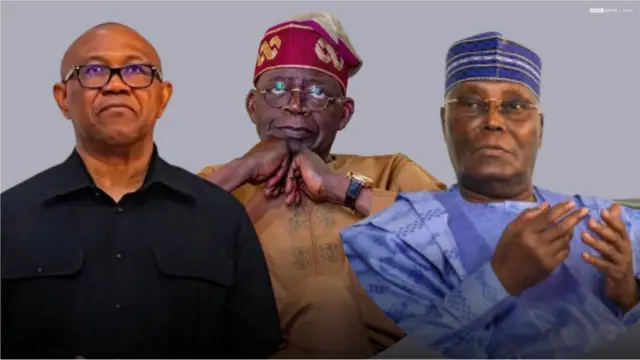
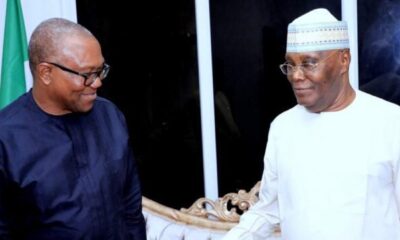
With the 2027 presidential election drawing closer, Nigeria appears headed for another high-stakes political contest, as three familiar names, President Bola Ahmed Tinubu, former Vice President Atiku Abubakar and former Anambra State governor Peter Obi, once again position themselves at the centre of the country’s political conversation.
Just as they did in 2023, the trio are expected to dominate the race, albeit under different political realities and platforms.
President Tinubu has secured the presidential ticket of the ruling APC and will be seeking a second term in office. Atiku Abubakar has emerged as the presidential candidate of the ADC, while Peter Obi was recently endorsed as the sole presidential candidate of the NDC and subsequently unveiled former Kano governor Rabiu Musa Kwankwaso as his running mate.
While other candidates, including Governor Seyi Makinde of the APM, Donald Duke of the PRP, Adewole Adebayo of the SDP and Omoyele Sowore of the AAC, are expected to be on the ballot, political observers believe the real battle remains among Tinubu, Atiku and Obi.
A Different Battlefield From 2023
Although the faces remain largely unchanged, the political environment heading into 2027 is markedly different.
In 2023, Tinubu benefitted from a divided opposition as Atiku and Obi split significant opposition votes across the country. That fragmentation helped the APC candidate secure victory with less than 40 per cent of total votes cast.
Four years later, opposition forces remain divided, but the alignments have changed.
Atiku has succeeded in consolidating a significant portion of the northern political establishment under the ADC platform. Prominent northern figures, including former Sokoto governor and senator, Aminu Waziri Tambuwal, Senator Abdul Ningi, former Attorney-General Abubakar Malami and several allies of Nasir El-Rufai, are now openly aligned with the ADC.
This development has strengthened perceptions that the ADC has become the primary political home of northern opposition elites ahead of the election.
Obi and Kwankwaso: Strength or Challenge?
Peter Obi’s emergence as the NDC presidential candidate was expected to inject fresh momentum into the party. The addition of Kwankwaso was equally seen as a strategic move designed to expand Obi’s reach in Northern Nigeria, particularly Kano State and parts of the North-West.
However, recent political developments have raised questions about the extent of Kwankwaso’s influence beyond his traditional base.
While Kwankwaso remains a significant political force in Kano, many of the influential northern political actors who could have strengthened the Obi-Kwankwaso ticket appear to be gravitating towards Atiku and the ADC instead.
This has prompted debate among analysts over whether Kwankwaso can genuinely deliver the broad northern coalition required to challenge both Atiku and Tinubu.
The question is no longer whether Kwankwaso controls Kano. The bigger question is whether he can rally enough northern political structures, governors, former governors, lawmakers and opinion leaders behind the NDC project.
Atiku’s Northern Advantage
So far, the ADC presidential primaries suggest that Atiku remains the dominant opposition figure in much of Northern Nigeria.
Results released from several states showed the former vice president recording overwhelming victories. In Sokoto, Yobe and Zamfara states alone, Atiku amassed well over 170,000 votes, leaving rivals such as Rotimi Amaechi and Mohammed Hayatu-Deen far behind.
For many observers, these results reinforce the belief that Atiku still commands substantial influence across large sections of the North.
Whether that influence will ultimately translate into votes at the general election remains another matter entirely.
Tinubu’s Incumbency Factor
Despite economic challenges, rising inflation and mounting criticism of his administration, President Tinubu enters the race with perhaps the most powerful political asset available in Nigerian politics — incumbency.
The APC remains the party with the widest spread of elected officials across the federation, controlling a significant number of states and political structures.
Tinubu’s supporters argue that opposition votes are once again being divided between Atiku and Obi, creating conditions similar to those that delivered victory for the APC in 2023.
Critics, however, insist that worsening economic conditions and growing public dissatisfaction could make the 2027 contest far more competitive than many expect.
The Emerging Reality
As things stand today, the 2027 election is shaping up as a contest of three different political strengths.
Tinubu possesses the advantages of incumbency and an extensive APC structure.
Atiku appears to be consolidating much of the northern political elite under the ADC.
Obi continues to enjoy strong support among young voters, urban professionals and large sections of the South-East and South-South, while hoping Kwankwaso can broaden his northern appeal.
Yet one question increasingly dominates political discussions:
If the ADC continues to attract major northern political heavyweights while the NDC’s early momentum appears to be slowing, can Kwankwaso truly deliver the North to Obi, or will Atiku’s deep-rooted northern network ultimately prove stronger?
The answer could determine not only the future of the NDC project, but also the outcome of what is already shaping up to be Nigeria’s most consequential presidential election since 2023.


 Follow Us on Google Discover



Wike’s son Jordan dragged to EFCC over alleged $2.1m land fraud

Subsidy removal is here to stay, ‘we will never go back to Egypt’ – Tinubu

If Buhari a General could not end insecurity, you cannot blame Tinubu – Yari

Sanwo-Olu reportedly demands LAWMA boss’ resignation over mounting refuse in Lagos

Gregory University founder Gregory Ibe dies at 63

Abia: NAFDAC uncovers suspected N500m fake alcohol factory in Aba

Veteran journalist Christiane Amanpour set to exit CNN after four decades

Gov Otti signs four bills into law, introduces criminal justice reforms in Abia

Pandemonium as fuel tanker goes up in flames under Lagos’ Otedola bridge

FG to introduce fuel taxes when economy stabilises, Oyedele says

10 key facts about late former Delta Governor, Emmanuel Uduaghan

Bauchi NDC governorship candidate Ibrahim Kashim resigns from party

Court throws out El-Rufai’s fundamental rights suit against DSS, ICPC, EFCC

Four more Makinde’s appointees quit TESCOM, SUBEB, others

NDC reschedules national campaign council inauguration to October 26
BREAKING: Former Delta Governor Emmanuel Uduaghan is dead

‘₦29,000 Cannot sustain a retired officer’ — Atiku challenges Tinubu on police pensions, proposes initiative

Opposition will front a single candidate against Tinubu, announcement will be made few days to election – Lukman

2027: Tinubu must be stopped, ‘even Buhari saw him as bad news’ — Hakeem Baba-Ahmed

Eight Nigerian Soldiers killed as ISWAP landmine hits Army patrol vehicle in Borno
Bauchi NDC governorship candidate Ibrahim Kashim resigns from party

2027: “Which North? North Korea or North Carolina?” Nigerians mock politicians promising Tinubu Northern votes

2027: NDC will never step down for Atiku, stop attacking us – Kwankwaso replies ADC Campaign Council

Messi’s double fires Inter Miami to 3-1 victory over Atlanta United

Catholic priest dies after Jesus’ statue falls on him during mass in Ecuador (video)

“I saw Akpabio at the State House begging Tinubu to keep his position” — Jake Epelle

FG defends fiscal reforms as World Bank flags ₦7.7tn debt interest

Wike, Akpabio, Uzodimma: Unity at the podium, rival ambitions behind the Scenes? can Tinubu keep his associates together?

‘Nigeria cannot become prosperous in four years’ — Tinubu’s Economic Adviser says
