
News
DSS DG introduces reforms, restricts arrests over civil matters

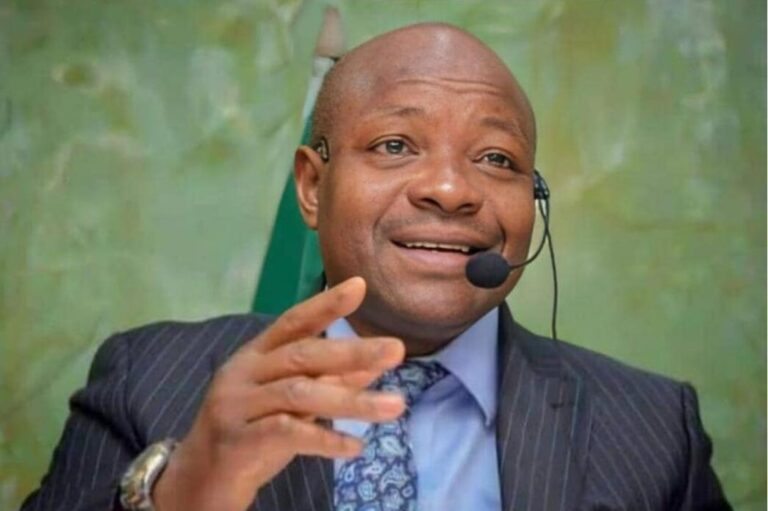
The Director-General of the Department of State Services (DSS), Adeola Ajayi, has directed operatives of the agency not to arrest individuals over civil matters.
Ajayi gave the directive on Thursday during an interview with selected media executives, saying it was part of efforts to strengthen respect for the rule of law and improve the agency’s human rights record.
The DSS boss said he had introduced reforms in five major areas since assuming office.
They include law enforcement, cooperation with other security agencies, accountability, respect for human rights, and infrastructural and administrative reforms.
According to him, the measures are aimed at improving the agency’s operational efficiency.
According to him, the reforms had also created a clearer distinction between civil and criminal matters within the agency, noting that his career experience showed that the DSS had previously conflated the two.
He said the use of force is inappropriate in civil disputes.
“You cannot apply the use of force in civil matters. Even some criminal matters don’t require force,” Ajayi said.
He cited the case involving Pat Utomi, a political economist, over allegations relating to an attempt to establish a “shadow government”.
“Rather than arrest him, we sought judicial interpretation,” the DG DSS said.
“And the court ruled that his adventure was unconstitutional, illegal, and a threat to national security.”
He also referred to a case involving the Socio-Economic Rights and Accountability Project (SERAP), saying the organisation approached the court over allegations that two DSS operatives invaded its premises.
He said the matter was pursued in court without any arrest, adding that the court eventually awarded more than N100 million in favour of SERAP.
Ajayi said the DSS now resorts to the courts in civil matters, adding that he had instructed operatives that there should be no arrest in any civil case.
He said the agency would also approach the courts in cases involving journalists because “we do the same job.”
Ajayi described journalists as “professional colleagues” of the DSS, noting that the difference is that journalists inform the public while the DSS informs the government.


 Follow Us on Google Discover









Wike, Akpabio, Uzodimma: Unity at the podium, rival ambitions behind the Scenes? can Tinubu keep his associates together?

Real reason we removed universities from IPPIS, recruitment waiver – FG

Macron condemns looting, vandalism during cost-of-living protests in France

Lagos State: List of LGAs, population, land mass, government, other key facts

Oyo State: List of LGAs, population, land mass, government, other key facts

Osun State: List of LGAs, population, land mass, government, other key facts

Ondo State: List of LGAs, population, land mass, government, other key facts

Eight Nigerian Soldiers killed as ISWAP landmine hits Army patrol vehicle in Borno

Bauchi Health Agency boss, four children die in Road accident

‘Nigeria cannot become prosperous in four years’ — Tinubu’s Economic Adviser says

2027: Tinubu must be stopped, ‘even Buhari saw him as bad news’ — Hakeem Baba-Ahmed

APC sweeps all 21 chairmanship seats, 239 Councillorship positions in Kogi LG poll

‘₦29,000 Cannot sustain a retired officer’ — Atiku challenges Tinubu on police pensions, proposes initiative

FG ends 17-year blackout in Gombe community with 1MW solar mini-grid

EPL: Leeds hold Man Utd to 1-1 draw as pressure mounts on Carrick

Opposition will front a single candidate against Tinubu, announcement will be made few days to election – Lukman
‘₦29,000 Cannot sustain a retired officer’ — Atiku challenges Tinubu on police pensions, proposes initiative

Gunmen kill four vigilantes in Plateau community

Tension as traditional ruler collapses, dies in Ondo

Suspended NSCDC commandant apologises over deaths of suspected illegal miners in Niger

Veteran Journalist, diplomat Dele Cole dies at 86

Ogun hospital under fire as Nurse dies of asthma attack amid alleged oxygen failure

2027: ‘APM will beat Tinubu in 12 battleground states’ – Makinde’s campaign team

2027: NDC will never step down for Atiku, stop attacking us – Kwankwaso replies ADC Campaign Council

Buhari backed Osinbajo’s presidential ambition four times, Akande tells Babachir Lawal

Macky Sall quits race for UN Secretary-General position

COAS arrives Borno as Military moves to clear terrorist camps, rescue abductees

Dr. Benjamins‑Laniyi urges media to amplify women’s leadership, adopt gender‑sensitive reporting

Messi’s double fires Inter Miami to 3-1 victory over Atlanta United
