
National News
‘Nigeria cannot become prosperous in four years’ — Tinubu’s Economic Adviser says

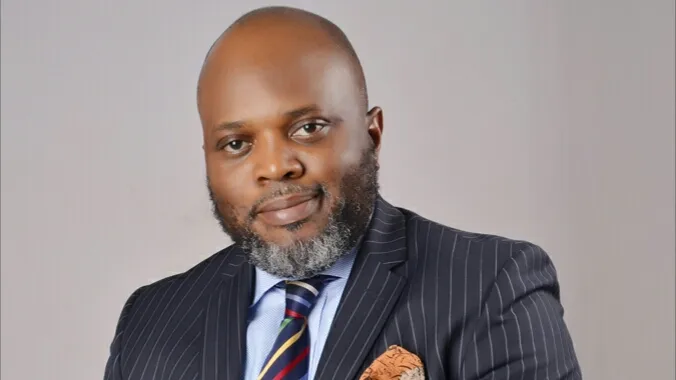
Tope Fasua, Special Adviser to the President on Economic Affairs in the Office of the Vice President, has said Nigeria cannot achieve sustainable prosperity within three or four years, urging Nigerians to be patient as the Federal Government consolidates its ongoing economic reforms.
Fasua said Nigerians would begin to experience greater benefits from the reforms as improvements in inflation, foreign reserves, economic growth and investment translate into better living conditions.
He spoke with the News Agency of Nigeria (NAN) on the sidelines of the International Monetary Fund (IMF) and World Bank Group Annual Meetings in Thailand.
According to him, Nigeria’s investment engagements in Thailand showcased 65 transactions and attracted more than $6 billion in private capital commitments.
Fasua said the Federal Government remained committed to sustaining the reforms while introducing social protection measures to ease the impact of economic hardship on vulnerable Nigerians.
He disclosed that Nigeria’s inflation rate had declined to about 14.63 per cent in September, expressing optimism that the downward trend would continue in the coming months.
“I am optimistic that the downward trend will continue towards the 10 per cent range in the coming months, barring unforeseen circumstances. Positive economic indicators have improved Nigeria’s standing with the international investment community,” he said.
Fasua added that Nigeria had received a positive response from investors, whom he said were encouraged by developments in the country’s macroeconomic environment.
“What we have seen here is a very good reception towards Nigeria because they see that the macro-economy is doing extremely well,” he said.
He identified declining inflation, easing interest rates, improved foreign reserves and gross domestic product (GDP) growth as indicators suggesting that the economy was moving in the right direction.
The presidential adviser also cited developments in the capital market, claiming that it had attracted investments estimated at ₦133 trillion, equivalent to approximately $100 billion.
However, Fasua acknowledged that improvements in macroeconomic indicators had yet to provide sufficient relief for many households struggling with the cost of living.
He argued that a stable macroeconomic environment was necessary to achieve sustainable improvements at the household level.
“The micro-economy can only stand on the macro-economy. If you do not fix the macro, you cannot do anything with the micro,” he said.
Using the analogy of a building, Fasua explained that economic reforms involved laying a solid foundation before the benefits could be fully realised by citizens.
He said President Bola Tinubu had indicated that the period of economic sacrifice was approaching its end, with the government now concentrating on consolidating the gains of the reforms.
Fasua acknowledged that rising fuel prices continued to place pressure on households and businesses but maintained that some sectors of the economy were recording encouraging developments.
He identified real estate, oil and gas, entertainment and electronic commerce as sectors showing positive signs.
The presidential adviser also ruled out reversing the economic reforms, describing the current period as an inappropriate time to abandon the policies.
Government Plans Social Protection Measures
On efforts to address economic hardship, Fasua said the Federal Government was developing a social protection package targeting the most vulnerable members of society.
He said the initiative would prioritise elderly people, children and persons whose conditions limited their ability to support themselves.
Fasua expressed a preference for interventions that would help beneficiaries become economically self-reliant, rather than relying solely on direct cash transfers.
“We are not very much a big fan of just collecting money and giving people money. It is better to teach people how to fish than to just give them fish,” he said.
He, however, acknowledged that direct financial assistance remained necessary for vulnerable Nigerians who needed immediate support.
According to him, the government was working on documentation to identify eligible beneficiaries and ensure that assistance reached them directly.
Fasua also urged the media to report economic developments accurately and help improve public understanding of government policies, describing public awareness and constructive engagement as important to national development.
He maintained that building a prosperous country required sustained effort, cooperation and patience.
“Building a prosperous country requires sustained effort, cooperation and patience. Meaningful development cannot be achieved within two, three or four years. We have only one country, and we all have to come together. Development is not a walk in the park,” he said.


 Follow Us on Google Discover






Eight Nigerian Soldiers killed as ISWAP landmine hits Army patrol vehicle in Borno

Bauchi Health Agency boss, four children die in Road accident

‘Nigeria cannot become prosperous in four years’ — Tinubu’s Economic Adviser says

2027: Tinubu must be stopped, ‘even Buhari saw him as bad news’ — Hakeem Baba-Ahmed

APC sweeps all 21 chairmanship seats, 239 Councillorship positions in Kogi LG poll

‘₦29,000 Cannot sustain a retired officer’ — Atiku challenges Tinubu on police pensions, proposes initiative

FG ends 17-year blackout in Gombe community with 1MW solar mini-grid

EPL: Leeds hold Man Utd to 1-1 draw as pressure mounts on Carrick

DSS arrests of NYSC kidnappers, Faisal Maina: Why intelligence must take centre stage: by Olufemi Lawson

SSANU halts two-week strike ultimatum after FG’s intervention

Catholic priest dies after Jesus’ statue falls on him during mass in Ecuador (video)

2027: NDC will never step down for Atiku, stop attacking us – Kwankwaso replies ADC Campaign Council

I fear APC’s internal crisis more than Atiku – Shettima

Why Shettima Insults Atiku: by Farooq Kperogi

Messi’s double fires Inter Miami to 3-1 victory over Atlanta United

2027: Step down if you are not working for Tinubu – Deji Adeyanju dares Obi, Kwankwaso

2027: Kwankwaso a goat in sheep’s clothing, secretly working for Tinubu – Atiku Campaign Council

Security forces arrest five suspects over abduction of 20 NYSC members in Imo

33 Governors cannot be wrong in supporting Tinubu – Bayo Onanuga

Opposition will front a single candidate against Tinubu, announcement will be made few days to election – Lukman

2027: ‘I wont join my Uncle to support Tinubu’ – Davido says

DSS arrests Maina’s fugitive son in Abuja, hands him over to EFCC

Gunmen kill four vigilantes in Plateau community

Veteran Journalist, diplomat Dele Cole dies at 86

Tension as traditional ruler collapses, dies in Ondo

Suspended NSCDC commandant apologises over deaths of suspected illegal miners in Niger
2027: NDC will never step down for Atiku, stop attacking us – Kwankwaso replies ADC Campaign Council

Ogun hospital under fire as Nurse dies of asthma attack amid alleged oxygen failure

2027: ‘APM will beat Tinubu in 12 battleground states’ – Makinde’s campaign team
