National News
Hardship: Workers begin 3-day warning strike nationwide today

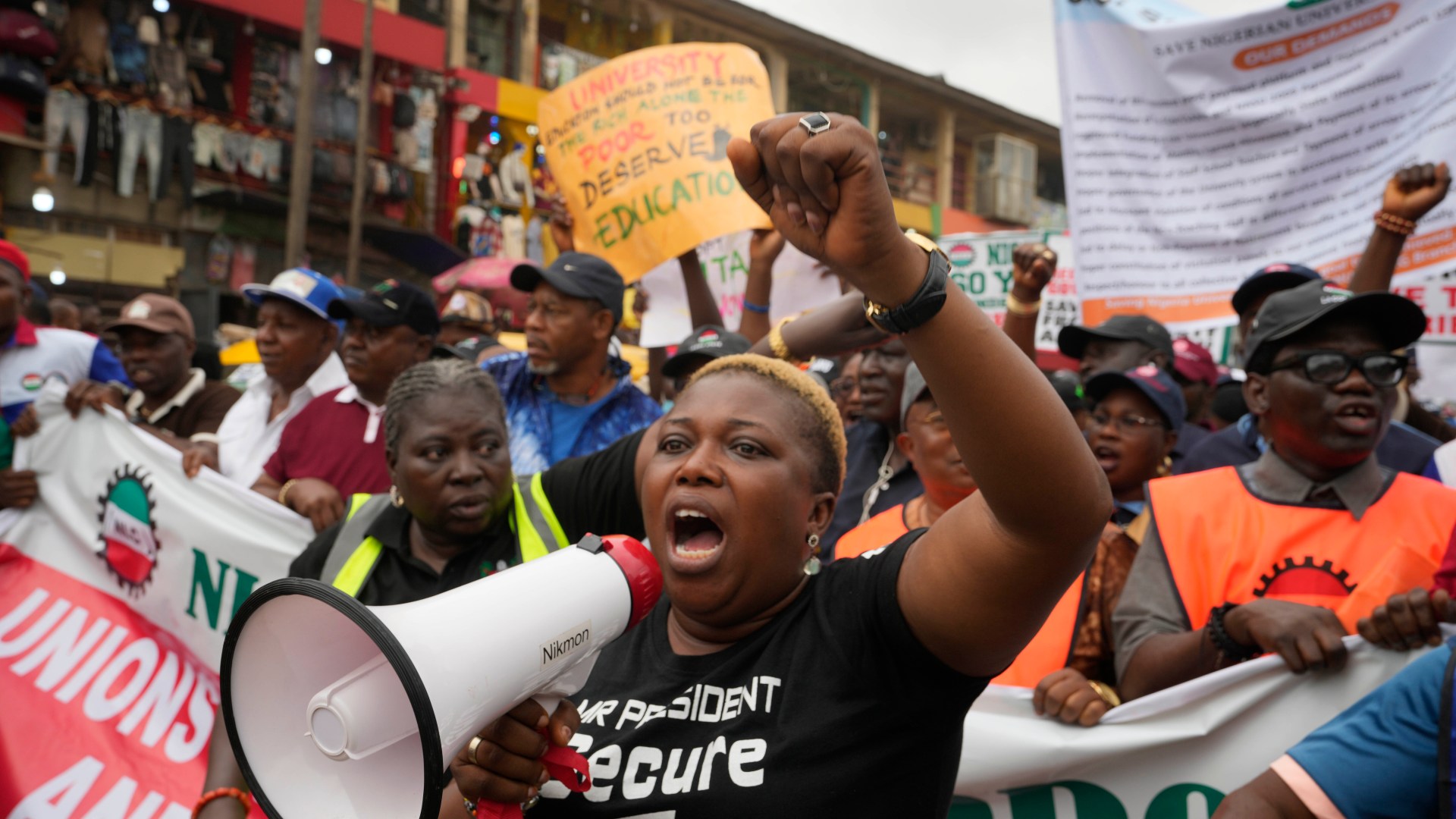
Public sector workers under the Joint National Public Service Negotiating Council (JNPSNC) have been directed to commence a three-day nationwide warning strike from midnight on Friday, October 2, 2026, over the Federal Government’s failure to address their demands for economic relief.
The industrial action is expected to affect employees of federal, state and local governments, including workers in ministries, departments and agencies (MDAs) across the country.
The council also directed officials of its affiliate unions at all levels to ensure full compliance with the strike, citing worsening economic conditions and the hardship confronting workers, their dependants and other vulnerable Nigerians.
The decision followed President Bola Tinubu’s Independence Day broadcast, which the council said failed to address its demands for a reduction in petrol prices, an immediate wage award and other measures to cushion the effects of economic hardship.
The JNPSNC had earlier threatened industrial action if the President failed to address the demands by September 30, particularly during his Independence anniversary address.
Strike to commence October 2
The directive was contained in a circular issued on Thursday by the council’s National Secretary on the Trade Union side, Olowoyo Gbenga, and addressed to national presidents and general secretaries, as well as state chairmen and secretaries of affiliated unions.
Titled “Declaration of Three-Day Warning Strike; Action With Immediate Effect,” the circular directed public servants across the three tiers of government to participate in the industrial action from Friday, October 2, to Sunday, October 4, 2026.
The circular partly read: “Please, recall the position of the National leadership of JNPSNC that if Mr President of the Federal Republic of Nigeria, Tinubu refuses to address our requests as contained in the letter to his exalted office (dated September 21, 2026), the three-day warning strike earlier scheduled shall commence immediately.
“Consequent upon the above, the strike shall start with effect from midnight of Friday, October 2, 2026, to Sunday, October 4, 2026.”
The council urged workers to unite behind the action, arguing that the prevailing economic conditions had become increasingly difficult for public servants and their families.
It stated that the strike was necessary to press home its demands and called on union leaders to mobilise members nationwide.
Workers disappointed with Tinubu
A leader of the JNPSNC, who spoke to Vanguard, expressed disappointment that Tinubu’s Independence Day address did not announce any immediate relief measures in response to the workers’ demands.
The union leader said the President acknowledged the hardship facing Nigerians but failed to provide concrete measures to address the concerns raised by organised labour.
The council had formally communicated its demands to Tinubu in a letter dated September 21, 2026.
Among its key demands are a reduction in petrol prices to ₦500 per litre, an immediate wage award for public servants and the commencement of negotiations for a new national minimum wage of at least ₦500,000 from 2027.
Details of workers’ demands
In its earlier statement, the council called on the Federal Government to take urgent steps to reduce the pump price of Premium Motor Spirit (PMS), arguing that the prevailing cost of fuel was placing severe pressure on workers and other Nigerians.
The JNPSNC proposed an intervention fund to address fuel landing costs and support operators in the oil and gas sector.
It also called for the sale of crude oil to the Dangote Refinery and modular refinery operators under appropriate terms to encourage domestic refining and reduce the cost of petroleum products.
The council said petrol prices, which it claimed ranged from ₦1,450 to ₦2,000 per litre in many locations and reached ₦2,500 in some areas, were making it increasingly difficult for workers to meet basic needs.
On wages, the union demanded an immediate wage award to cushion the impact of rising living costs on public servants, their dependants and vulnerable households.
It also called for the urgent constitution of a tripartite committee to begin negotiations on a new national minimum wage expected to become due in 2027.
According to the council, establishing the committee early would help prevent administrative delays in negotiating and implementing the new wage structure.
Unions under JNPSNC
The JNPSNC comprises several public sector unions, including the Nigerian Civil Service Union (NCSU), Medical and Health Workers Union (M&HWU), Association of Senior Civil Servants of Nigeria (ASCSN) and National Association of Nigerian Nurses and Midwives (NANNM).
Other affiliates include the Amalgamated Union of Public Corporations, Civil Service Technical and Recreational Employees (AUPCTRE), Nigeria Union of Public Service, Reportorial, Secretarial, Data Processors and Allied Workers (NUPSRAW), National Union of Printing, Publishing and Paper Products Workers (NUPPPPROW), and National Union of Agriculture and Allied Employees (NUAEE).
SSANU warns over implementation of 2026 agreement
Meanwhile, the Senior Staff Association of Nigerian Universities (SSANU) has warned the Federal Government and university authorities against delays, selective implementation and marginalisation in the implementation of its 2026 agreement with the government.
The union made its position known during the 56th National Executive Council meeting held at the University of Uyo, Akwa Ibom State.
Delivering the State of the Union Address, SSANU National President, Mohammed Ibrahim, said implementation had commenced in some universities but remained incomplete in others due to funding and administrative challenges.
Ibrahim insisted that the agreement and resolutions of the union’s National Executive Council must translate into measurable benefits for members.
“Agreements and NEC resolutions must translate into concrete action and measurable benefits for our members,” he said.
He directed branch and zonal officials to monitor implementation, maintain accurate membership records, document cases of non-compliance or victimisation and submit timely reports to the national secretariat.
While reaffirming the union’s commitment to dialogue, Ibrahim warned that the association would consider lawful and constitutional measures if the implementation process was deliberately frustrated.
He also disclosed that the 2026 FGN/SSANU Agreement took effect from January 1, 2026, although it was formally signed on June 29, 2026.
According to him, outstanding financial obligations arising from the agreement’s effective date must be fully addressed.
The developments highlight growing labour concerns over workers’ welfare, wage negotiations and the implementation of agreements across Nigeria’s public sector.


 Follow Us on Google Discover





2027: Fuel will be free for Okada, Keke riders if am elected – Gombe ADC governorship candidate Tinka declares

‘I’m Not Very Well Myself’ — Pete Edochie speaks on health challenges

2027: Ogun NNPP guber candidate withdraws suit challenging Yayi’s eligibility

Court remands man in Kuje prison over alleged impersonation of JAMB Registrar

FIFA rejects Argentina’s bid to retire Messi’s legendary No. 10 shirt

JUST IN: WAEC names Amos Dangut as new Registrar, CEO

Man City file appeal against Premier League verdict

Nollywood Actress Chioma Chukwuka-Akpotha loses father

Christa Pike: Meet the American woman who survived execution after two doses of lethal injection

BREAKING: Veteran Actor Olu Jacobs laid to rest in Lagos

Nigerians groan as transport fares remain high despite Tinubu’s October 1 promise

‘Muslims Don’t Own Nigeria’ — Oyedepo tackles those opposed to Christian President

‘Rescue my daughter, 18 others’ — Ibadan woman begs Tinubu, Police after NYSC abduction

Dangote Foundation offers Nigerian students free refinery shares

Zulum hosts five North-East governors for key regional meeting in Maiduguri

Access Bank announces recruitment for 9 positions across Nigeria – Apply Now

First Bank announces recruitment for 14 positions across Nigeria – Apply Now

Nigeria@66: Full text of President Tinubu’s independence day speech

BREAKING: I will resign as FCT Minister if Tinubu loses Rivers, FCT in 2027 – Wike

Listen to Nnamdi Kanu, release El-Rufai, Sheikh Zaria — Atiku Tells Tinubu

Explain to Nigerians how you transferred N750bn to people without phones?’ — Atiku tackles APC Chairman

Saudi Arabia grants Nigeria additional 10,000 slots for 2027 Hajj

Nollywood mourns again as actor CJay Nwoks passes away

66th Independence: Tinubu to address Nigerians Thursday at 7am

Hardship: Public sector workers begin three-day warning strike nationwide

Hardship: Workers begin 3-day warning strike nationwide today

Atiku to Tinubu: Address Kanu’s grievances, release El-Rufai, Sheikh Zaria

‘If elected, I will make life more affordable’ – Atiku
Dangote Foundation offers Nigerian students free refinery shares
