
Editorials
Tinubu’s Fuel Discount: Who pays, who benefits and what happens after 30 Days?

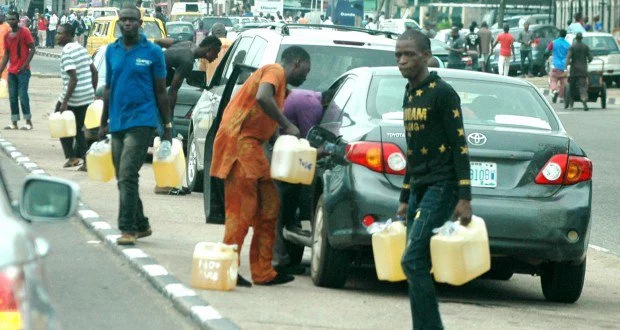
The Federal Government’s decision to introduce a 30-day petrol discount at stations operated by the Nigerian National Petroleum Company Limited (NNPCL) has reopened one of the most contentious economic debates in Nigeria: whether the removal of fuel subsidy has delivered the promised benefits and what the government should do to ease the burden on citizens.
Announced by the Minister of Finance and Coordinating Minister of the Economy, Taiwo Oyedele, the intervention is being presented by the government as a temporary measure to moderate petrol prices and reduce the pressure on public transport operators and commuters.
But the announcement has triggered a wave of questions from opposition politicians, labour unions, petroleum marketers and economic analysts. At the centre of the debate are three fundamental issues: how the discount will work, who will ultimately bear its cost and whether Nigerians can expect meaningful relief after the initial 30-day period.
The controversy is particularly significant because the Tinubu administration has repeatedly defended the removal of petrol subsidy as a necessary step towards restoring fiscal stability and eliminating distortions in the petroleum market.
Now, with the government introducing a temporary discount amid persistent complaints about fuel prices and the cost of living, critics are asking whether the intervention represents a departure from its original policy or an acknowledgement that the consequences of subsidy removal require more effective measures.
A discount, not a subsidy?
Speaking at a press briefing in Abuja tagged “Fuel Prices and the Subsidy Question”, Oyedele announced that the government would offer a discount on petrol dispensed at NNPCL stations for an initial period of 30 days, with public transport operators given priority nationwide.
“We are offering a discount on petrol dispensed by NNPC Limited for the next 30 days in the first instance with priority for public transporters nationwide. It’s not a subsidy; the government is saying we sell to you at a cost,” he said.
The minister also outlined a proposed arrangement to negotiate a ceiling of N1,350 per litre on the ex-gantry cost of petrol, with the aim of reducing the effect of fluctuations in international crude oil prices and exchange rates on domestic pump prices.
Under the proposed price-modulation mechanism, refiners and importers would bear costs above the agreed ceiling and recover the shortfall later when market conditions improve.
Oyedele said the arrangement was designed to moderate price fluctuations rather than suppress prices artificially.
“Pump prices should not have to follow every swing in global crude or exchange rate. The government is negotiating a ceiling of N1,350 a litre on the ex-gantry cost of petrol to keep pump prices stable,” he explained.
He argued that price stability would offer consumers and businesses greater certainty, noting that sharp increases in fuel prices often place immediate pressure on transportation, logistics and household expenses.
The government also plans to review the ceiling monthly and publish relevant figures to promote transparency.
However, the distinction between a subsidy and a discount has become one of the most disputed aspects of the policy.
The crucial economic question is not simply what the government calls the arrangement. It is whether any party is absorbing costs that would otherwise have been reflected in the price paid by consumers.
If the government or another party bears part of the cost to keep prices below what prevailing market conditions would otherwise dictate, the arrangement could carry subsidy-like economic consequences, regardless of its official description.
The N1,350 ceiling and the question of who pays
The proposed ex-gantry ceiling is intended to shield domestic fuel prices from sudden increases in crude oil prices and exchange rates.
Oyedele said refiners and importers would initially bear any shortfall when their costs exceed the agreed ceiling, with opportunities to recover the difference when market conditions become favourable.
But this raises questions about how the arrangement will operate in practice.
Will refiners and importers voluntarily absorb the additional costs? What happens if international crude prices remain high or the exchange rate moves against them for an extended period? How will the government verify the actual costs incurred and the amounts eventually recovered?
These questions matter because the sustainability of the arrangement depends on whether the proposed mechanism can function without creating hidden liabilities, discouraging investment or placing additional pressure on the petroleum supply chain.
Petroleum Economics Professor Emeritus Wumi Iledare, Executive Director of the Emmanuel Egbogah Foundation, said there was an economic justification for directing relief towards public transport operators rather than offering cheaper petrol indiscriminately to all motorists.
According to him, lowering the cost of public transportation could reduce logistics expenses and help moderate inflation, particularly for low-income households.
However, he warned that the intended benefit would be lost if transport operators received discounted fuel but continued charging passengers the same fares.
“If a transporter receives cheaper petrol but passengers continue paying the same fare, the public does not receive the intended welfare gain,” he said.
Iledare urged the government to disclose the discount per litre, the volume of fuel covered, the total financial exposure and the mechanisms for ensuring that the savings reach commuters.
He also called for the publication of the actual cost of the intervention and an independent assessment of its financial implications after the 30-day period.
In his assessment, the arrangement carries what he described as a “subsidy-equivalent risk” unless the actual distribution of its costs and benefits demonstrates otherwise.
He argued that any temporary relief programme should be targeted, time-bound, transparent, independently auditable and subject to a clear financial limit.
He also cautioned against allowing NNPCL to become a government-directed price setter in ways that could undermine competition in the downstream petroleum market.
Presidency insists the policy is not a return to subsidy
The Presidency has also rejected suggestions that the intervention represents a return to the former fuel subsidy regime.
Special Adviser to the President on Information and Strategy, Bayo Onanuga, maintained that the measure was designed to moderate price fluctuations rather than suppress market prices through subsidies.
The government has also proposed forward crude sales to domestic refiners as local production increases, arguing that the arrangement could reduce the country’s exposure to international price movements.
Another component of the plan is an accelerated rollout of compressed natural gas-powered vehicles.
According to the Presidency, CNG is between 60 and 70 per cent cheaper than petrol, creating an opportunity to reduce transportation costs if the savings are passed on to passengers.
The government is also considering a National Strategic Fuel Reserve to protect the economy against future supply disruptions and price shocks.
Under the proposed arrangement, refined products would be released according to published rules during periods of disruption, hoarding or artificial scarcity.
These measures suggest that the government is attempting to address fuel-price volatility through a combination of market interventions, alternative energy sources and strategic reserves.
The challenge, however, is translating those proposals into measurable benefits for consumers.
For households facing high food prices and transportation costs, the distinction between a temporary discount and a broader subsidy policy may matter less than the amount saved at the pump and whether the savings last.
Marketers demand inclusion
The proposed concentration of discounted petrol at NNPCL stations has also generated concerns among independent petroleum marketers.
The Independent Petroleum Marketers Association of Nigeria (IPMAN) said its members should be included in the arrangement to ensure that the intervention reaches consumers beyond NNPCL outlets.
IPMAN National Publicity Secretary Chinedu Ukadike said independent marketers wanted access to products at the same discounted rate.
“We don’t know how they want to achieve that. We also want to enjoy that benefit. NNPCL should be giving us products at that same rate so that there will be no confusion,” he said.
Ukadike warned that implementing the arrangement without involving independent marketers could create confusion and undermine the policy’s intended objectives.
The Petroleum Products Retail Outlets Owners Association of Nigeria (PETROAN) also welcomed the intervention but called for a broader distribution network.
Its National President, Billy Gillis-Harry, said the government should allocate between 30 and 40 per cent of the discounted product to PETROAN-affiliated retail outlets.
He argued that involving more outlets would improve nationwide access, reduce the likelihood of queues and ensure that consumers in different communities could benefit.
The two associations have therefore raised an important implementation question: if discounted petrol is available only through a limited number of outlets, how effectively can the intervention reach public transport operators and other intended beneficiaries?
A policy intended to ease hardship could lose much of its value if access is restricted, distribution becomes uneven or consumers must spend additional money travelling to designated stations.
Industry analyst warns of a disguised subsidy
Oil and gas industry analyst Marcel Okeke described the arrangement as a possible return of subsidy in another form.
He questioned whether the government would have to absorb part of the cost if fuel importers were expected to sell petrol below the prevailing market cost.
Okeke also raised concerns about the implications for domestic refiners, particularly the Dangote refinery.
If imported petrol benefits from an arrangement that allows it to be sold more cheaply than competing products, he argued, the government could create an uneven competitive environment unless domestic refiners receive comparable treatment.
Such a situation could complicate the government’s stated objective of strengthening domestic refining and reducing Nigeria’s dependence on imported petroleum products.
Okeke also questioned the sustainability of the intervention.
“For now, the arrangement is only for the next 30 days. What happens after those 30 days? That is the big question,” he said.
He linked the timing of the announcement to the wider political environment, arguing that the government would be under pressure to demonstrate that it was responding to the economic difficulties confronting Nigerians.
He also noted that transportation costs affect the prices of goods and services throughout the economy, meaning that a meaningful reduction in transport expenses could have wider benefits.
However, he argued that the government’s CNG programme would require more than the deployment of vehicles. Adequate refuelling infrastructure must also be available across the country if the initiative is to deliver sustainable savings.
Labour demands an end to policies that deepen hardship
The Nigeria Labour Congress (NLC) has taken a more confrontational position, calling on the Federal Government to abandon what it described as insensitive policies that have allowed indiscriminate increases in petroleum prices.
The union made its position known in a communique issued after a joint meeting of its National Executive Council and Central Working Committee in Abuja.
NLC President Joe Ajaero said high petrol prices had contributed to rising transportation costs, food prices and the cost of essential goods, worsening the economic difficulties facing workers and other Nigerians.
The Congress urged the government to work with relevant agencies to reduce the price of petrol immediately.
It argued that workers could not be expected to continue making sacrifices without corresponding relief from the government.
Ajaero also criticised the broader economic environment, pointing to persistent inflation, pressure on the naira, declining purchasing power and the rising cost of living.
The NLC’s position reflects a wider concern that temporary interventions may not adequately address the structural pressures affecting household welfare.
For organised labour, the issue is not simply whether the government can reduce petrol prices for one month. It is whether its economic policies can produce a sustained improvement in living standards.
ADC rejects the intervention
The African Democratic Congress Presidential Campaign Council has dismissed the 30-day discount as a political intervention rather than a sustainable economic policy.
In a statement, its Director of Media and Publicity, Kola Ologbondiyan, questioned what would happen after the initial period expired.
“What happens after 30 days? Will Nigerians return to buying petrol at over N1,400 per litre?” he asked.
The campaign council argued that Nigerians had endured prolonged hardship following the removal of petrol subsidy and other economic reforms, adding that a one-month discount would not resolve the underlying problems of inflation, unemployment and declining purchasing power.
Former Vice-President Atiku Abubakar, the ADC presidential candidate, also criticised the proposal.
In a statement issued by his spokesman, Phrank Shaibu, Atiku described the intervention as a politically motivated attempt to offer temporary relief after years of rising fuel costs.
He argued that Nigerians should not be expected to welcome a short-term discount while facing the same economic pressures once it expires.
Atiku also questioned the decision to limit the intervention to NNPCL stations, noting that the government had yet to specify the savings motorists would receive per litre or establish a clear guarantee that public transport operators would reduce their fares.
The former Vice-President said the proposal demonstrated the need for a different approach to fuel pricing and reiterated his support for capped, budgeted production support tied to petrol refined in Nigeria.
He argued that such a framework should include safeguards to ensure that the benefits reach consumers while supporting domestic refining.
The ADC’s position illustrates how fuel pricing has become an important issue in the emerging political contest ahead of the 2027 general election.
Another opposition campaign questions the scale of relief
The Makinde/Daura Presidential Campaign Organisation, operating under the Allied Peoples Movement, has also criticised the intervention.
Its Director of Strategic Communications, Richard Ihediwa, described the discount as an inadequate response to the scale of hardship experienced by Nigerians.
The organisation questioned why a government that had overseen substantial increases in petrol prices was now offering what it considered a minimal reduction for only one month.
It also criticised the restriction of the intervention to NNPCL stations, arguing that the arrangement would divide consumers according to where they purchase petrol.
For the campaign organisation, the proposal falls short of the broader reduction in fuel costs that many Nigerians have been demanding.
Its criticism reinforces the central question confronting the administration: whether the proposed relief is proportionate to the economic burden citizens have endured.
A 30-day intervention cannot substitute for a lasting policy
The Federal Government has presented the petrol discount as part of a broader effort to moderate fuel-price volatility, support public transportation and reduce the pressure on households and businesses.
Its proposed measures include price modulation, forward crude sales to domestic refiners, accelerated CNG deployment, cash transfers, subsidised credit for small businesses and consumers, and possible additional taxes on excess profits in the energy value chain.
Oyedele said the government would consider an excess-profit tax for operators found to be taking undue advantage of the situation.
According to the minister, the proceeds would be used exclusively to cushion the impact of fuel prices through transport support or vouchers for vulnerable urban minimum-wage earners.
The government also plans to work with the National Assembly on enhanced tax relief for low-income earners under the 2027 Finance Bill.
These proposals could form part of a broader response to fuel-price volatility, but their effectiveness will depend on implementation, funding and accountability.
The government must explain how the discount will be calculated, who will bear the costs, how independent marketers will participate and how public transport operators will be monitored to ensure that passengers benefit.
It must also provide a clear account of the intervention once the 30-day period ends.
Without those details, the programme risks becoming another temporary measure whose immediate benefits are difficult to quantify and whose long-term implications remain uncertain.
The debate over subsidy will not be resolved by terminology alone. Calling an intervention a discount, price-modulation mechanism or market-stabilisation measure does not eliminate the need to disclose its financial implications.
Ultimately, Nigerians will judge the policy by whether it makes transportation more affordable, eases pressure on household budgets and provides a credible path towards greater price stability.
The government may be right that the old subsidy arrangement should not return in its previous form. But it must also recognise that the burden of economic adjustment cannot be assessed solely through fiscal savings or market reforms.
It must be measured against the welfare of the people those reforms are intended to serve.
The real test of Tinubu’s 30-day petrol discount is not what the government calls it, but how much Nigerians save, who pays for the relief and what happens when Day 31 arrives.


 Follow Us on Google Discover






Kano Assembly begins review of state police bill, sets October 12 for second reading

Ekiti driver takes N3.5m Loan to campaign for Tinubu, Bamidele, Fatoba’s re-election

FCT strike: Wike orders ‘no work, no pay’ for NLC, NUT members

Gunmen kill security operative, steal motorcycle in Plateau

Gunmen abduct three CRIN workers in Oyo, demand N120m ransom

SERAP’s appeal against N100m defamation judgment stalls, adjourned again

Federal University Gusau (FUGUS) announces recruitment for Pharmacists, Nurses, Engineers, Accountants, others -Apply Now

Flour Mills of Nigeria announces Engineering Programme for young Nigerians – Apply Now

‘NNPC petrol price cut is business decision, not fuel subsidy’ – Oyedele

NNPC extends N66 fuel discount for another week, includes diesel in deal, insists subsidy not back

FG appeals to scrap dealers to suspend strike, resume negotiations

Tragedy in Anambra as three-storey building collapses, kills mother, 14-year-old daughter

55-year-old driver survives as train rams car in Lagos

Tinubu’s Fuel Discount: Who pays, who benefits and what happens after 30 Days?

Obidient Movement faults FG’s 30-Day petrol discount, says Peter Obi will restore subsidy under new plan

BREAKING: Tinubu’s Govt announces 30-Day petrol discount at filling stations for Nigerians
Flour Mills of Nigeria announces Engineering Programme for young Nigerians – Apply Now

BREAKING: Security forces rescue 20 NYSC members from abductors in Imo

2027: Peter Obi will win with or without Igbos’ vote — Isaac Fayose

2027: INEC commences training for supervisors

Fresh tragedy averted as NAF Helicopter lands on farmland in Benue

Buhari was not in charge, I’ll take full control of my govt if elected – Obi

‘Atiku, Obi must unite to stop Tinubu in 2027’ – Donald Duke
Supreme Court Verdict: Erring parties will not field candidates – INEC

2027: Taraba is 100% behind Tinubu — Governor Kefas

Super Eagles drop to 30th in latest FIFA ranking

NAF Crash: Aiyedatiwa orders sustained search for missing victims, aircraft

ASUSS defies NUT strike, orders FCT teachers to resume work

Atiku rejects FG’s 30-Day petrol discount, questions what Nigerians will do in Day 31