
News
Tinubu’s 30-Day petrol discount is subsidy return – Kenneth Okonkwo

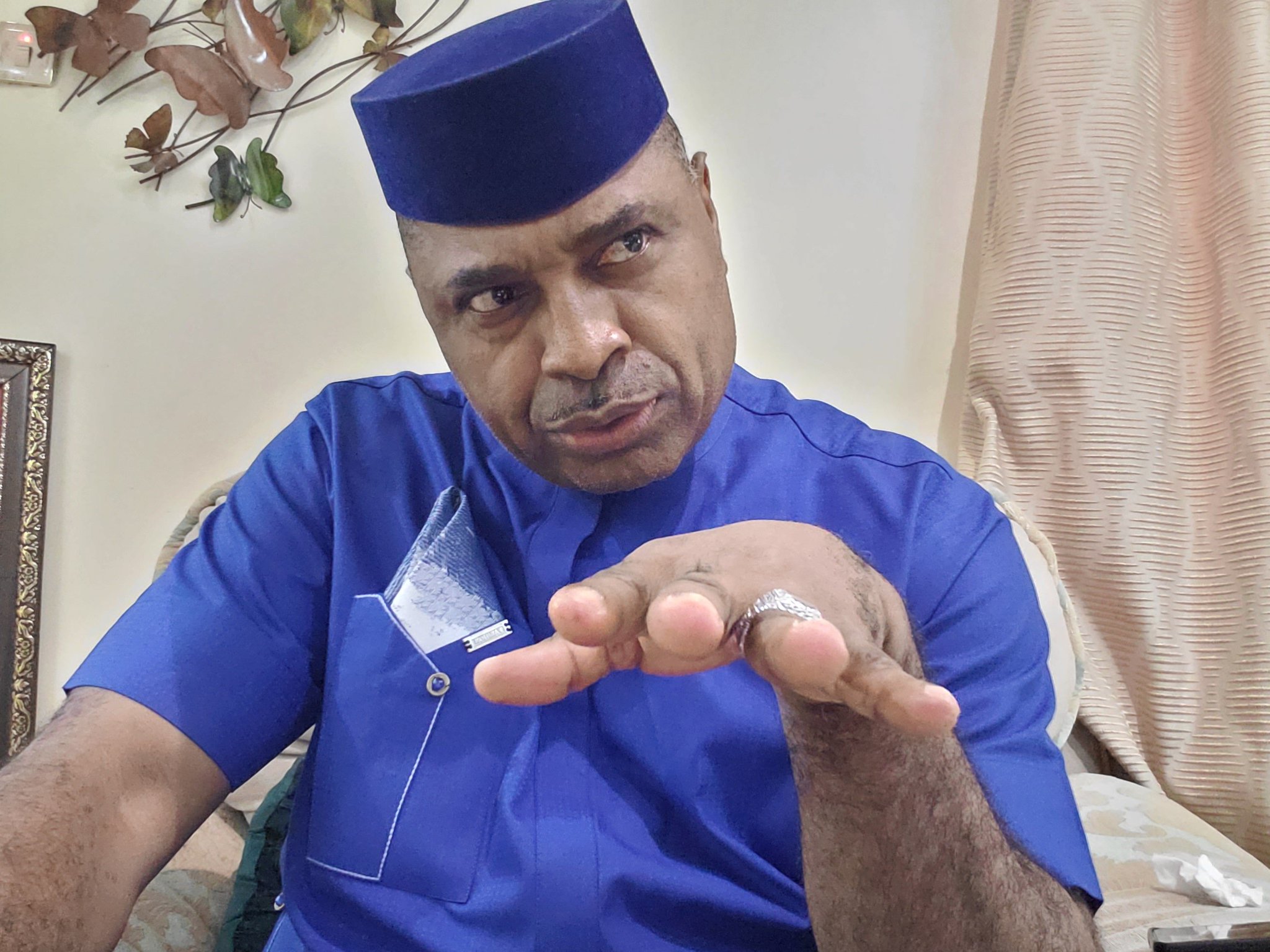
A chieftain of the African Democratic Congress (ADC), Kenneth Okonkwo, has accused President Bola Tinubu’s administration of effectively reintroducing petrol subsidy through its 30-day petrol price discount, despite the Federal Government’s insistence that the initiative is not a return to the subsidy regime.
Okonkwo, a lawyer and former spokesperson for the Labour Party, made the allegation during an appearance on Channels Television, where he challenged the government’s explanation that the temporary price reduction was a discount rather than a subsidy.
He argued that both arrangements could serve the same economic purpose if they were designed to reduce the amount consumers pay for petrol.
“Sorry to say this, Taiwo Oyedele lied when he said it was not subsidy. It was subsidy,” Okonkwo said.
His comments were directed at the Minister of Finance and Coordinating Minister of the Economy, Taiwo Oyedele, who has defended the government’s position on the temporary reduction in petrol prices.
Okonkwo maintained that the government’s decision to intervene amid rising petrol prices demonstrated its recognition of the financial pressure on households and businesses.
According to him, the reported reduction in the pump price from about N1,500 to N1,350 per litre showed that the administration had moved to ease the burden on consumers.
“What were they trying to do? They were trying to reduce cost. They acknowledged by themselves that the cost was becoming unbearable for the people and they have to intervene to give relief for the people,” he said.
The ADC chieftain argued that an intervention aimed at making petrol more affordable could reasonably be regarded as a subsidy, regardless of the terminology used by the government.
“And they say it’s not subsidy. Then the whole idea of subsidy has to be redefined. Because what he did is exactly the definition of subsidy,” he added.
The disagreement centres on the distinction between a government-funded subsidy and a temporary price discount provided through a commercial pricing arrangement.
The Federal Government has maintained that the initiative does not amount to a restoration of the petrol subsidy removed by Tinubu in May 2023.
The administration has explained that the discount is intended to provide temporary relief to consumers without reversing its broader fuel pricing reforms.
The controversy comes against the background of significant increases in petrol prices following the removal of the subsidy shortly after Tinubu assumed office.
Before the policy change, the government spent substantial sums to keep petrol prices below levels that would otherwise have reflected the full cost of supply.
Although the arrangement placed considerable pressure on public finances, it also shielded consumers from some of the immediate effects of international oil prices, exchange-rate movements and domestic supply costs.
Following the subsidy removal, petrol prices rose sharply across different parts of the country, contributing to higher transportation costs and increasing the cost of food and other essential goods.
The development has intensified pressure on households and businesses already grappling with the rising cost of living.
Petrol remains a major input in transportation, power generation for businesses and the distribution of goods, meaning changes in its price can affect costs across several sectors of the economy.
While the government maintains that its temporary discount is different from the former subsidy arrangement, Okonkwo insists that the intervention serves the same fundamental purpose of reducing the cost borne by consumers.


 Follow Us on Google Discover





BREAKING: Court strikes out forgery charge against alleged PFIPC Director-General

‘I never handled $1bn defence procurement fund, money went to ministry’ – Ex-COAS Buratai

BREAKING: Makinde appoints Wolekanle as new Chief of Staff

Ayra Starr makes African history, headlines NFL international game halftime show in London

Explain how you will fund your campaign promises – Tinubu challenges Atiku, Obi, other presidential candidates

Police arrest four suspects over alleged rape of minors in Bauchi

Tinubu’s 30-Day petrol discount is subsidy return – Kenneth Okonkwo

INEC disowns fake notice on six states as parties seek candidates’ inclusion

CJN swears in 68 new SANs (Senior Advocates of Nigeria)

Ex-Akwa Ibom University SUG President dies at Enugu NYSC camp

JUST IN: Segun Ogunwuyi steps down as Makinde’s chief of staff

From Pantami to Adebutu: Political parties battle INEC over missing names on 2027 list

We’ve conducted our own polls, Tinubu will win 2027 election — APC Chairman Yilwatda

2027 Elections: Atiku challenges INEC to reveal identity of ballot paper printers

Dauda Ali Biu, former FRSC Corps Marshal, dies at 62

2027 Elections: INEC publishes final list of governorship candidates nationwide (Full list)

INEC omits Kwankwaso’s NDC governorship candidate Gwarzo from Kano final list

Benue APC delegates involved in road accident on way to rally

BREAKING: INEC clears Wike’s ally, Kingsley Chinda, for Rivers governorship race

JUST IN: US publishes names, identities of 24 Nigerians facing deportation

INEC names Tinubu, Atiku, Obi, 15 others in 2027 presidential race (Full List)

2027: INEC omits PDP governorship candidate Adebutu from Ogun final list

Latest World Bank report proves our reforms are working – Tinubu

2027: INEC excludes Pantami from final list of Gombe governorship candidates

‘Our ransom has been refunded’, says parents of abducted NYSC member

2027: Obi is a ‘packaged fraud’, he’s secretly working for Atiku, positioning himself to become SGF – Sowere alleges

NDLEA rearrests 83-year-old Abia woman with hard drugs months after conviction

2027: NDC set to inaugurate Presidential campaign council October 20

Amnesty International raises alarm, urges Wike to halt Maitama demolitions