Editorials
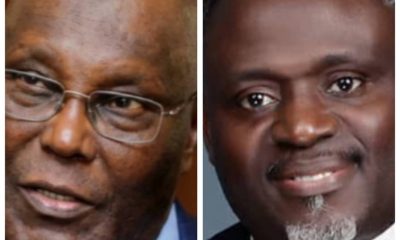
Atiku, Obi and the missed opportunity that may cost the opposition 2027

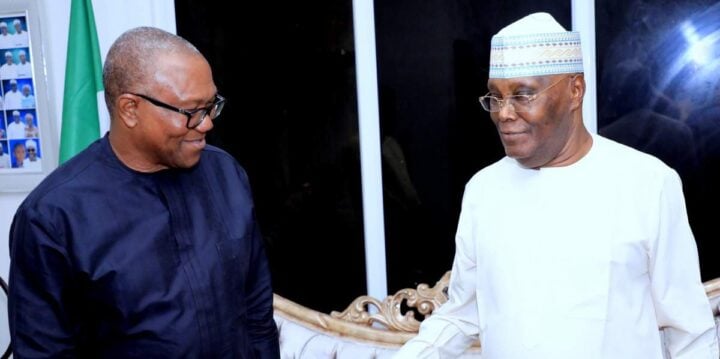
The growing distance between Atiku Abubakar and Peter Obi ahead of the 2027 general election is fast becoming one of the most consequential dilemmas within Nigeria’s opposition politics, and the African Democratic Congress (ADC) has now openly admitted its concern.
While ADC spokesman Bolaji Abdullahi stopped short of calling the situation a threat to democracy, his words on Arise Television carried an unmistakable warning: the lack of synergy between Nigeria’s two most prominent opposition figures remains a strategic problem that cannot be ignored.
This is not merely about personal ambition or party loyalty.
It is about numbers, structure, momentum, and whether the opposition is serious about challenging a ruling establishment that thrives on fragmentation.
A Familiar Opposition Problem
Nigeria has seen this script before.
Strong opposition figures emerge. Public frustration grows. Hope builds.
Then egos clash, alliances fracture, and opportunity evaporates.
In 2023, Atiku and Obi split the opposition vote, handing victory to the ruling party in an election many Nigerians believed could have produced a different outcome under a unified front.
Two years later, that lesson still hangs heavily in the air, yet there is no clear sign that the key actors are willing to act differently.
The ADC’s concern is therefore not misplaced. Politics is ultimately about coalitions, not sentiments.
Without cooperation among major contenders, the opposition risks repeating its most expensive mistake.
ADC’s Careful Balancing Act
Bolaji Abdullahi’s intervention was deliberately cautious.
On one hand, he acknowledged the obvious: the absence of collaboration between Atiku and Obi is a challenge.
On the other, he stressed that the ADC is not currently fixated on presidential tickets, but on building a functional, nationwide political structure capable of contesting elections across all 36 states and the FCT.
This posture reflects a party attempting to avoid being swallowed by personality politics too early.
The ADC wants to present itself as an institution, not a vehicle for any single ambition, a refreshing stance in a political environment often driven by individual calculations.
Yet, reality remains stubborn.
No serious national coalition can avoid confronting the Atiku–Obi question for long.
The Coalition Question
Obi’s recent claim that the ADC coalition is “shaky” due to unresolved zoning arrangements adds another layer of complexity.
While Atiku has already picked up ADC membership, Obi is yet to formally join, signalling hesitation, or leverage.
Abdullahi’s response makes it clear that ADC does not intend to rush into zoning debates or coronations.
The party is keeping its options open: consensus if possible, open contest if necessary, and conversations even beyond its own ranks.
This flexibility is strategic, but it also exposes a risk, endless consultations without decisive alignment may weaken momentum and confuse supporters yearning for clarity.
What Is Really at Stake
The issue is bigger than ADC. It cuts to the heart of opposition credibility in Nigeria.
Voters are increasingly impatient with political elites who talk about rescue and reform but fail to make the personal compromises required to win power.
Many Nigerians no longer want inspirational speeches alone; they want strategy, sacrifice, and unity of purpose.
If Atiku and Obi cannot find common ground, whether within ADC or another credible platform, the opposition may once again gift victory to its rivals before the first ballot is cast.
2027 Is Not Far Away
Time is not on the opposition’s side.
Coalitions take time to negotiate, structures take time to build, and trust takes even longer to restore once lost.
The ADC may still be laying foundations, but elections wait for no one.
If the lessons of 2023 are ignored, 2027 may become another chapter in Nigeria’s long history of opposition self-sabotage, not because victory was impossible, but because unity was.


 Follow Us on Google Discover










Dr. Benjamins‑Laniyi urges media to amplify women’s leadership, adopt gender‑sensitive reporting

Pope Leo XIV set to leave hospital after lung cancer surgery

Gunmen kill four vigilantes in Plateau community

Tension as traditional ruler collapses, dies in Ondo

2027: Kwankwaso a goat in sheep’s clothing, secretly working for Tinubu – Atiku Campaign Council

DSS arrests Maina’s fugitive son in Abuja, hands him over to EFCC

2027: Step down if you are not working for Tinubu – Deji Adeyanju dares Obi, Kwankwaso

2027: ‘I wont join my Uncle to support Tinubu’ – Davido says

Enugu NYSC death: NAFDAC debunks claims linking corps members death to fake drugs

33 Governors cannot be wrong in supporting Tinubu – Bayo Onanuga

Security forces arrest five suspects over abduction of 20 NYSC members in Imo

Rugby star Hyron Andrews dies at 31 after accidental fall in South Africa

LAUTECH Resident Doctors halt 50-day strike as Makinde intervenes

House Officers, Nurses, Radiographers, Others wanted as DELSUTH opens recruitment – Apply Now

FG raises health fund allocation to N40.76bn, extends insurance to prison inmates

Erisco Foods announces 13 job openings across Nigeria – Apply Now
‘You Betrayed Osun People’ — Adeleke, Davido face backlash over support for Tinubu

Ex-Senator Bello Mandiya’s body found in Abuja home three days after he slipped, hit his head in the bathroom

Tinubu reappoints Bala Bila as INEC commissioner, nominates six others
House Officers, Nurses, Radiographers, Others wanted as DELSUTH opens recruitment – Apply Now

‘I love Islam, I’ve sent people to Mecca to pray for me, Nigeria for 25 years’ – Akpabio

Over 10 soldiers, four civilians feared dead as Boko Haram terrorists attack Borno military base

Umahi reopens first Niger bridge after emergency repairs, displays Tinubu’s photos
2027: Step down if you are not working for Tinubu – Deji Adeyanju dares Obi, Kwankwaso

Panic in Rivers community as pipeline explosion injures 20, razes over 50 houses

Elon Musk unveils Tesla’s ‘flying’ car in stunning demonstration

Tension mounts as NLC rejects FG’s response to 14-day ultimatum

2027: Tinubu to miss rallies in over 20 States as APC releases campaign timetable

BREAKING: Headline inflation drops to 14.63% in September, third consecutive decline
