
National News
Before Tinubu, Nigeria relied on loans to pay salaries — Alake

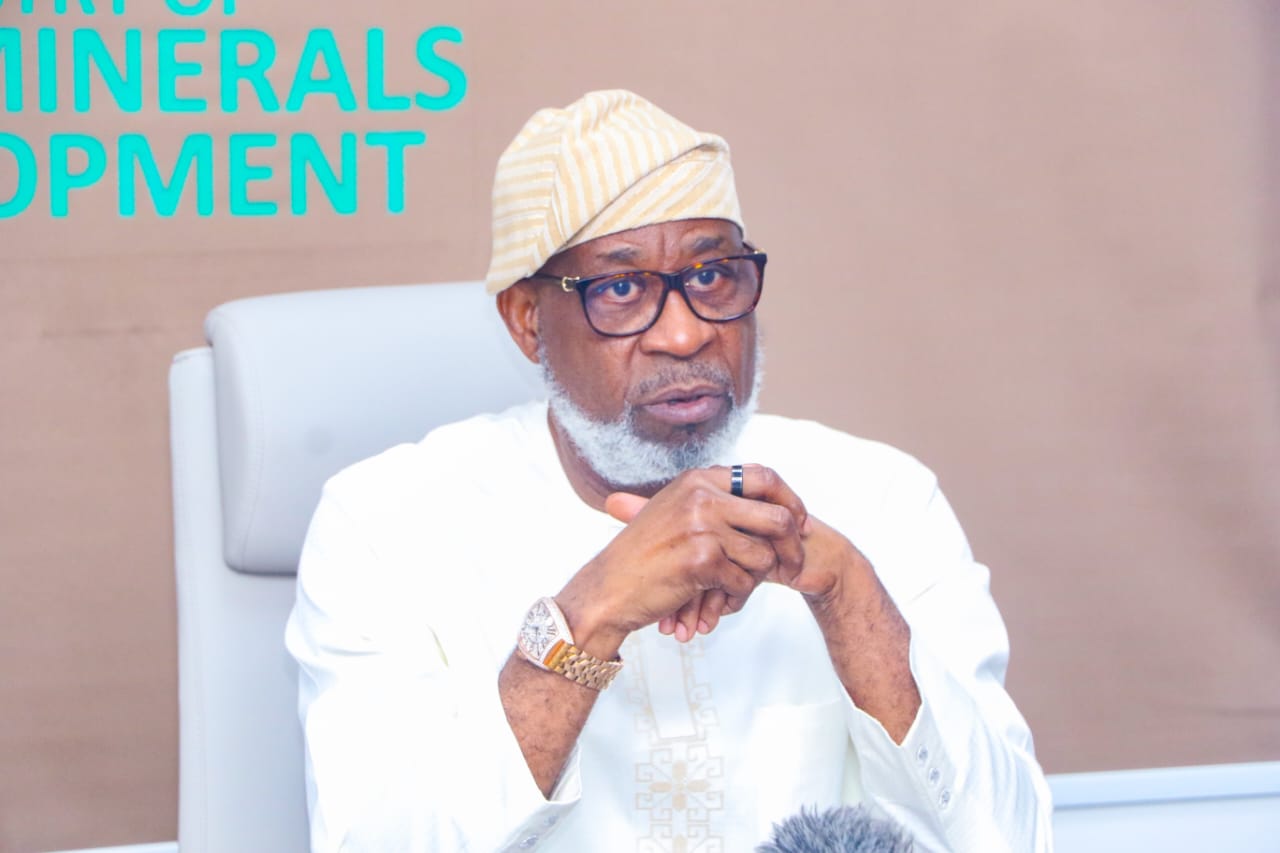
The Minister of Solid Minerals Development, Dr. Dele Alake, has said previous administrations lacked the political courage demonstrated by President Bola Tinubu in taking difficult decisions needed to place Nigeria on the path of economic recovery.
Alake made the remarks on Thursday in Abuja during the 2026 NRS-MSMD Joint Stakeholder Sensitisation for the North Central zone, themed “From Resource to Revenue: Aligning Solid Minerals Operations with the 2025 Tax Reform Act.”
According to the minister, Nigeria’s economic challenges were largely caused by years of overdependence on imports and the neglect of local production, which weakened the nation’s economy and depleted its resources.
“We were importing everything importable, including toothpicks and orange juice—things we used to produce locally when our currency was strong,” Alake said.
Reflecting on Nigeria’s economic past, he recalled a period when the naira was stronger than the dollar.
“I was privileged to have lived in this country when the naira was strong. In the early 80s, I bought one dollar for 80 kobo. The official rate then was even lower at 52 kobo,” he stated.
Defending the economic reforms introduced by the Tinubu administration, particularly the removal of fuel subsidy, Alake argued that Nigeria would have faced a complete economic collapse by late 2023 if the policy had not been implemented.
He disclosed that before the current administration took office, the country had resorted to borrowing funds to pay workers’ salaries rather than investing in capital projects, a development he described as unsustainable.
“What would have happened to Nigeria by September 2023 if the President had not removed fuel subsidy? The economy would have crashed completely,” he said.
“By the time this government came into office, the country was borrowing money to pay salaries, not for capital projects but for recurrent expenditure. When a nation borrows to pay salaries, there can be no meaningful development.”
Alake further explained that Nigeria’s worsening credit ratings eventually made foreign borrowing difficult, forcing the government at the time to print large volumes of money locally.
“When borrowing became difficult because our credit ratings had crashed, we started printing currency. Over N20 trillion was printed, which further weakened the naira and fuelled inflation,” he said.
The minister also criticised previous administrations for failing to address structural economic problems, noting that Nigeria spent hundreds of millions of dollars annually importing products that could easily be produced locally.
He maintained that the reforms being implemented by the Tinubu administration, though painful, were necessary to stabilise the economy and lay the foundation for long-term growth.


 Follow Us on Google Discover


Opposition will front a single candidate against Tinubu, announcement will be made few days to election – Lukman

La Liga: Unstoppable Barcelona beat Real Betis 5-2 to extend winning run

EPL: Super Eagles star Iwobi fires Fulham to first league victory

Ogun hospital under fire as Nurse dies of asthma attack amid alleged oxygen failure

Maryam Babangida Center for Women Devt gets first wheel chair ramp after 34 years

Shettima inaugurates Arewa for Asiwaju campaign office in Abuja

2027: ‘APM will beat Tinubu in 12 battleground states’ – Makinde’s campaign team

Veteran Journalist, diplomat Dele Cole dies at 86

Suspended NSCDC commandant apologises over deaths of suspected illegal miners in Niger

EPL: Martinez rushed to hospital after head injury as Chelsea beat Everton

COAS arrives Borno as Military moves to clear terrorist camps, rescue abductees

Macky Sall quits race for UN Secretary-General position

Buhari backed Osinbajo’s presidential ambition four times, Akande tells Babachir Lawal

Dr. Benjamins‑Laniyi urges media to amplify women’s leadership, adopt gender‑sensitive reporting

Pope Leo XIV set to leave hospital after lung cancer surgery

Erisco Foods announces 13 job openings across Nigeria – Apply Now

2027: Step down if you are not working for Tinubu – Deji Adeyanju dares Obi, Kwankwaso

House Officers, Nurses, Radiographers, Others wanted as DELSUTH opens recruitment – Apply Now

Tinubu reappoints Bala Bila as INEC commissioner, nominates six others

Elon Musk unveils Tesla’s ‘flying’ car in stunning demonstration

2027: Kwankwaso a goat in sheep’s clothing, secretly working for Tinubu – Atiku Campaign Council

33 Governors cannot be wrong in supporting Tinubu – Bayo Onanuga

2027: Tinubu to miss rallies in over 20 States as APC releases campaign timetable

Security forces arrest five suspects over abduction of 20 NYSC members in Imo

2027: ‘Don’t trust your destiny to ‘kalokalo’ people’ – Wike warns Rivers voters against Atiku, Amaechi, Obi

Atiku fully fit, ready to campaign in all 36 states, interact with Nigerians – ADC PCC

Gunmen storm Plateau, kill traditional ruler at residence

Outrage as suspected cultists unveil renovated police post in Rivers

BREAKING: Oyebanji makes history as first Ekiti Governor to win second consecutive term
