Editorials
Benin Coup Attempt: Why Nigeria could not stand by

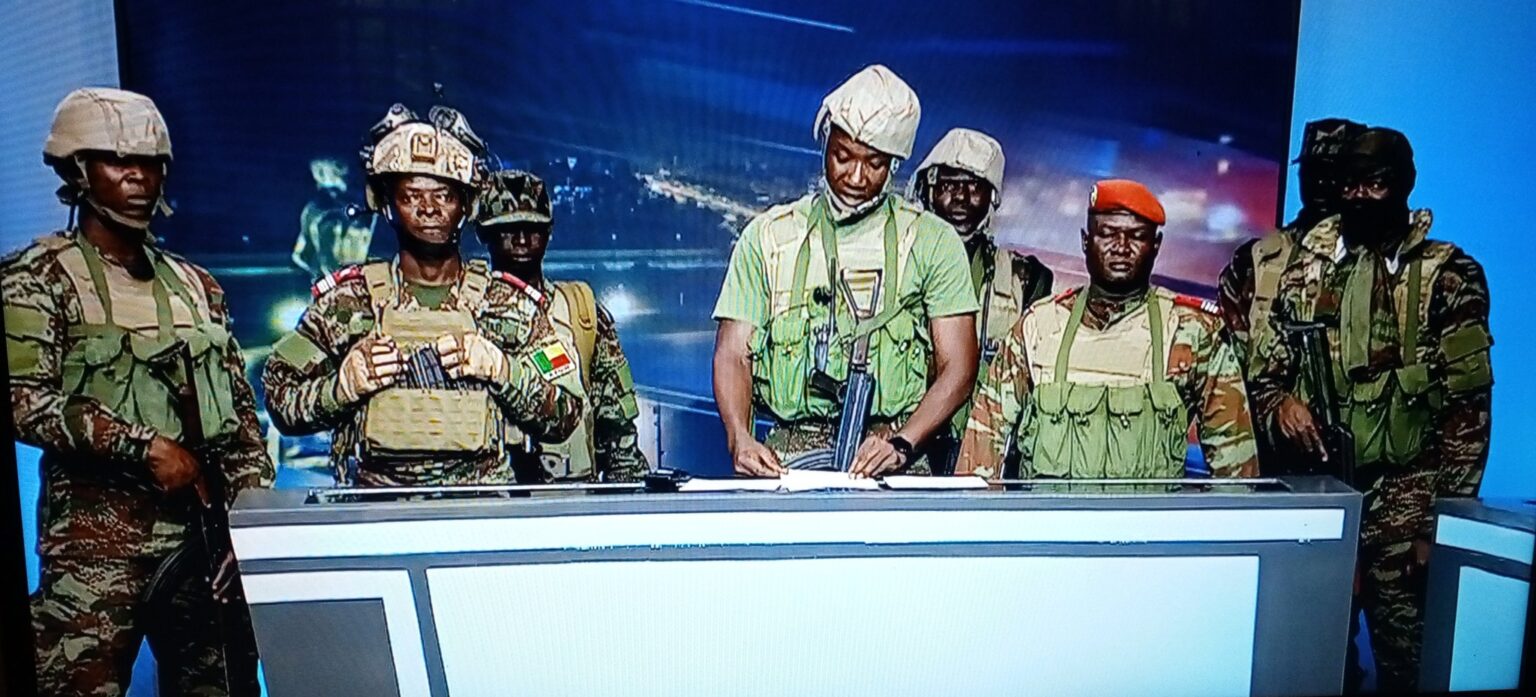
When news broke on Sunday that a group of renegade soldiers in Benin Republic had seized state media and declared the ouster of President Patrice Talon, West Africans were jolted into yet another moment of anxiety.
The region, already fatigued by a streak of military takeovers, looked on in disbelief as Lt. Col. Pascal Tigri and his band of mutineers attempted to drag Benin into the growing club of unstable states.
But within hours, a coordinated regional response, including Nigeria’s deployment of fighter jets in agreement with Beninese authorities, crushed the rebellion.
What should have been a clear victory for democracy was, unfortunately, drowned out by noise from online critics who branded Nigeria’s move as “reckless,” “illegal,” or “unnecessary.”
These reactions, loud but shallow, miss a crucial point: West Africa has clear, binding rules that compel countries to respond when democracy is violently threatened. And under those rules, Nigeria was not just justified, it was obligated.
The Legal Mandate: What ECOWAS and the AU Actually Say
Africa-wide responses to coups are not improvisations. They are anchored in established regional laws created after decades of bloodshed, military excesses, and unconstitutional grabs for power.
1. ECOWAS 1999 Protocol on Conflict Prevention
This protocol empowers the bloc to “constitute and deploy civilian and military forces to maintain or restore peace” whenever constitutional order is endangered.
All ECOWAS member states, including Benin, signed this.
2. ECOWAS 2001 Protocol on Democracy and Good Governance
Here, the message is even more direct: zero tolerance for power seized through unconstitutional means. ECOWAS is mandated to intervene.
3. The AU Constitutive Act
The Act shifts the AU from the old, timid doctrine of non-interference to the right of intervention in “grave circumstances,” including unconstitutional changes of government.
In short, Africa has learned, painfully, that ignoring coups only invites more coups.
Nigeria Acted on Invitation, Not Impulse
Some have spread the falsehood that Nigeria violated Benin’s sovereignty. But the facts are clear:
Benin asked for help.
International law recognises this as a legitimate “intervention by invitation.”
President Bola Tinubu’s confirmation that Nigerian forces helped “foil” the plot aligns with international media reports and ECOWAS procedures. In essence, Nigeria stepped in not as a bully or a big brother, but as a responsible neighbour fulfilling a regional pact.
Why Benin Was Different From Niger
The swift response in Benin has drawn comparisons to the Niger crisis, where ECOWAS threatened but failed to act. But the contexts are worlds apart.
In Niger:
The legitimate president could not request help, he was detained.
Mali, Burkina Faso, and Guinea backed the junta, creating a hostile bloc.
France, the U.S., and the UN sent conflicting signals.
Nigerian public opinion was deeply divided.
ECOWAS consensus collapsed.
In Benin:
The elected president remained fully in control.
The government formally cooperated with Nigeria.
No military-ruled state defended the coupists.
There was no geopolitical complication.
Benin was the exact situation the ECOWAS protocols were designed for, and Nigeria acted with rare clarity.
Democracy Still Has Work To Do
Stopping coups is only half of the responsibility. Africa continues to struggle with corruption, inequalities, poverty and fragile institutions.
These failures create fertile ground for romanticising military rule.
Yes, democracy in Africa has disappointed many.
But history has shown, repeatedly, that the worst democracy is still better than the best military regime.
If leaders want citizens to stop flirting with the idea of soldiers in power, they must deliver governance that inspires confidence, not despair.
A Regional Promise Kept
Nigeria’s move in Benin was not aggression, not adventurism, and not political theatre.
It was the fulfilment of a regional promise, that the ballot box, not the barrel of a gun, must determine leadership.
Africa cannot afford to slide back into the dark era of coups.
And when democracy is threatened next door, the worst thing Nigeria can do is look away.


 Follow Us on Google Discover








Pope Leo XIV set to leave hospital after lung cancer surgery

Gunmen kill four vigilantes in Plateau community

Tension as traditional ruler collapses, dies in Ondo

2027: Kwankwaso a goat in sheep’s clothing, secretly working for Tinubu – Atiku Campaign Council

DSS arrests Maina’s fugitive son in Abuja, hands him over to EFCC

2027: Step down if you are not working for Tinubu – Deji Adeyanju dares Obi, Kwankwaso

2027: ‘I wont join my Uncle to support Tinubu’ – Davido says

Enugu NYSC death: NAFDAC debunks claims linking corps members death to fake drugs

33 Governors cannot be wrong in supporting Tinubu – Bayo Onanuga

Security forces arrest five suspects over abduction of 20 NYSC members in Imo

Rugby star Hyron Andrews dies at 31 after accidental fall in South Africa

LAUTECH Resident Doctors halt 50-day strike as Makinde intervenes

House Officers, Nurses, Radiographers, Others wanted as DELSUTH opens recruitment – Apply Now

FG raises health fund allocation to N40.76bn, extends insurance to prison inmates

Erisco Foods announces 13 job openings across Nigeria – Apply Now
Erisco Foods announces 13 job openings across Nigeria – Apply Now

Ex-Senator Bello Mandiya’s body found in Abuja home three days after he slipped, hit his head in the bathroom
‘You Betrayed Osun People’ — Adeleke, Davido face backlash over support for Tinubu

Tinubu reappoints Bala Bila as INEC commissioner, nominates six others
House Officers, Nurses, Radiographers, Others wanted as DELSUTH opens recruitment – Apply Now

JUST IN: Finnish Appeal Court reduces Simon Ekpa’s jail term to four years, upholds terrorism conviction

‘I love Islam, I’ve sent people to Mecca to pray for me, Nigeria for 25 years’ – Akpabio

Over 10 soldiers, four civilians feared dead as Boko Haram terrorists attack Borno military base

Zamfara govt set to empower 36,176 residents with Dangote shares

Umahi reopens first Niger bridge after emergency repairs, displays Tinubu’s photos

Panic in Rivers community as pipeline explosion injures 20, razes over 50 houses

Elon Musk unveils Tesla’s ‘flying’ car in stunning demonstration

Lagos govt announces 3-day traffic diversion on Independence bridge for emergency repairs

2027: Tinubu to miss rallies in over 20 States as APC releases campaign timetable
