National News
BREAKING: Court declares LGs autonomous, strikes down UBE act provisions

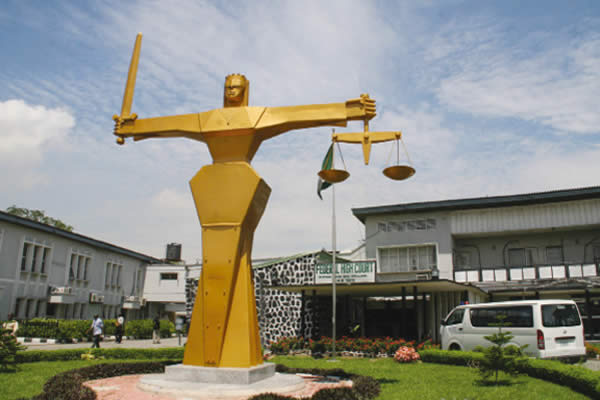
The Federal High Court in Abuja has delivered a landmark judgment declaring local governments as an autonomous third tier of government, striking down key provisions of the Universal Basic Education (UBE) Act, 2004, which placed them under the control of state governments.
In a judgment delivered on October 13, 2025, Justice Emeka Nwite held that local governments are constitutionally independent and cannot be treated as appendages or extensions of state governments.
The court consequently nullified Sections 11(3) and 13(1) of the UBE Act, 2004, which mandated that Local Government Education Authorities (LGEAs) operate under State Universal Basic Education Boards (SUBEBs) and access federal education funds through them.
Justice Nwite ruled that the provisions are inconsistent with Sections 7(1) and 7(5) and Item 2(a) of the Fourth Schedule of the 1999 Constitution (as amended), and therefore unconstitutional, null and void.
“The local government system is the third and an autonomous tier of government originated by the Constitution,” the court declared, stressing that any law subjecting local governments or their agencies to state control violates the Constitution.
Following the ruling, the court ordered the Universal Basic Education Commission (UBEC) and the Attorney-General of the Federation to, within three months, formally notify all 37 State Universal Basic Education Boards (SUBEBs) and the 774 Local Government Education Authorities (LGEAs) nationwide of the decision.
The court further directed that local governments must, through their respective LGEAs, pay their counterpart funds and access UBE grants directly from UBEC, without interference from state governments or SUBEBs. It emphasized that local governments “shall,” not “may,” access the funds directly.
The judgment effectively ends the long-standing practice where SUBEBs applied for and administered UBE funds on behalf of local governments, a system critics say enabled fund diversion, stalled projects, and poor service delivery at the grassroots.
The suit, marked FHC/ABJ/CS/1536/2020, was instituted by Sesugh Akume against UBEC and the Attorney-General of the Federation, challenging the constitutionality of state supervision over local government education administration.
Justice Nwite also ruled that the National Assembly lacks the power to enact laws placing LGEAs under state supervision, noting that while states may legislate on local government administration, such laws must strictly conform with constitutional provisions.
The court ordered UBEC and the Attorney-General to personally communicate the judgment to all affected bodies, with the deadline for compliance set for January 14, 2026.
The ruling comes amid Nigeria’s deepening education crisis. According to UBEC records, hundreds of billions of naira in UBE funds remain unaccessed, while the country has an estimated 18 million out-of-school children, dilapidated classrooms, and severe teacher shortages.
Under the UBE policy, every Nigerian child is entitled to free and compulsory basic education, including learning materials and school supplies. Analysts say the judgment could significantly improve accountability and service delivery if properly implemented at the local level.


 Follow Us on Google Discover

La Liga: Unstoppable Barcelona beat Real Betis 5-2 to extend winning run

EPL: Super Eagles star Iwobi fires Fulham to first league victory

Ogun hospital under fire as Nurse dies of asthma attack amid alleged oxygen failure

Maryam Babangida Center for Women Devt gets first wheel chair ramp after 34 years

Shettima inaugurates Arewa for Asiwaju campaign office in Abuja

2027: ‘APM will beat Tinubu in 12 battleground states’ – Makinde’s campaign team

Veteran Journalist, diplomat Dele Cole dies at 86

Suspended NSCDC commandant apologises over deaths of suspected illegal miners in Niger

EPL: Martinez rushed to hospital after head injury as Chelsea beat Everton

COAS arrives Borno as Military moves to clear terrorist camps, rescue abductees

Macky Sall quits race for UN Secretary-General position

Buhari backed Osinbajo’s presidential ambition four times, Akande tells Babachir Lawal

Dr. Benjamins‑Laniyi urges media to amplify women’s leadership, adopt gender‑sensitive reporting

Pope Leo XIV set to leave hospital after lung cancer surgery

Gunmen kill four vigilantes in Plateau community

Erisco Foods announces 13 job openings across Nigeria – Apply Now

House Officers, Nurses, Radiographers, Others wanted as DELSUTH opens recruitment – Apply Now

2027: Step down if you are not working for Tinubu – Deji Adeyanju dares Obi, Kwankwaso

Tinubu reappoints Bala Bila as INEC commissioner, nominates six others

Panic in Rivers community as pipeline explosion injures 20, razes over 50 houses

Elon Musk unveils Tesla’s ‘flying’ car in stunning demonstration

2027: Kwankwaso a goat in sheep’s clothing, secretly working for Tinubu – Atiku Campaign Council

2027: Tinubu to miss rallies in over 20 States as APC releases campaign timetable

33 Governors cannot be wrong in supporting Tinubu – Bayo Onanuga

2027: ‘Atiku, Obi, Duke, Makinde are not threats to Tinubu’, says APC
Gunmen storm Plateau, kill traditional ruler at residence

2027: ‘Don’t trust your destiny to ‘kalokalo’ people’ – Wike warns Rivers voters against Atiku, Amaechi, Obi

Outrage as suspected cultists unveil renovated police post in Rivers

Atiku fully fit, ready to campaign in all 36 states, interact with Nigerians – ADC PCC
