
National News
FG moves against cooking gas hoarding as DSS, EFCC join emergency LPG pricing meeting

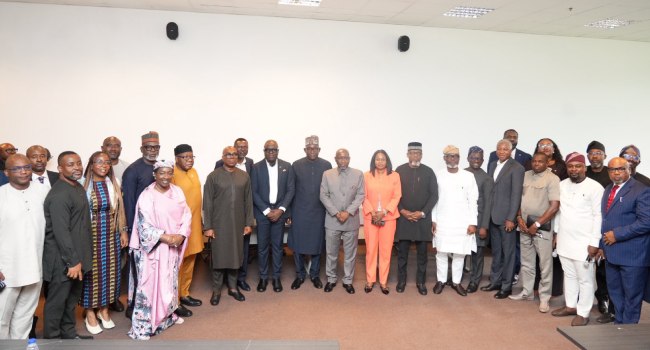
The Federal Government has convened an emergency stakeholders’ engagement involving the Department of State Services (DSS), the Economic and Financial Crimes Commission (EFCC), and the Nigeria Police Force to address alleged Liquefied Petroleum Gas (LPG) hoarding and diversion to neighbouring countries.
The meeting, convened by the Federal Ministry of Petroleum Resources, followed recent increases in cooking gas prices and was aimed at developing coordinated measures to stabilise supply, improve affordability, and strengthen market operations across the country.
According to a statement by the Nigerian Midstream and Downstream Petroleum Regulatory Authority (NMDPRA), the engagement also brought together regulators, producers, marketers, terminal operators and industry associations to identify key drivers of price escalation and agree on practical interventions across the LPG value chain.
Speaking at the meeting, the Permanent Secretary of the Ministry of Petroleum Resources, Patience Oyekunle, described LPG as a critical household energy source and a key component of Nigeria’s energy transition agenda, warning that rising prices were increasing pressure on household incomes.
Minister of State for Petroleum Resources (Gas), Ekperikpe Ekpo, said President Bola Tinubu was concerned about the situation and had directed relevant agencies to take proactive steps to address supply and pricing challenges.
He stressed that improved supply must be matched with efficient logistics, better infrastructure and transparent pricing mechanisms to ensure consumers benefit from market interventions.
The Authority Chief Executive of NMDPRA, Mallam Rabiu Umar, noted that high landing costs remained a major factor influencing LPG prices but expressed optimism that ongoing interventions would ease pressure in the coming weeks.
He added that the regulator was working with producers to boost domestic supply and strengthen market oversight.
In a technical presentation, the Executive Director of Distribution Systems, Storage and Retailing Infrastructure (DSSRI), Ogbugo Ukoha, identified infrastructure gaps, supply constraints, logistics challenges and global disruptions as key factors affecting pricing.
He disclosed that national LPG supply sufficiency had improved from 11 days to 22 days, while average daily supply increased from 4,262 metric tonnes in May 2026 to 5,040 metric tonnes in June 2026.
Stakeholders at the meeting pledged support for government efforts but highlighted persistent challenges in storage, transportation and distribution efficiency.
Agreed measures include tighter market monitoring, enforcement against malpractice, expansion of storage infrastructure, improved domestic production, enhanced product tracking systems and stronger inter-agency collaboration.
In his closing remarks, the minister directed stakeholders to take immediate steps to improve supply and eliminate inefficiencies, stressing that success would be measured by increased availability and reduced price pressures nationwide.


 Follow Us on Google Discover








My gov’t correcting past mistakes, give me more time to ‘finish the good work’ – Tinubu appeals to Nigerians

Gunmen kill four, injure two in Niger

Super Eagles begin AFCON 2027 qualifiers with 2-1 win over Madagascar

ADC hit by fresh crisis as National youth leader Sultan Bello resigns

Appeal Court affirms two-year jail sentence for ex-Unical Dean, Ndifon

DisCos record N205.53bn electricity revenue in July – NERC

Super Falcons defender Ohale announces retirement from international football

‘I respect Tinubu, I can never abuse him’ – Peter Obi

Cristian Romero replaces Messi as Argentina’s new Captain

NDLEA arraigns KayCee Luxury, two others over alleged 184.5kg cocaine export

Workers shut down Delta secretariat over deputy director’s death

Anyone praying for fuel subsidy return does not mean well for Nigeria – Alex Otti

Obi-Soludo debt row deepens as Anambra releases N363m document on workers’ arrears after Obi denied borrowing

Okoye arrives Super Eagles camp ahead of AFCON qualifier against Madagascar

Tinubu-Related Drug Records: U.S. DEA warns release could expose confidential sources, techniques

ECOWAS opens recruitment for qualified nationals across multiple sectors – Apply Now

British Council opens recruitment opportunities across Nigeria – Apply Now

BREAKING: Atiku appoints Akobundu DG of ADC Presidential Campaign Council, names El-Rufai Deputy Chairman (Full List)

Flour Mills of Nigeria opens recruitment for multiple positions across Nigeria – Apply Now

Former Super Eagles captain William Troost-Ekong converts to Islam, recites Shahadah in Doha

A Litre of petrol costs over ₦3,000 in UK, Nigerians are enjoying — Gov. Okpebholo

Atiku donates ₦20m to families of 37 Miners who died in NSCDC custody

Shanahan University announces 13 vacancies for Medical, ICT, Admin Workers – Apply Now

‘US cannot afford to let Tinubu rig 2027 Polls’ — Von Batten-Montague-York

BREAKING: Court nullifies Pantami’s PDP ticket, orders fresh Primary in Gombe

Rainbow Coalition: Wike-Uzodimma rift splits APC Governors into camps
Tinubu-Related Drug Records: U.S. DEA warns release could expose confidential sources, techniques

‘I hold no grudge against those who chose not to stand by me’ – El-Rufai

FIFA picks Nigerian referee for U-17 world cup
