
News
FG unveils $500m solar power plan for Nigerian universities


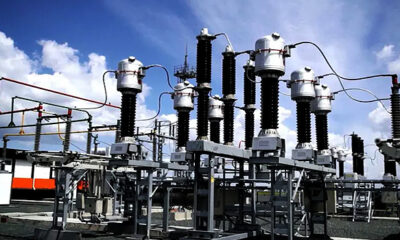
Nigerian universities struggling with persistent electricity shortages are set to receive a major boost through a proposed $500 million solar energy investment aimed at improving power supply across campuses.
The announcement was made on Thursday in Abuja during the launch of the Tinubu Light Initiative, organised by the National Board for Technology Incubation (NBTI), an agency under the Federal Ministry of Science and Technology.
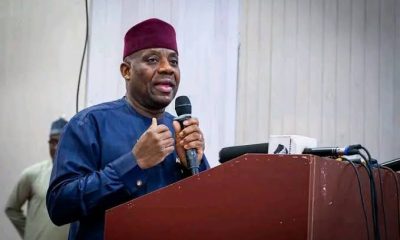
Speaking at the event, the Chief Executive Officer of renewable energy company Gigawatt Global, Yosef Abramowitz, said the firm is prepared to provide up to $500 million in project financing to support solar power projects in universities across the country.
According to him, the funding will cover up to 90 per cent of the cost of installing solar energy systems, provided the projects meet internationally accepted bankable power purchase agreement requirements and other agreed project milestones.
“We’re honoured to be able to present up to `$500 million in project finance. That will represent 90 per cent financing for solar power plants at universities, which will also anchor power supply to the rural communities surrounding them,” he said.
He noted that many Nigerian universities currently depend on costly diesel-powered generators, leaving campuses with electricity for only a few hours daily.
“How do you run a university in three, four or five hours? How do you not have internet because you don’t have electricity?” he asked.
According to him, each university solar installation is expected to generate between 10 and 20 megawatts of electricity, enough to meet campus energy demand while supplying excess power to neighbouring rural communities through prepaid metering systems.
“The plants will produce more power than the universities need. The surplus electricity will be supplied to the surrounding communities through prepaid metering systems, helping to expand access to reliable electricity,” he said.
Abramowitz said the initiative would significantly reduce universities’ dependence on diesel while lowering electricity costs.
“We want to bring down your costs, increase the amount of energy, make it green and sustainable, and empower the communities around each of these universities,” he added.
He said the company was committed to ensuring that the projects deliver broad economic benefits by prioritising local manufacturing and services.
Abramowitz further explained that local companies would be responsible for operating and maintaining the facilities, making the projects more sustainable than smaller standalone mini-grid systems.
He stressed that cheaper and more reliable electricity would enable universities to channel more resources into their core mandate.
The announcement comes amid worsening electricity challenges facing Nigeria’s tertiary institutions, many of which spend billions of naira annually on diesel to keep lecture halls, laboratories, hostels and research facilities operational. Several federal universities have repeatedly warned that rising energy costs are threatening academic activities, forcing some institutions to ration electricity supply and increase utility charges for students.
The proposed investment also aligns with the Federal Government’s broader drive to expand renewable energy adoption through the recently launched Tinubu Light Initiative, which aims to provide clean energy to one million micro, small and medium enterprises, create jobs, lower production costs and accelerate Nigeria’s transition to sustainable energy.


 Follow Us on Google Discover









APM, Makinde sue Otti over alleged N200m campaign levy in Abia

‘Why are afraid of entering America?’, Atiku blasts Tinibu for missing third consecutive UNGA

Gunmen storm Kebbi community, kill village head

Former Kogi Gov Ibrahim Idris dies in UK

NDLEA seizes N3.4bn drugs, nab fake cop, mechanic

Falconets crash out of 2026 U-20 Women’s World Cup after 1-0 loss to Colombia

BREAKING: Tinubu confirms absence from 81st UN General Assembly in New York, directs Shettima to lead Nigerian delegation

2027: ‘Obi will defeat Tinubu by a wider margin in Lagos’ — NDC

NDC disowns OK Movement campaign council, refers John Ugulu for discipline

Raphinha set to sign new Barcelona contract until 2030

Four Nigerians receive UNGA Humanitarian, Goodwill Ambassador honours in New York

‘We Won’t Go Back to Egypt’ — Showunmi rejects Atiku’s petrol subsidy proposal

NSCDC names new Niger commandant following death of miners in custody

ECOWAS court set to hold 2026 international conference in Dakar

Nigerians already seeing reductions in transport fares – Tinubu
BREAKING: Tinubu confirms absence from 81st UN General Assembly in New York, directs Shettima to lead Nigerian delegation
Nigerians already seeing reductions in transport fares – Tinubu

Tinubu may shun UN General Assembly in New York – Fresh details emerge

‘Before lecturing Tinubu, you must answer questions from your past’ — Presidency to Atiku
‘We Won’t Go Back to Egypt’ — Showunmi rejects Atiku’s petrol subsidy proposal

Deji Adeyanju, Buhari others appointed as FG constitutes committee to probe NSCDC custody deaths (Full List)

‘The Site Belongs To Babangida’ – Survivor links deaths of miners in NSCDC custody to ex-Military Ruler
Four Nigerians receive UNGA Humanitarian, Goodwill Ambassador honours in New York

PL: Brighton thrash Arsenal 3-0, end Gunners’ winning run
Raphinha set to sign new Barcelona contract until 2030

Why EFCC must prosecute Atiku – Agbonayinma

NSCDC detains suspended Niger commandant, 21 officers over deaths of 37 miners

Sowore as best president Nigeria refuses to have: by Farooq A. Kperogi
Falconets crash out of 2026 U-20 Women’s World Cup after 1-0 loss to Colombia