
News
How Climate Change is crippling Checheyi women farmers, gets Initiative, German Media attention

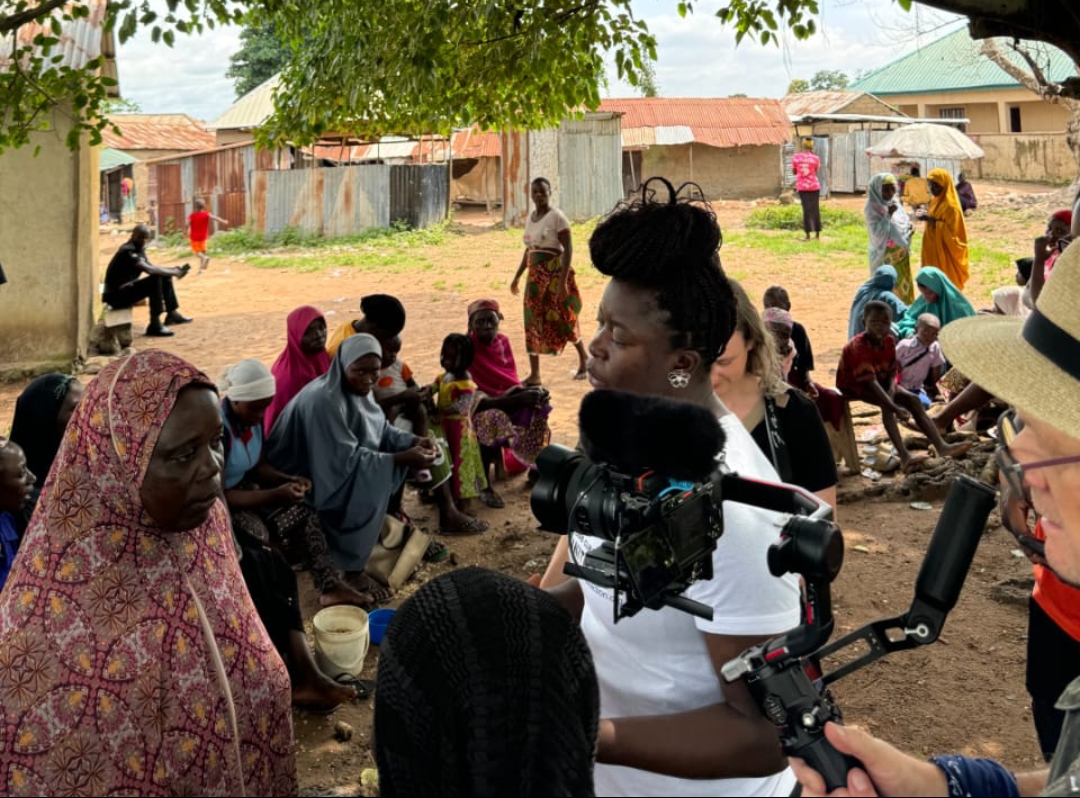
The mounting climate crisis in Checheyi, a farming community tucked within the Kwali Area Council of Abuja, has drawn the attention of international and local advocates, from Germany’s ZDF media to Nigeria’s own I Lead Climate Action Initiative.
Their visit to Checheyi had a singular purpose: to spotlight and support the women and girls who stand at the frontline of climate change.
These women, though often unseen or unheard, have become the silent responders to a crisis that is wiping out farmlands, shrinking harvests, and threatening livelihoods.
At the centre of this renewed attention is the work of climate advocate Adenike Oladosu, founder of I Lead Climate Action.
Her grassroots movement has focused on empowering women in rural communities, especially those dealing daily with the twin extremes of devastating floods and prolonged drought, realities that now define Nigeria’s climate experience.
In the fields of Checheyi stood Mummy Destiny, one of many whose survival depends entirely on the land.
Surrounded by what remained of rice stalks that once promised food and income, she summed up her ordeal with heartbreaking simplicity.
“We no get water this year,” she lamented. “Rain no fall at all. This rice wey suppose grow well don dry finish.”
For families like hers, the shift has been brutal.
A planting season that once produced five bags of rice now struggles to yield two. Sometimes, she barely gets one and a half.
This sharp decline has ripple effects beyond food scarcity: many girls are withdrawn from school when harvests collapse and family income shrinks.
Adenike has consistently argued that excluding women from global climate decisions weakens the fight for climate justice. Mummy Destiny’s story reinforces that truth.
When asked what form of help she needed most, her answer was straightforward: “Make government help us with fertilizer.”
To her, fertilizer is not just farm input, it is a lifeline, a chance for her crops to survive the relentless heat.
But Checheyi’s climate challenges do not end with drought.
In a painful contradiction, Mummy Destiny nodded when asked if floods also affect her farmland.
“Yes,” she said quietly.
In one farming season, she is forced to battle both extremes: scorching dryness that kills her crops and sudden floods that wash away whatever is left.
Her daily reality is a cycle of survival, a fight between drought and flood.
Her experiences, now amplified through ZDF’s reportage and supported by the advocacy of I Lead Climate Action, present a compelling call to action.
They underscore the urgent need for policies that prioritize women farmers, elevate their voices, and provide real tools for adaptation.
For Mummy Destiny and many others in Checheyi, the climate struggle is not an abstract global discussion, it is a daily battle for food, dignity, and a future worth fighting for.


 Follow Us on Google Discover












2027: Kwankwaso a goat in sheep’s clothing, secretly working for Tinubu – Atiku Campaign Council

DSS arrests Maina’s fugitive son in Abuja, hands him over to EFCC

2027: Step down if you are not working for Tinubu – Deji Adeyanju dares Obi, Kwankwaso

2027: ‘I wont join my Uncle to support Tinubu’ – Davido says

Enugu NYSC death: NAFDAC debunks claims linking corps members death to fake drugs

33 Governors cannot be wrong in supporting Tinubu – Bayo Onanuga

Security forces arrest five suspects over abduction of 20 NYSC members in Imo

Rugby star Hyron Andrews dies at 31 after accidental fall in South Africa

LAUTECH Resident Doctors halt 50-day strike as Makinde intervenes

House Officers, Nurses, Radiographers, Others wanted as DELSUTH opens recruitment – Apply Now

FG raises health fund allocation to N40.76bn, extends insurance to prison inmates

Erisco Foods announces 13 job openings across Nigeria – Apply Now

Tinubu reappoints Bala Bila as INEC commissioner, nominates six others

2027: ‘Don’t trust your destiny to ‘kalokalo’ people’ – Wike warns Rivers voters against Atiku, Amaechi, Obi

BREAKING: Cross River PDP Chairman Venatius Ikem resigns, cites leadership crisis
Erisco Foods announces 13 job openings across Nigeria – Apply Now

2027: Atiku, Obi, Makinde, Adebayo, Duke hold talks with six opposition parties
‘You Betrayed Osun People’ — Adeleke, Davido face backlash over support for Tinubu

Ex-Senator Bello Mandiya’s body found in Abuja home three days after he slipped, hit his head in the bathroom
Tinubu reappoints Bala Bila as INEC commissioner, nominates six others

JUST IN: Finnish Appeal Court reduces Simon Ekpa’s jail term to four years, upholds terrorism conviction

‘I love Islam, I’ve sent people to Mecca to pray for me, Nigeria for 25 years’ – Akpabio

Zamfara govt set to empower 36,176 residents with Dangote shares

Over 10 soldiers, four civilians feared dead as Boko Haram terrorists attack Borno military base

Umahi reopens first Niger bridge after emergency repairs, displays Tinubu’s photos

Lagos govt announces 3-day traffic diversion on Independence bridge for emergency repairs

Panic in Rivers community as pipeline explosion injures 20, razes over 50 houses

Tension escalates as thugs attack NDC secretariat in Edo, destroy properties

‘Local champion’ – Donald Duke takes fresh swipe at Gov Diri over Lagos-Calabar coastal highway
