
Politics
Ibadan Summit: Fear grips APC as opposition plots single presidential ticket

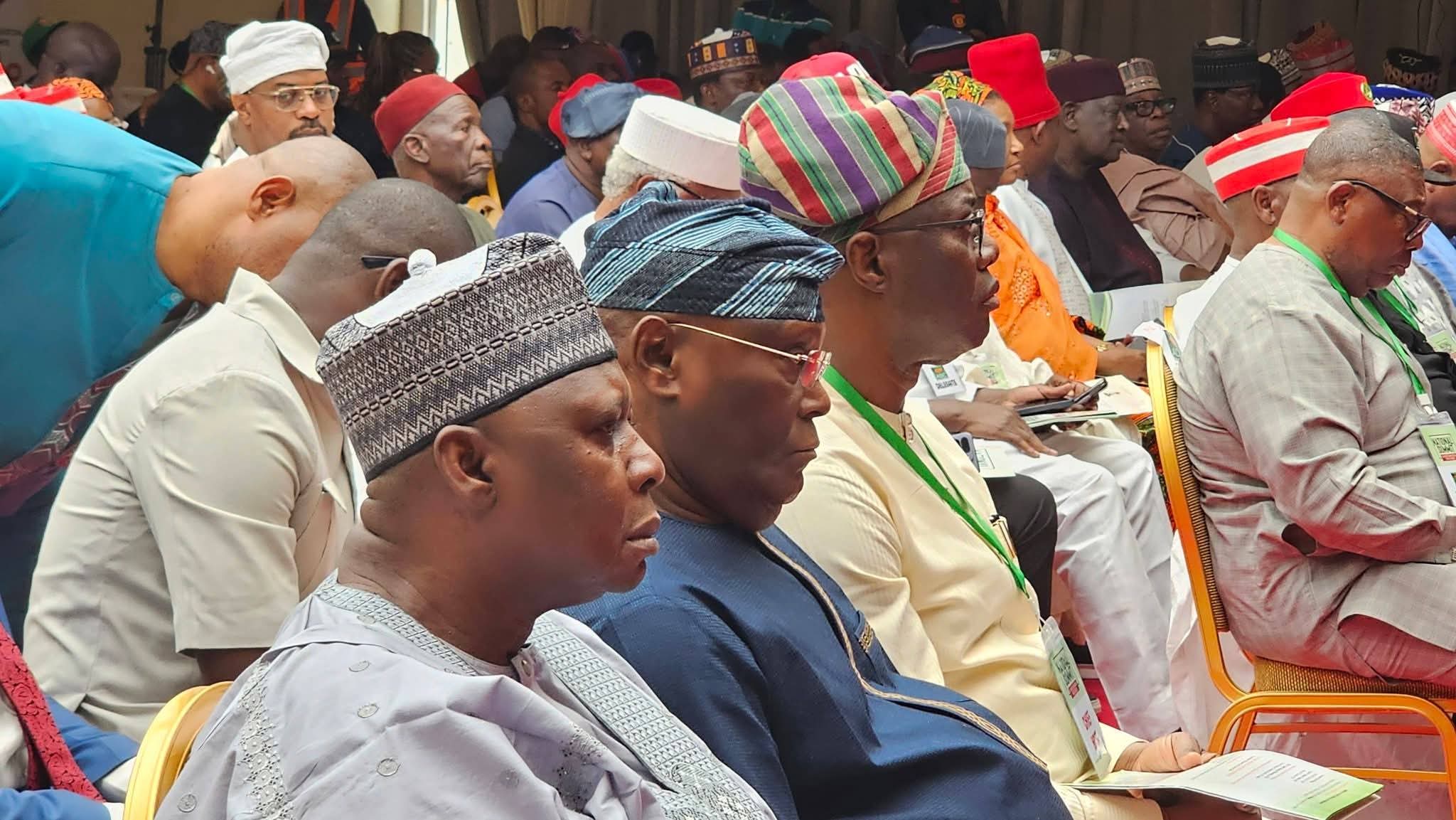
The decision by opposition leaders to field a joint presidential candidate against Bola Tinubu in the 2027 elections has triggered widespread reactions across Nigeria’s political landscape, exposing both momentum and deep divisions within and outside the coalition.
The resolution was reached at a high-level summit in Ibadan, hosted by Oyo State Governor Seyi Makinde, where leading opposition figures converged to forge a united front.
Key political heavyweights present included Atiku Abubakar, Peter Obi, Rotimi Amaechi, Rauf Aregbesola, and David Mark, alongside other stakeholders across parties.
The coalition, largely anchored on the African Democratic Congress (ADC) and a faction of the Peoples Democratic Party (PDP), aims to consolidate opposition strength ahead of the next general election.
However, the move has drawn sharp criticism from the ruling All Progressives Congress (APC), which dismissed the alliance as a “coalition of confusion” and not a credible threat.
APC National Publicity Secretary, Felix Morka, condemned remarks attributed to Makinde at the summit, accusing the governor of invoking the violent legacy of “Operation Wetie” and describing it as reckless and capable of inciting unrest.
The party also took aim at opposition leaders, alleging internal contradictions within their ranks and questioning their credibility.
Top government officials, including FCT Minister Nyesom Wike and Aviation Minister Festus Keyamo, went further to dismiss the coalition as “dead on arrival,” arguing that the proposed merger lacks structure and political coherence.
Keyamo, in particular, questioned how parties would reconcile competing candidates across different elective positions while backing a single presidential flag bearer, warning that such an arrangement could create confusion and internal rebellion.
On the opposition side, reactions have been mixed.
Omoyele Sowore, leader of the African Action Congress (AAC), rejected the initiative outright, describing it as an attempt by “recycled politicians” to rebrand themselves. He declined participation, insisting his party would not be part of what he called a political charade.
In contrast, the New Nigeria Peoples Party (NNPP) endorsed the move, describing it as a “historic realignment” capable of challenging the status quo and mobilising Nigerians dissatisfied with current conditions.
Socio-political group Afenifere also backed the idea in principle but warned that any alliance must be driven by clear ideology and pro-people policies rather than mere power-sharing arrangements.
Similarly, political elder Akin Osuntokun described the coalition as a positive development that could help prevent Nigeria from drifting into a one-party state.
Yet, cracks are already visible within the coalition itself. A faction of the ADC distanced itself from the Ibadan summit, with leaders insisting that internal party disputes must first be resolved before engaging in broader alliances.
The Social Democratic Party (SDP) also disowned the process, claiming it was sidelined and not involved in the Ibadan declaration.
Adding another layer, APGA founding chairman Chekwas Okorie described the plan as a strategic counter to APC dominance but cautioned that its success would depend entirely on implementation and sincerity among participants.
The unfolding scenario highlights a familiar paradox in Nigerian politics: while opposition unity appears strong in theory, translating it into a cohesive, disciplined structure remains the real test.
As 2027 approaches, the battle lines are becoming clearer—not just between the ruling party and the opposition, but within the opposition itself.


 Follow Us on Google Discover









Opposition will front a single candidate against Tinubu, announcement will be made few days to election – Lukman

La Liga: Unstoppable Barcelona beat Real Betis 5-2 to extend winning run

EPL: Super Eagles star Iwobi fires Fulham to first league victory

Ogun hospital under fire as Nurse dies of asthma attack amid alleged oxygen failure

Maryam Babangida Center for Women Devt gets first wheel chair ramp after 34 years

Shettima inaugurates Arewa for Asiwaju campaign office in Abuja

2027: ‘APM will beat Tinubu in 12 battleground states’ – Makinde’s campaign team

Veteran Journalist, diplomat Dele Cole dies at 86

Suspended NSCDC commandant apologises over deaths of suspected illegal miners in Niger

EPL: Martinez rushed to hospital after head injury as Chelsea beat Everton

COAS arrives Borno as Military moves to clear terrorist camps, rescue abductees

Macky Sall quits race for UN Secretary-General position

Buhari backed Osinbajo’s presidential ambition four times, Akande tells Babachir Lawal

Dr. Benjamins‑Laniyi urges media to amplify women’s leadership, adopt gender‑sensitive reporting

Pope Leo XIV set to leave hospital after lung cancer surgery

Erisco Foods announces 13 job openings across Nigeria – Apply Now

2027: Step down if you are not working for Tinubu – Deji Adeyanju dares Obi, Kwankwaso

House Officers, Nurses, Radiographers, Others wanted as DELSUTH opens recruitment – Apply Now

Tinubu reappoints Bala Bila as INEC commissioner, nominates six others

Elon Musk unveils Tesla’s ‘flying’ car in stunning demonstration

2027: Kwankwaso a goat in sheep’s clothing, secretly working for Tinubu – Atiku Campaign Council

33 Governors cannot be wrong in supporting Tinubu – Bayo Onanuga

2027: Tinubu to miss rallies in over 20 States as APC releases campaign timetable

Security forces arrest five suspects over abduction of 20 NYSC members in Imo

Atiku fully fit, ready to campaign in all 36 states, interact with Nigerians – ADC PCC

Gunmen storm Plateau, kill traditional ruler at residence

2027: ‘Don’t trust your destiny to ‘kalokalo’ people’ – Wike warns Rivers voters against Atiku, Amaechi, Obi

Outrage as suspected cultists unveil renovated police post in Rivers

BREAKING: Oyebanji makes history as first Ekiti Governor to win second consecutive term
