Metro
Lagos govt shuts down restaurant over environmental violations

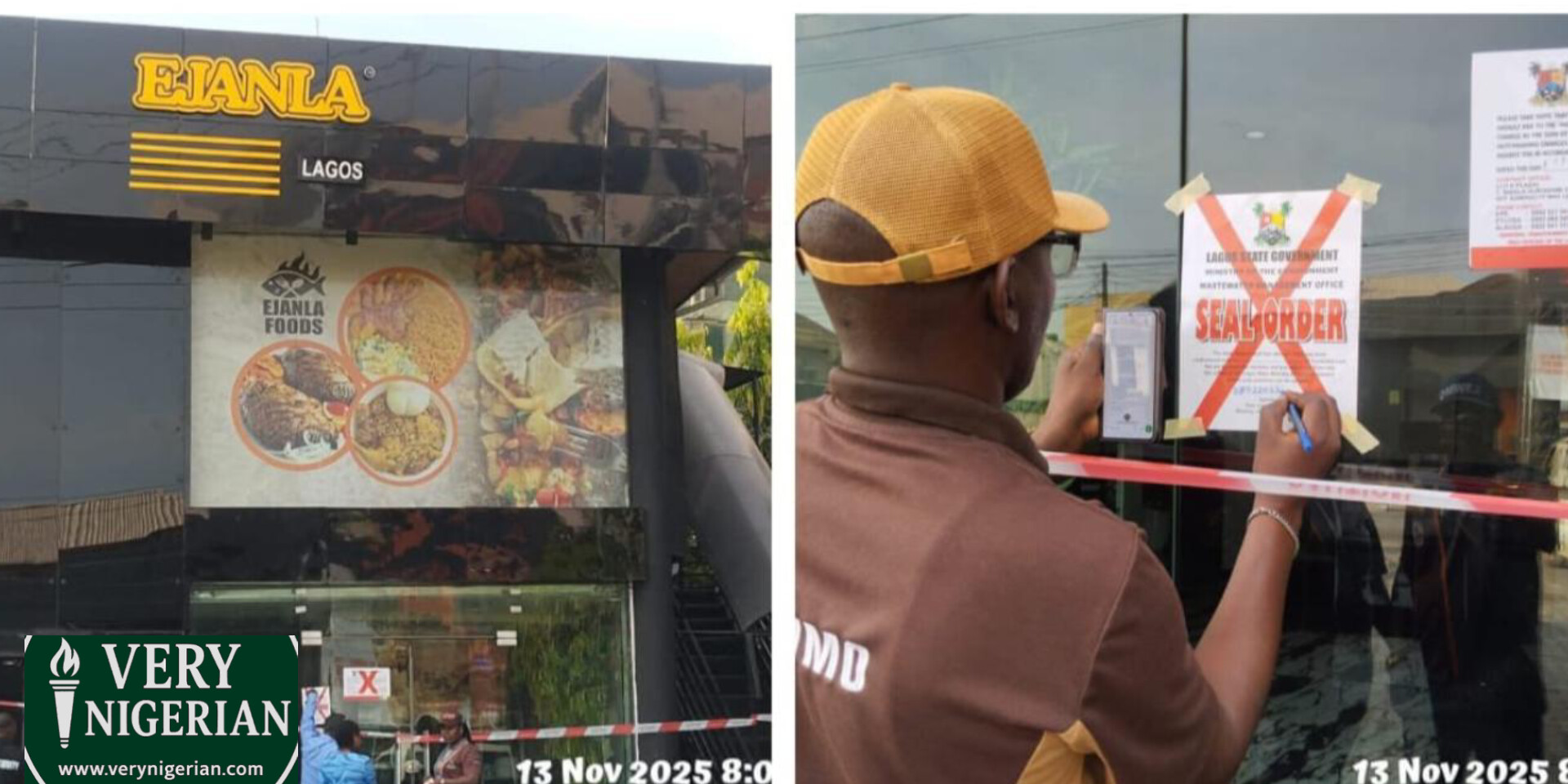
Lagos State authorities have shut down Ejanla Restaurant, located at No. 40 Fola Osibo Street, Lekki, for violating environmental regulations.
The Commissioner for Environment and Water Resources, Tokunbo Wahab, announced on X that the Lagos State Wastewater Management Office (LSWMO) took the action after discovering that the restaurant had been deliberately pumping raw sewage into public drains.
Wahab explained that the discharge caused offensive odors, posed a public nuisance, polluted the environment, and endangered human health.
“The Lagos State Wastewater Management Office (LSWMO), on Thursday, 13th November 2025, sealed off Ejanla Restaurant for deliberate discharge of raw sewage into public drains, constituting environmental pollution and public health risks,” he said.
He warned that such acts would not be tolerated, adding: “Every act of environmental nuisance and pollution portends grave dangers to public health and will be met with appropriate sanctions and or prosecution.”
The sealing of Ejanla Restaurant follows a series of enforcement actions by Lagos State authorities against commercial establishments flouting environmental laws. In recent years, several restaurants, hotels, and industrial facilities across the state have been sanctioned for illegally discharging wastewater into public drains, causing flooding, offensive odours, and public health hazards.
In one recent case, Very Nigerian reported that the Lagos State Government sealed a branch of Chicken Republic at No. 23, Agungi Ajiran Road, Lekki, for deliberate discharge of wastewater onto the public drain.
Also, in September 2024, the LSWMO sealed a fast‑food outlet, Cravings & More on Egbeda‑Idimu Road, for discharging kitchen fats and oils into the public drainage system, causing clogging, foul odour, and a proliferation of maggots and flies.
Lagos, Nigeria’s commercial hub, has long grappled with challenges related to improper waste disposal, sewage management, and the impact of urbanization on public health.
Public drains in many parts of the city are often clogged or misused, leading to flooding, offensive odours, and increased risk of waterborne diseases.
The Lagos State Wastewater Management Office (LSWMO), under the Ministry of the Environment and Water Resources, is mandated to monitor, regulate, and manage wastewater disposal within the state.
Its role includes inspecting commercial and residential facilities to ensure compliance with environmental standards and prosecuting offenders who breach sanitation regulations.
Officials have repeatedly warned restaurants, hotels, and industrial operators against discharging untreated sewage into public drains, noting that such actions pose serious risks to community health, including the spread of cholera, typhoid, and other infectious diseases.


 Follow Us on Google Discover








Pope Leo XIV set to leave hospital after lung cancer surgery

Gunmen kill four vigilantes in Plateau community

Tension as traditional ruler collapses, dies in Ondo

2027: Kwankwaso a goat in sheep’s clothing, secretly working for Tinubu – Atiku Campaign Council

DSS arrests Maina’s fugitive son in Abuja, hands him over to EFCC

2027: Step down if you are not working for Tinubu – Deji Adeyanju dares Obi, Kwankwaso

2027: ‘I wont join my Uncle to support Tinubu’ – Davido says

Enugu NYSC death: NAFDAC debunks claims linking corps members death to fake drugs

33 Governors cannot be wrong in supporting Tinubu – Bayo Onanuga

Security forces arrest five suspects over abduction of 20 NYSC members in Imo

Rugby star Hyron Andrews dies at 31 after accidental fall in South Africa

LAUTECH Resident Doctors halt 50-day strike as Makinde intervenes

House Officers, Nurses, Radiographers, Others wanted as DELSUTH opens recruitment – Apply Now

FG raises health fund allocation to N40.76bn, extends insurance to prison inmates

Erisco Foods announces 13 job openings across Nigeria – Apply Now
Erisco Foods announces 13 job openings across Nigeria – Apply Now
‘You Betrayed Osun People’ — Adeleke, Davido face backlash over support for Tinubu

Ex-Senator Bello Mandiya’s body found in Abuja home three days after he slipped, hit his head in the bathroom

Tinubu reappoints Bala Bila as INEC commissioner, nominates six others
House Officers, Nurses, Radiographers, Others wanted as DELSUTH opens recruitment – Apply Now

JUST IN: Finnish Appeal Court reduces Simon Ekpa’s jail term to four years, upholds terrorism conviction

‘I love Islam, I’ve sent people to Mecca to pray for me, Nigeria for 25 years’ – Akpabio

Over 10 soldiers, four civilians feared dead as Boko Haram terrorists attack Borno military base

Panic in Rivers community as pipeline explosion injures 20, razes over 50 houses

Umahi reopens first Niger bridge after emergency repairs, displays Tinubu’s photos

Elon Musk unveils Tesla’s ‘flying’ car in stunning demonstration
2027: Step down if you are not working for Tinubu – Deji Adeyanju dares Obi, Kwankwaso

Tension mounts as NLC rejects FG’s response to 14-day ultimatum

2027: Tinubu to miss rallies in over 20 States as APC releases campaign timetable
