
Politics
Mark-led ADC relieved as Supreme Court voids status quo ruling

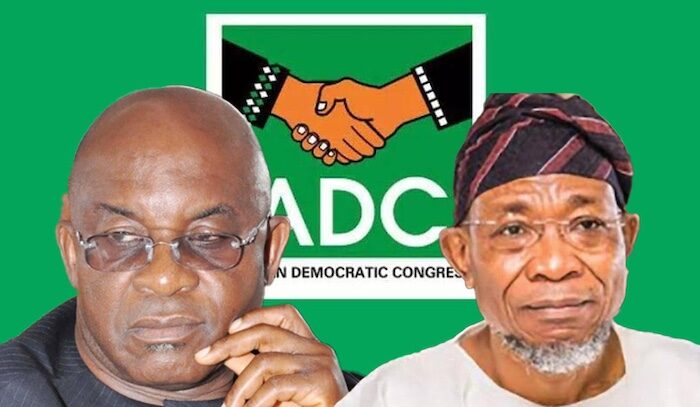
The African Democratic Congress (ADC) led by former Senate President, David Mark, has secured a significant reprieve following recent rulings of the Supreme Court of Nigeria which vacated earlier Court of Appeal orders that had led to the derecognition of its leadership by the Independent National Electoral Commission (INEC).
The apex court set aside the status quo ante bellum order issued by the Court of Appeal, while directing that the substantive dispute be returned to the Federal High Court in Abuja for full hearing.
The decision effectively cleared the way for INEC to restore the Mark-led National Working Committee (NWC) on its official portal, where Mark is now listed as National Chairman alongside Rauf Aregbesola as National Secretary and other executives.
Although the ruling has been widely interpreted as a boost for the Mark faction, the Supreme Court was clear that the underlying leadership dispute remains unresolved and must be determined by the trial court.
In a related development, the Supreme Court also delivered a split judgment in the long-running Peoples Democratic Party (PDP) leadership crisis, nullifying the party’s November 2025 national convention held in Ibadan, which produced the Tanimu Turaki-led executive backed by Oyo State Governor, Seyi Makinde.
The apex court held that the convention was conducted in violation of subsisting court orders and therefore declared it invalid.
It also upheld earlier findings that certain suspended party officials acted in breach of judicial directives.
The judgment has, however, triggered divergent interpretations within the PDP.
The Wike-aligned camp insists the ruling validates its position, while the Board of Trustees (BoT), led by Adolphus Wabara, argues that the decision effectively nullifies both competing factions and leaves the BoT with constitutional responsibility to stabilise the party.
According to Wabara, the intervention was necessary to avoid a leadership vacuum, citing provisions of the party constitution.
The Turaki camp, on the other hand, maintains that the ruling exposes a leadership void and calls for urgent action by party organs to restore order.
Legal analysts say the PDP judgment has further deepened internal divisions, even as the party struggles to present a united front ahead of future elections.
On the ADC matter, INEC has already reinstated the David Mark-led leadership on its website, listing key officers including Aregbesola, Dr. Mani Ibrahim Ahmad, Akibu Dalhatu, and Prof. Oserheimen Osunbor.
The commission had earlier removed the faction following an appellate court ruling in March 2026, but said it acted based on evolving court decisions and conflicting legal interpretations.
Reacting to the ADC judgment, former Vice President Atiku Abubakar described the ruling as an important milestone but cautioned that the broader political struggle remains ongoing.
He urged supporters not to become complacent, stressing that the objective of political realignment and national “rescue” is far from achieved.
Meanwhile, the ADC has hailed the Supreme Court decision as a vindication of its leadership structure and has renewed its call for institutional reforms within INEC, including a demand for the resignation of the commission’s chairman.
Political observers say the twin Supreme Court rulings have reshaped the internal dynamics of both opposition parties, creating temporary relief for some factions while leaving deeper structural disputes unresolved.
As both the PDP and ADC prepare for the next phase of legal and political battles, analysts warn that the courts may have only succeeded in resetting, rather than resolving, Nigeria’s ongoing party leadership crises.


 Follow Us on Google Discover






Opposition will front a single candidate against Tinubu, announcement will be made few days to election – Lukman

La Liga: Unstoppable Barcelona beat Real Betis 5-2 to extend winning run

EPL: Super Eagles star Iwobi fires Fulham to first league victory

Ogun hospital under fire as Nurse dies of asthma attack amid alleged oxygen failure

Maryam Babangida Center for Women Devt gets first wheel chair ramp after 34 years

Shettima inaugurates Arewa for Asiwaju campaign office in Abuja

2027: ‘APM will beat Tinubu in 12 battleground states’ – Makinde’s campaign team

Veteran Journalist, diplomat Dele Cole dies at 86

Suspended NSCDC commandant apologises over deaths of suspected illegal miners in Niger

EPL: Martinez rushed to hospital after head injury as Chelsea beat Everton

COAS arrives Borno as Military moves to clear terrorist camps, rescue abductees

Macky Sall quits race for UN Secretary-General position

Buhari backed Osinbajo’s presidential ambition four times, Akande tells Babachir Lawal

Dr. Benjamins‑Laniyi urges media to amplify women’s leadership, adopt gender‑sensitive reporting

Pope Leo XIV set to leave hospital after lung cancer surgery

Erisco Foods announces 13 job openings across Nigeria – Apply Now

2027: Step down if you are not working for Tinubu – Deji Adeyanju dares Obi, Kwankwaso

House Officers, Nurses, Radiographers, Others wanted as DELSUTH opens recruitment – Apply Now

Tinubu reappoints Bala Bila as INEC commissioner, nominates six others

Elon Musk unveils Tesla’s ‘flying’ car in stunning demonstration

2027: Kwankwaso a goat in sheep’s clothing, secretly working for Tinubu – Atiku Campaign Council

2027: Tinubu to miss rallies in over 20 States as APC releases campaign timetable

33 Governors cannot be wrong in supporting Tinubu – Bayo Onanuga

2027: ‘Atiku, Obi, Duke, Makinde are not threats to Tinubu’, says APC

Atiku fully fit, ready to campaign in all 36 states, interact with Nigerians – ADC PCC

Gunmen storm Plateau, kill traditional ruler at residence

2027: ‘Don’t trust your destiny to ‘kalokalo’ people’ – Wike warns Rivers voters against Atiku, Amaechi, Obi

Outrage as suspected cultists unveil renovated police post in Rivers

BREAKING: Oyebanji makes history as first Ekiti Governor to win second consecutive term
