National News
New tax regime to begin January 1 2026 as FG moves to calm NASS tension

The Chairman of the Presidential Committee on Fiscal Policy and Tax Reforms, Taiwo Oyedele, has reaffirmed that the implementation of the Nigerian Tax Act and the Nigerian Tax Administration Act will commence on January 1, 2026, as earlier scheduled.
Speaking to journalists on Friday in Lagos after a briefing with President Bola Tinubu, Oyedele said the government is fully prepared to roll out the reforms, describing the date as “sacrosanct.”
“The plan to commence the new laws on January 1, 2026, will go ahead as planned because these reforms are designed to provide relief to the Nigerian people,” Oyedele stated.
He explained that the tax reforms aim to reduce the financial burden on most Nigerians and stimulate inclusive economic growth.
According to him, 98 percent of workers will pay either no Pay-As-You-Earn (PAYE) tax or a lower rate, while 97 percent of small businesses will be exempted from Corporate Income Tax, Value Added Tax (VAT), and Withholding Tax.
“The whole idea is to promote economic growth, inclusivity, and shared prosperity for our people,” he added.
Also present at the meeting were the Chairman of the Federal Inland Revenue Service (FIRS), Zacchaeus Adedeji, and the Chairman of the National Tax Policy Implementation Committee, Joseph Tegbe.
Oyedele also welcomed the National Assembly’s decision to review alleged discrepancies between the passed versions of the tax bills and those published in the Official Gazette.
He said the executive arm was ready to work closely with lawmakers to clarify the concerns raised.
“We are open to collaborating with the National Assembly to ensure that what becomes law reflects the collective intent of government and legislature,” Oyedele said.
Controversy Trails New Tax Laws
The renewed assurance comes amid controversy following claims by a House of Representatives member, Abdussamad Dasuki, who alleged discrepancies between the versions of the tax laws passed by the National Assembly and those gazetted.
Dasuki argued that the situation breached lawmakers’ legislative rights, as the content of the gazetted Acts did not fully reflect what was debated ancollaborati.
“Before you can say there is a difference between what was gazetted and what was passed, we have what has not been gazetted. We don’t have what was passed,” he said.
“The official harmonised bills certified by the Clerk of the National Assembly, which were sent to the President, we don’t have a copy to compare.”
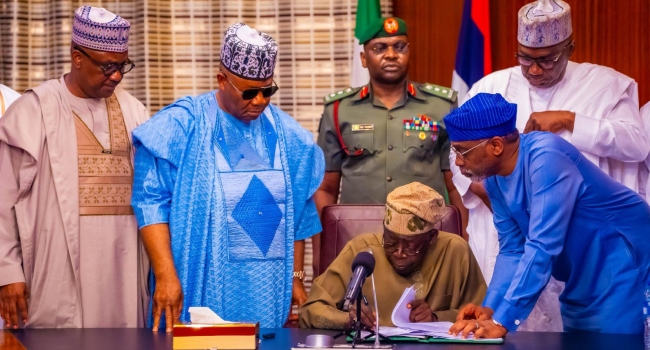
President Tinubu had earlier signed four major tax reform bills into law, the Nigeria Tax Act, Nigeria Tax Administration Act, Nigeria Revenue Service (Establishment) Act, and the Joint Revenue Board (Establishment) Act, described as the most comprehensive overhaul of the country’s tax system in decades.
The laws, which unify tax administration under the newly established Nigeria Revenue Service, are scheduled to take effect on January 1, 2026, despite earlier opposition from some northern lawmakers.


 Follow Us on Google Discover










Ogun hospital under fire as Nurse dies of asthma attack amid alleged oxygen failure

Maryam Babangida Center for Women Devt gets first wheel chair ramp after 34 years

Shettima inaugurates Arewa for Asiwaju campaign office in Abuja

2027: ‘APM will beat Tinubu in 12 battleground states’ – Makinde’s campaign team

Veteran Journalist, diplomat Dele Cole dies at 86

Suspended NSCDC commandant apologises over deaths of suspected illegal miners in Niger

EPL: Martinez rushed to hospital after head injury as Chelsea beat Everton

COAS arrives Borno as Military moves to clear terrorist camps, rescue abductees

Macky Sall quits race for UN Secretary-General position

Buhari backed Osinbajo’s presidential ambition four times, Akande tells Babachir Lawal

Dr. Benjamins‑Laniyi urges media to amplify women’s leadership, adopt gender‑sensitive reporting

Pope Leo XIV set to leave hospital after lung cancer surgery

Gunmen kill four vigilantes in Plateau community

Tension as traditional ruler collapses, dies in Ondo

2027: Kwankwaso a goat in sheep’s clothing, secretly working for Tinubu – Atiku Campaign Council

Erisco Foods announces 13 job openings across Nigeria – Apply Now

House Officers, Nurses, Radiographers, Others wanted as DELSUTH opens recruitment – Apply Now

2027: Step down if you are not working for Tinubu – Deji Adeyanju dares Obi, Kwankwaso

Tinubu reappoints Bala Bila as INEC commissioner, nominates six others

Panic in Rivers community as pipeline explosion injures 20, razes over 50 houses

Elon Musk unveils Tesla’s ‘flying’ car in stunning demonstration

2027: Tinubu to miss rallies in over 20 States as APC releases campaign timetable
2027: Kwankwaso a goat in sheep’s clothing, secretly working for Tinubu – Atiku Campaign Council

33 Governors cannot be wrong in supporting Tinubu – Bayo Onanuga
Gunmen storm Plateau, kill traditional ruler at residence

2027: ‘Atiku, Obi, Duke, Makinde are not threats to Tinubu’, says APC

Osun Police arrest three suspects over murder, recover weapons

2027: ‘Don’t trust your destiny to ‘kalokalo’ people’ – Wike warns Rivers voters against Atiku, Amaechi, Obi

Outrage as suspected cultists unveil renovated police post in Rivers
