Politics
Nigerian Workers suffering, increase Minimum Wage now – Atiku bombs Tinubu

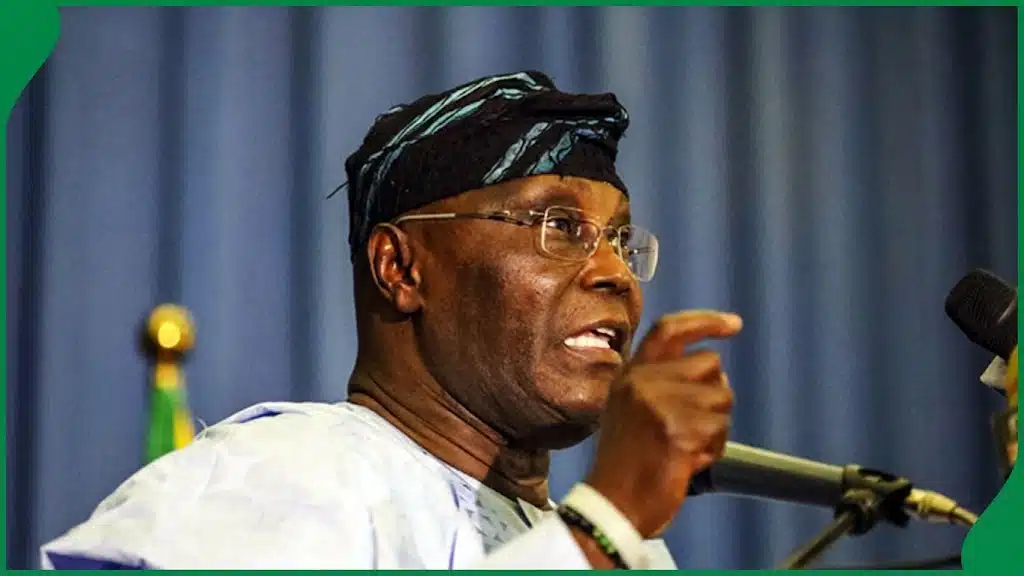
Presidential candidate of the African Democratic Congress (ADC), Atiku Abubakar, has called on President Bola Ahmed Tinubu to increase Nigeria’s ₦70,000 national minimum wage, arguing that rising fuel, transport, food and housing costs have eroded workers’ purchasing power.
Atiku made the call in a statement issued by Phrank Shaibu, Director of Strategic Communications of the ADC Presidential Campaign Council.
The former Vice-President said the removal of the petrol subsidy under the Tinubu administration had contributed to increased living costs and placed additional pressure on Nigerian households.
He also backed organised labour’s demand for a substantial review of the minimum wage, arguing that the increase from ₦30,000 to ₦70,000 had not translated into a corresponding improvement in workers’ purchasing power.
The Federal Government increased the minimum wage to ₦70,000 in 2024 following negotiations with organised labour. President Tinubu had said the wage would be reviewed after three years.
Atiku, however, argued that the current wage was inadequate when measured against prevailing prices.
“The government pulled away the floor, offered workers a flimsy umbrella and now applauds itself while the rain beats down on them,” he said.
“Fuel, transport, food and rent have devoured their earnings. This is a callous way to govern people who work hard and ask only for the means to live.”
Atiku used petrol prices to illustrate his argument, saying that ₦70,000 could purchase only about 50 litres of petrol at ₦1,400 per litre.
Recent reports have shown petrol selling for around ₦1,400 per litre at some filling stations in Lagos, while prices in parts of Abuja reached as high as ₦1,450 per litre.
According to Atiku’s statement, the previous ₦30,000 minimum wage could buy approximately 118 litres of petrol when the national average price was ₦254.06 per litre in April 2023.
“At ₦1,400 a litre, the entire ₦70,000 monthly minimum wage buys just 50 litres of petrol. What does the worker take home to feed the children? What pays the rent? What gets that worker back to work on Monday?” he asked.
“The payslip has grown, but the fuel it can buy has more than halved. Tinubu has given workers a larger number and left them with a smaller life. That is hardship dressed up as a wage increase.”
Atiku also compared Nigeria’s minimum wage with those of other African countries, including oil-producing nations, using exchange rates cited in his statement.
He said the converted figures for minimum wages in Libya, Algeria, Equatorial Guinea and Gabon were higher than Nigeria’s ₦70,000, while Benin Republic’s minimum wage also compared favourably when converted into naira.
The ADC candidate acknowledged that wage structures, exchange rates and living costs vary from country to country, but maintained that such differences did not make ₦70,000 sufficient for Nigerian workers facing current prices.
He urged the President to review workers’ salaries while taking measures to reduce the prices of essential commodities and energy.
“The Nigerian worker is the engine of this country’s productive life, yet Tinubu expects that engine to run without fuel,” Atiku said.
He argued that the impact of petrol prices went beyond filling stations because higher transportation and energy costs feed into the prices of food and other essential goods.
“Petrol does not stay at the pump. Its price follows the farmer to market, enters the baker’s oven and appears in the fare a parent pays to take a child to school,” he said.
Atiku challenged Tinubu to immediately agree to what he described as a substantial increase in the minimum wage to reflect the cost of food, transportation, rent and electricity.
“If he has no intention of raising workers’ pay, he should say so plainly and stop stringing the Nigeria Labour Congress and other labour leaders along,” he said.
“Nigerian workers deserve an answer, not another round of meetings that ends where it began.”
He also said that if elected president in 2027, he would begin work on increasing the wage floor from his first day in office.
“Tinubu has eight months left in this term. Nigerian workers cannot be told to endure eight more months of hunger while his government debates whether their wages are enough,” Atiku said.
He further outlined a proposed programme of support for domestic production, targeted social protection and measures aimed at reducing the cost of energy and essential goods.
Atiku said his proposed targeted production subsidy would support petroleum products refined in Nigeria and sold to Nigerians, subject to a spending cap, public accounting and independent auditing.
The proposal is part of his broader argument for targeted government intervention in domestic refining and lower energy costs. The APC Presidential Campaign Council has, however, questioned the legal and fiscal basis of the proposed production subsidy, while the NMDPRA has maintained that petrol prices are determined by market forces under the Petroleum Industry Act.
Atiku said any government support for the petroleum sector must produce measurable relief for consumers.
“Nigerians do not eat FAAC figures. A full treasury is no answer to an empty kitchen. The test of this government is whether the men and women who work all month can live on what they earn,” he said.
“A living wage must buy a living. It is not a privilege; it is a basic right.”
The former Vice-President has in recent weeks repeatedly criticised the Tinubu administration over fuel prices and the wider cost-of-living situation, while proposing measures he says would reduce the burden on households.


 Follow Us on Google Discover






Nigerian Workers suffering, increase Minimum Wage now – Atiku bombs Tinubu

Six NDC governorship candidates reject Babachir Lawal’s appointment as North-East campaign coordinator

PSC announces dates for 2026 Police promotion examinations

US rejects Iran’s Strait of Hormuz reopening proposal

Tinubu set to return Tuesday after four-week European vacation

‘What is Tinubu still doing in France?’ – Atiku questions President’s prolonged stay abroad

Nollywood Actor Rykardo Agbor escapes death in tragic auto crash

Flamingos crush Togo 4-0 to clinch 2026 WAFU-B U-17 Girls Cup title

FG moves to revamp four ports nationwide

One dead as bus rams into median pole in Lagos

NDLEA nabs 25-year-old newlywed with 72 cocaine wraps at Enugu airport

NECO 2026: Kano emerges best performing state in Nigeria

BREAKING: Panic as explosion hits gas station in Abuja

Woman nabbed for allegedly smuggling alcohol into Ogun prison

Thousands gather at Old Trafford as Pastor Jerry Eze lead prayer in Manchester

‘Produce any corruption conviction against Atiku’ – ADC challenges APC

My gov’t correcting past mistakes, give me more time to ‘finish the good work’ – Tinubu appeals to Nigerians
Thousands gather at Old Trafford as Pastor Jerry Eze lead prayer in Manchester

OK Movement defies NDC Obi, insists its Presidential Campaign Council is still operational

Iran offers plan to reopen Strait of Hormuz, US reportedly declines

APM urges Tinubu to quit 2027 race, back Makinde

‘I never diverted federal road projects to South-East’ – Umahi
Woman nabbed for allegedly smuggling alcohol into Ogun prison

Kenyan President Ruto visits Dangote refinery

Troops rescue 14 kidnapped victims, arrest three logistics couriers in Katsina
BREAKING: Panic as explosion hits gas station in Abuja

EFCC nab suspended City Boy Movement women leader, Halimat Tejuosho

NUJ FCT Chair, Ike urges research investment to tackle oil, gas uncertainty

Iraq demands US exemption for Iranian airlines after flight disruptions
