
News
‘You have plunged each Nigerian into N716,882 debt’ – Atiku tackles Tinubu amid fresh plan to borrow $1.5bn from World Bank

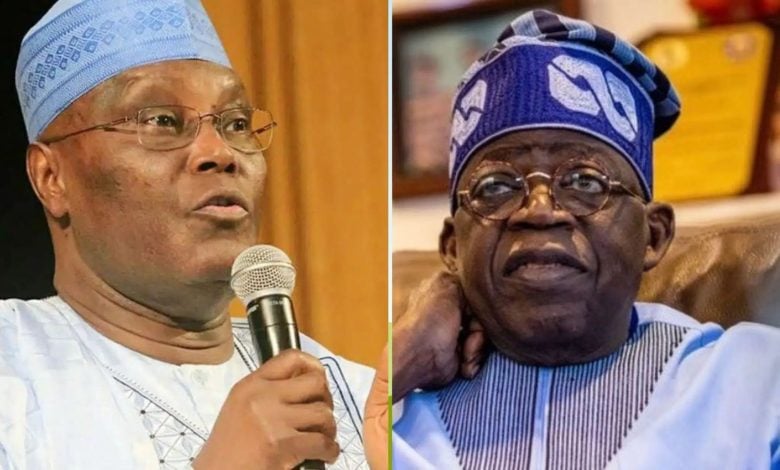
Former Vice President and African Democratic Congress (ADC) presidential candidate, Atiku Abubakar, has called on President Bola Tinubu’s administration to account for Nigeria’s existing debt before proceeding with proposed fresh $1.5 billion World Bank financing.
Atiku made the demand in a statement issued by the Director of Strategic Communications of the ADC Presidential Campaign Council, Phrank Shaibu, amid the latest public debt figures released by the Debt Management Office (DMO).
The DMO reported that Nigeria’s total public debt stood at ₦166.79 trillion as of June 30, 2026, comprising ₦91.59 trillion in domestic debt and ₦75.20 trillion in external debt.
The proposed World Bank financing involves three facilities of $500 million each, reportedly targeting climate resilience, social protection and early childhood development. The financing was still being discussed/proposed at the time of Atiku’s statement.
Atiku criticised the proposed borrowing, arguing that the government should first provide a detailed account of how previous loans had been utilised and the results achieved.
“With public debt at ₦166.79 trillion, Tinubu is now seeking another $1.5 billion from the World Bank. The President must first account for the money already borrowed,” he said.
He argued that Nigerians were facing difficulties with the cost of food, fuel and electricity despite what he described as continued increases in public borrowing.
“Nigerians were promised that painful policies would free resources for development. They have felt the pain. Where is the development?” Atiku asked.
According to the former vice president, if Nigeria’s public debt were divided among the country’s population, the implied debt burden per person would be about ₦716,822, which he compared with ₦383,442 three years earlier.
He described the increase as an 87 per cent rise and questioned the government’s justification for additional borrowing.
“Tinubu has made today difficult and tomorrow more uncertain. He cannot keep loading debt onto the country and expect Nigerians to applaud programme titles,” Atiku said.
Atiku Seeks Details of Proposed Financing
While acknowledging that the areas targeted by the proposed World Bank financing address important needs, Atiku said the names of development programmes should be accompanied by clear information on how the funds would be used and measured.
He called on the government to publish details of the projects to be financed, the communities and citizens expected to benefit, the targets for each programme, the terms of the proposed borrowing and the disbursement schedule.
“Climate resilience must mean identifiable land restored, irrigation delivered and communities protected from flooding. Social protection must identify who receives support and when. Early childhood development must produce measurable gains in nutrition, healthcare and learning,” he said.
Atiku also questioned the government’s borrowing plans against its claims of increased revenue and savings following the removal of the petrol subsidy.
“If more money is coming in, why does the debt keep climbing? If Nigerians have sacrificed so much, where are the results?” he asked.
He argued that the focus should be on demonstrating how existing borrowed funds had been used and what outcomes had been achieved.
“A government cannot keep announcing savings, signing loans and asking the same struggling families to wait for relief,” he said.
Atiku called for greater transparency over Nigeria’s existing debt and urged the government to provide information that would enable citizens to track the implementation of projects funded through borrowing.
“Show us the money already received. Show us what it built. Show us who benefited. Account for the debt already on Nigeria’s books before borrowing another dollar,” he said.
The DMO’s latest debt publication shows that Nigeria’s total public debt increased from ₦159.35 trillion at the end of March 2026 to ₦166.79 trillion at the end of June 2026.
The World Bank’s Nigeria financing records also show that the institution has several active and recently approved financing programmes in the country, although the proposed $1.5 billion facilities referenced by Atiku are separate from previously approved projects.


 Follow Us on Google Discover






Gov Ododo leads Kogi delegation to Kuwait, seals new development partnership

US-led troops withdraws from Iraq after 12 years

Group decline calls to disqualify Chinda Rivers APC governorship candidate

Atiku demands release of Nigeria-US health agreement following Ghana’s rejection

Court orders Wike’s son Jordan to produce American Passport over $2.1m land fraud suit

Fresh crisis rock Gombe PDP as Mailantarki rejects Pantami’s victory, threatens fresh legal action

‘You have plunged each Nigerian into N716,882 debt’ – Atiku tackles Tinubu amid fresh plan to borrow $1.5bn from World Bank

I should be commended for delivering my promise – Jimoh Ibrahim fires critics over Tinubu’s absence At UNGA

Naira gains to N1,370/$ in Parallel Market, weakens to N1,329 at NFEM

Public Servants threaten October 2 strike over petrol price, wage award, gets NLC backing

“I feel good, healthy, sound and ready to Go” — Tinubu after return from Europe

Pantami wins fresh PDP Governorship Primary in Gombe

Fatima El Mansouri emerges Morocco first female PM

Osun residents loot food warehouse after cheap food scheme operators disappear

BREAKING: Tinubu returns home after four weeks vacation in Europe

Dangote Group announces 77 job vacancies across Nigeria, Africa – Apply Now

Nigerian Navy Batch 39 Recruitment 2026: Application opens October 2 — Requirements, How to Apply

IITA Recruitment 2026: International Institute of Tropical Agriculture opens vacancies – Apply Now

IBEDC announces recruitment for Operations, Technical Audit Officers (Apply Now)
BREAKING: Tinubu returns home after four weeks vacation in Europe

Education Ministry releases approved textbooks for Nigerian schools

Court directs NMDPRA to grant import licences to Matrix Energy, AA Rano, AYM Shafa

2027: PDP members dump party for APC in Kwara

Ogun 2027: PDP defends Adebutu, dismisses eligibility claims

Guinea-Bissau thrash sloppy Super Eagles of Nigeria 3-0 in AFCON Qualifier
Court orders Wike’s son Jordan to produce American Passport over $2.1m land fraud suit

Kenneth Okonkwo reverses position on Obi’s Anambra debt record, says ‘I was misled’

BREAKING: Premier League Commission confirms Manchester City guilty of financial rule breaches

Lagos’ Danielle Adewusi crowned Miss Universe Nigeria 2026
