
News
Overturn judgment nullifying 2027 election timetable, INEC prays Appeal Court

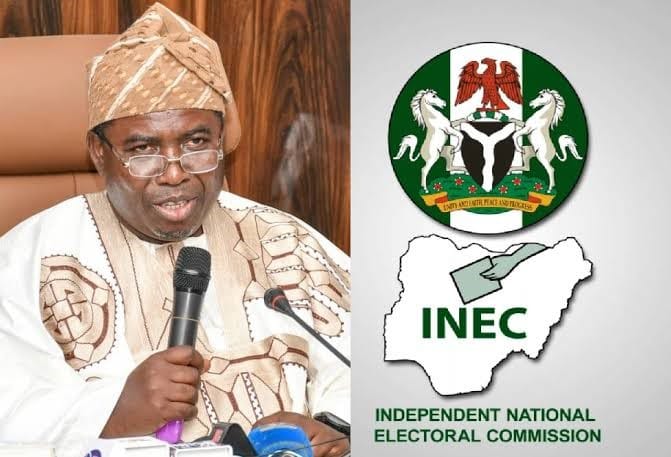
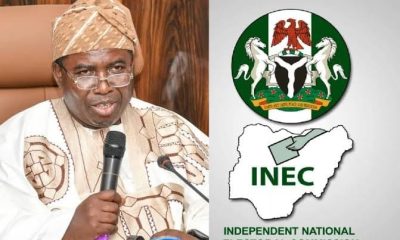
The Independent National Electoral Commission (INEC) has approached the Abuja Division of the Court of Appeal, seeking to overturn a Federal High Court judgment that nullified parts of its guidelines for the conduct of the 2027 general elections.
INEC is also asking the appellate court to stay the execution of the judgment delivered by the trial court, pending the determination of its appeal.
Justice Mohammed Umar of the Federal High Court, Abuja, had last week struck down key provisions of INEC’s revised election timetable, which required political parties to submit their membership registers and databases by May 10 as a condition for participation in the 2027 elections.
The ruling followed a suit filed by the Youth Party, which challenged the legality of INEC’s directive and accused the commission of overstepping its statutory powers.
In his judgment, the trial judge held that INEC could not lawfully shorten the timelines already provided under Section 29(1) of the Electoral Act, 2026, for the submission of party membership records and candidates’ particulars.
Dissatisfied with the decision, INEC filed its appeal on May 25 through its legal team led by Senior Advocate of Nigeria, Chief Alex Izinyon.
The commission raised nine grounds of appeal, arguing that the trial court erred in law by failing to properly address jurisdictional issues, which it claimed resulted in a denial of fair hearing.
INEC maintained that under Sections 29(1), 82 and 84 of the Electoral Act, 2026, political parties are only required to submit candidate lists not later than 120 days before the general election, while notifying the commission 21 days before primaries or conventions.
According to the commission, it does not possess the legal authority to impose additional or shortened timelines beyond what the Electoral Act provides.
The electoral body further argued that the trial court’s decision was against the weight of evidence and urged the appellate court to allow the appeal and set aside the judgment in its entirety.
INEC also asked the court to strike out the suit, contending that the plaintiff lacked the legal standing (locus standi) to institute the case.
It will be recalled that Justice Umar had ruled that INEC’s timetable violated several provisions of the Electoral Act, 2026, including Sections 29(1), 31, 32, and 98, which govern submission of candidate particulars, substitution of candidates, publication of final lists, and campaign timelines.
The court consequently nullified the contested portions of the timetable, holding that INEC lacked statutory powers to impose deadlines inconsistent with the Electoral Act.


 Follow Us on Google Discover








Pope Leo XIV set to leave hospital after lung cancer surgery

Gunmen kill four vigilantes in Plateau community

Tension as traditional ruler collapses, dies in Ondo

2027: Kwankwaso a goat in sheep’s clothing, secretly working for Tinubu – Atiku Campaign Council

DSS arrests Maina’s fugitive son in Abuja, hands him over to EFCC

2027: Step down if you are not working for Tinubu – Deji Adeyanju dares Obi, Kwankwaso

2027: ‘I wont join my Uncle to support Tinubu’ – Davido says

Enugu NYSC death: NAFDAC debunks claims linking corps members death to fake drugs

33 Governors cannot be wrong in supporting Tinubu – Bayo Onanuga

Security forces arrest five suspects over abduction of 20 NYSC members in Imo

Rugby star Hyron Andrews dies at 31 after accidental fall in South Africa

LAUTECH Resident Doctors halt 50-day strike as Makinde intervenes

House Officers, Nurses, Radiographers, Others wanted as DELSUTH opens recruitment – Apply Now

FG raises health fund allocation to N40.76bn, extends insurance to prison inmates

Erisco Foods announces 13 job openings across Nigeria – Apply Now
Erisco Foods announces 13 job openings across Nigeria – Apply Now

Ex-Senator Bello Mandiya’s body found in Abuja home three days after he slipped, hit his head in the bathroom
‘You Betrayed Osun People’ — Adeleke, Davido face backlash over support for Tinubu

Tinubu reappoints Bala Bila as INEC commissioner, nominates six others
House Officers, Nurses, Radiographers, Others wanted as DELSUTH opens recruitment – Apply Now

‘I love Islam, I’ve sent people to Mecca to pray for me, Nigeria for 25 years’ – Akpabio

Over 10 soldiers, four civilians feared dead as Boko Haram terrorists attack Borno military base

Panic in Rivers community as pipeline explosion injures 20, razes over 50 houses

Umahi reopens first Niger bridge after emergency repairs, displays Tinubu’s photos

Elon Musk unveils Tesla’s ‘flying’ car in stunning demonstration
2027: Step down if you are not working for Tinubu – Deji Adeyanju dares Obi, Kwankwaso

2027: Tinubu to miss rallies in over 20 States as APC releases campaign timetable

Tension mounts as NLC rejects FG’s response to 14-day ultimatum

‘No plan to raise electricity tariff’ – FG assures Nigerians
