
News
Phantom presidential council was inserted into the budget through an official instrument under Buhari — Budget Office

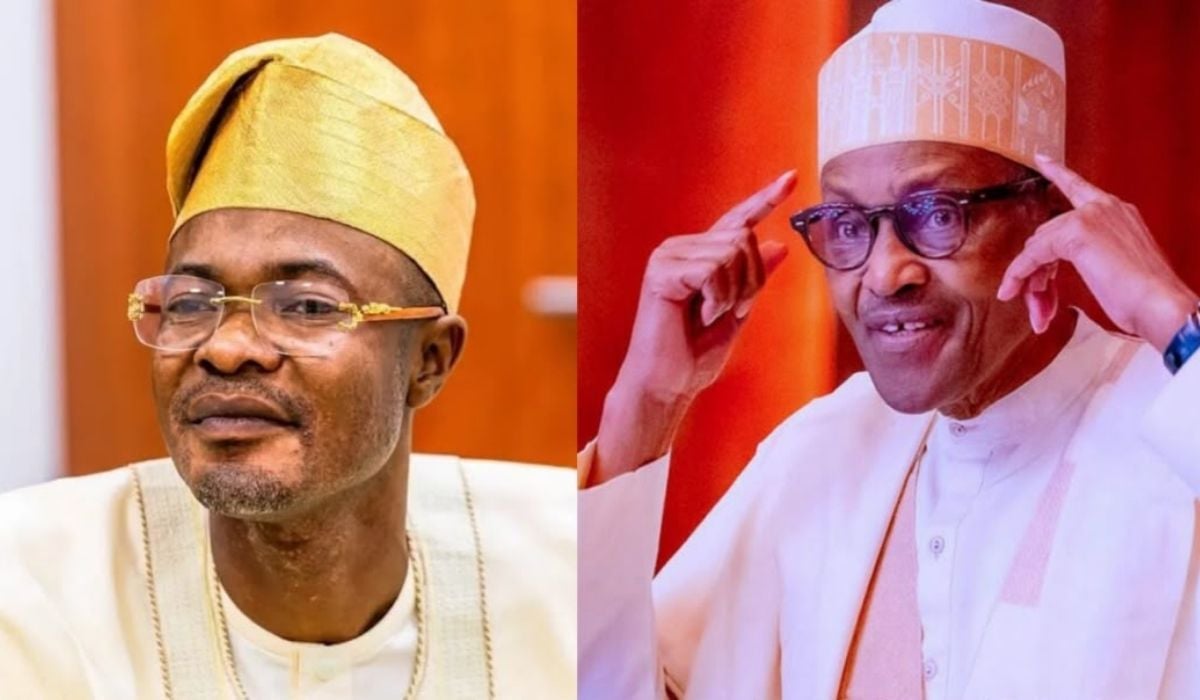
The Director-General of the Budget Office of the Federation, Dr. Yakubu Tanimu, has defended the agency’s role in the controversial budgetary allocation to the Presidential Foreign Investment Promotion Council (PFIPC), insisting that although the council was captured in the 2026 Appropriation Act, not a single kobo was released because the legal conditions for expenditure were never fulfilled.
Speaking before the House of Representatives Ad-hoc Committee investigating the alleged unlawful establishment and funding of the council on Friday, Yakubu said the Budget Office neither created the council nor approved its establishment, recruitment or staffing.
He explained that the council entered the federal budget through official government instruments originating from the Presidential Economic Advisory Council established during the administration of former President Muhammadu Buhari on October 9, 2019.
According to him, the Office of the Accountant-General of the Federation assigned the council an administrative budget code, while the Office of the Head of the Civil Service approved its establishment and recruitment waiver before the Budget Office assessed the fiscal implications.
“The Budget Office did not create the council. It did not assign its budget code. It did not approve its establishment. It did not grant its recruitment waiver. It received official instruments and did what the law required of it. It measured their fiscal effect,” he said.
Yakubu disclosed that although the council requested ₦3.8 billion for personnel costs, the Budget Office rejected the proposal and independently reduced it to ₦802.98 million using the approved establishment and public service salary structure.
He stressed that the provision never translated into actual spending because the office withheld the mandatory financial clearance required before recruitment, payroll enrolment and salary payments could commence.
“There was therefore no financial clearance. There was no lawful recruitment. There was no payroll enrolment. There was no salary payment,” he said.
The DG further stated that the ₦200 million overhead allocation remained untouched because no treasury warrants or cash backing were issued, while the ₦300 million capital allocation never advanced to the procurement stage as all statutory procurement requirements remained unmet.
According to him, the government’s financial control mechanisms functioned as designed by preventing any expenditure before public funds could be accessed.
“The law did not recover money after it had gone. It prevented the expenditure before it began,” Yakubu stated.
During the hearing, lawmakers questioned the legal basis for budgeting for the council after examining what they described as a purported Act establishing it.
Committee member, Hon. Abubakar Fulata, argued that the document lacked a gazette number, the signature of the Clerk of the National Assembly and evidence of presidential assent, insisting it was not a genuine Act of Parliament.
Responding, Yakubu maintained that the Budget Office relied strictly on official establishment approvals, recruitment waivers and directives from the National Salaries, Incomes and Wages Commission in preparing its fiscal estimates.
Chairman of the committee, Hon. Yusuf Gagdi, defended the Budget Office, saying evidence before lawmakers showed the agency acted on approvals received from the relevant government institutions.
He noted that the investigation had now shifted to determining how allegedly forged documents found their way into official government processes.
“The agency satisfied all the requirements the Budget Office needed before allocating a budget. The issue now is whether those documents were genuine. That is what this committee is investigating,” Gagdi said.
The committee also announced that the Accountant-General of the Federation would appear before lawmakers on Monday to explain how the council obtained its budget code, with other government agencies expected to testify before the investigation concludes next week.


 Follow Us on Google Discover






Nigerian Army sends 600 Personnel to India for specialised combat training

FCC accuses Customs of bypassing federal character, demands suspension of recruitment training

Peter Obi, Dickson, Babachir Lawal meet as NDC prepares for 2027 Campaign Council

APC accuses Atiku, ADC of plotting AI deepfakes to discredit Kaduna campaign rally

Four pilots killed as two military aircraft collide mid-air in Philippines

‘I want to leave Aso Rock in 2031 to enjoy a better Nigeria’ – Remi Tinubu

Hardship is necessary for better future, Suswam tells Nigerians as he backs Tinubu for 2027

2026 U-17 WWC: Flamingos set to face Mexico, Chile or Australia in round of 16

Anambra woman allegedly killed by ex-boyfriend after breakup

Atiku dares Tinubu to name ministers, appointees involved in alleged bribery

Flamingos beat North Korea 3-1 to reach U-17 WWC knockout stage

EFCC opens portal for 2026 recruitment – Step-by-step guide to apply

Tinubu reinstates Mohammed Danjuma as permanent secretary after suspension

Nigerian Electricity Supply Corporation (NESCO) opens recruitment for five positions – Apply Now

Chevron opens recruitment for five console operator positions in Nigeria – Apply

Seven-Up opens recruitment for 17 positions across Nigeria – Apply Now

Backend Office HQ announces 9 job openings with salaries of up to ₦400,000 – Apply Now

CDCFIB Recruitment: Portal opens October 28 for shortlisted candidates
Chevron opens recruitment for five console operator positions in Nigeria – Apply
EFCC opens portal for 2026 recruitment – Step-by-step guide to apply

10 things you never knew about late Nollywood veteran, Francis Duru

‘Politics Is Not Madness’: Emir of Katsina warns Tinubu Campaign DG Yari

EXCLUSIVE: Rainbow Coalition emerges in Ogun Central as Iyabo Obasanjo moves to back Peter Obi

BREAKING: Veteran Nollywood actor Francis Duru is dead

Remi Tinubu, Seyi Tinubu clash over APC Youth leadership appointment

Ebola: Tinubu approves ₦10bn, appoints Gbajabiamila to lead Presidential Task Force

Tinubu’s Gov’t only about him, his wife, son and bank account; ‘Renewed Hope’ Is ‘Renewed Hunger’ — Emir of Katsina

Hardship: NLC, TUC threaten nationwide action, give FG October 27 deadline

‘Every Nigerian made poorer by 300%’ – Obasanjo slams Tinubu reforms
