
Opinion
Tinubu’s top-down, one-partyist reelection strategy – Viewpoint by Farooq A. Kperogi

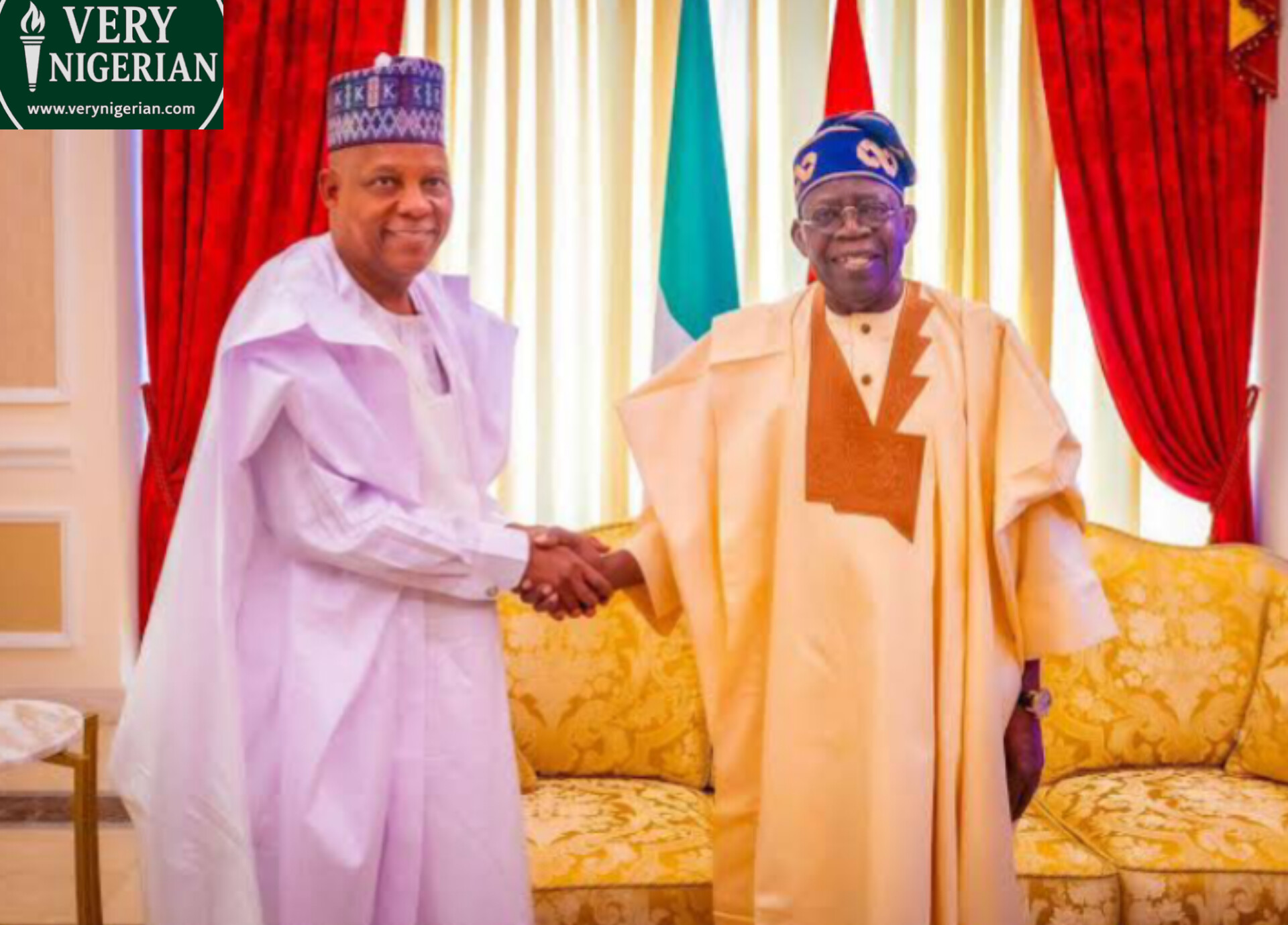
What most Nigerians recognize as Nigeria’s creeping descent into stifling one-partyism, with what seems like the unstoppably expanding defections of major elected officials into the APC, is actually only President Bola Tinubu’s reelection strategy.
It is a strategy that may well unravel after the 2027 presidential election, but whose immediate effects are already distorting the country’s democratic ecosystem and hollowing out the meaning of political choice.
Tinubu’s consuming monomania for assembling all governors and legislators under the notional banner of the APC is structurally and substantively similar to previous presidents’ single-minded political expansionism under the PDP.
That earlier expansionism also provoked loud cries of one-partyist dictatorship from the commentariat and political opponents. History, it seems, is being cynically reenacted by people who had claimed to have learned from it.
If you go back in time and read stories, editorials, and analyses from or about the 1999 to 2014 PDP era, you will see sustained arguments that Nigeria was being nudged toward a de facto one-party system.
The fear then was that opposition parties were rendered functionally irrelevant through a venomous mix of incumbency power, institutional capture, induced defections and the systematic shrinking of political alternatives.
For instance, in an August 26, 2003, analysis in ThisDay titled “The Spectre of One-Party Rule,” Chukwudi Nwabuko relied on the late Pa Abraham Adesanya’s grim exhortation to frame the PDP’s 2003 electoral dominance (and the corresponding weakening of opposition parties) as indicative of a mordant slide toward one-party democratic autocracy. The anxiety was grounded in what Nigerians were witnessing in real time: an opposition that could barely breathe, let alone challenge power.
In a May 30, 2007, report after the presidential election that returned Umaru Musa Yar’adua as president, the International Crisis Group said the outcome marked a “further slide towards a one-party state.” It argued that PDP’s dominance was reinforced through captured institutions, selective anti-corruption pressure and especially rigged elections.
This was not partisan rage. It was sober analysis by observers who had little interest in Nigerian party loyalties but a keen interest in democratic health.
In fact, in April 2008, then PDP chairman Vincent Ogbulafor bragged that the “PDP will rule for 60 years,” a statement that quickly became a trope of one-party symbolism. “I don’t care if Nigeria becomes a one-party state,” Ogbulafor said.
That boast is now memorialized as a defining rhetorical emblem of PDP-era political hubris, a moment when arrogance briefly dispensed with euphemism.
By September 19, 2010, a Reuters dispatch on a major resignation to challenge Goodluck Jonathan in PDP primaries casually included the assessment that Nigeria was “close to being a one-party state.” That line was telling. It showed how widely the one-partyist frame had spread beyond domestic commentary into international reportage. Nigeria’s democratic drift had become legible to outsiders.
It was against this background that Tinubu and his allies cast themselves as insurgents against PDP hegemony. They denounced the PDP’s one-partyist tendencies, mocked its hubris, and promised a more competitive political order. Now that Tinubu sits atop the same power structure, the irony is almost operatic. The script he once criticized is the same one he is now directing.
So why is Tinubu, who echoed the sentiments of the drift to one-partyism under the PDP and challenged it with all he had, playing the same game? There are two reasons I can divine for this, and neither flatters him nor augurs well for Nigeria’s democracy.
First, even the most hopelessly fanatical Tinubu supporter cannot deny that Tinubu’s domestic economic policies have been an unrelieved disaster for the vast majority of people.
With fuel subsidy gone, the naira aggressively devalued, petrol prices through the rooftops, an inflationary conflagration tearing everything apart, hunger on the rise, insecurity effectively democratized, hope on the run, and a looming taxation regime rooted in a legally questionable law, Tinubu has no positive record to run on.
There is nothing in the lived experience of most Nigerians that he can point to and say, “This is why you should renew my mandate.”
Economic pain can sometimes be sold as tough but necessary reform if people can see light at the end of the tunnel. In Tinubu’s case, the tunnel keeps getting darker, and the promised light keeps receding. In such circumstances, appealing directly to the electorate becomes politically suicidal.
Which brings me to the second reason. For the 2027 election, Tinubu will not directly appeal to everyday Nigerians to vote for him. Instead, he will take a circuitous route: he will ask governors to deliver votes for him in exchange for his support for their own reelections.
It is a transactional politics stripped of pretense, a politics that treats voters as passive objects to be mobilized, coerced or managed by local power brokers.
It will be a classic quid pro quo, and the timetable released by INEC ensures that this arrangement works seamlessly. Presidential and National Assembly elections will take place on February 20, 2027, while governorship elections will take place on March 6.
This sequencing means that defecting governors have an abiding, existential imperative to “deliver” their states for Tinubu in February in the expectation that he will “deliver” for them a few weeks later. Their political survival becomes intertwined with his, and democratic choice becomes collateral damage.
So, like the PDP he once opposed, Tinubu is banking on governors, not the ordinary voters he governs, to reelect him for a second term. He is instrumentalizing the power of incumbency to bludgeon politicians into the APC, thereby transforming what should be a contest of ideas into a consolidation of power.
The mass defection of elected officials also achieves another crucial effect. It helps construct a notion of the inevitability of Tinubu’s reelection. If most of the governors of the federation are already in the APC and are actively campaigning for the president’s second term, what, many people will ask, is the point of opposing him?
This is a powerful rhetorical maneuver designed to demoralize the critical electorate and sap the energy of opposition forces. It encourages political apathy and fatalism. It nudges even those who dislike the government into thinking that resistance is futile, that the outcome is already predetermined.
That sense of inevitability is perhaps the most insidious weapon in the one-partyist arsenal. You do not need to ban opposition parties if you can convince people that opposing the ruling party is a waste of time. You do not need to rig every ballot if you can first rig expectations.
But history offers a cautionary tale that Tinubu and his strategists would do well to remember. The PDP once believed its dominance was permanent. It mistook elite defections for popular consent. It confused the silence of intimidation with the endorsement of legitimacy. When the reckoning came in 2015, it came swiftly and decisively.
One-partyist strategies can win elections, but they corrode the moral foundations of power. They produce brittle victories and hollow mandates. They also create pent-up frustrations that eventually find expression, often in unexpected and destabilizing ways.
Tinubu’s top-down reelection strategy may very well work in the short term. Governors may deliver. Legislators may comply. Opposition parties may fracture further.
But a democracy reduced to elite transactions is a democracy living on borrowed time. The deeper question is not whether Tinubu can secure a second term this way, but what kind of country will be left behind when the illusion of inevitability finally collapses.
Happy New Year to my readers!
Update:
A few hours after writing this column, INEC issued a statement disclaiming the 2027 electoral timetable some newspapers attributed to it.


 Follow Us on Google Discover






Yamal double fires Barcelona to 4-2 victory over Levante

Tinubu lands in Paris for second leg of holiday

Burna Boy’s ‘Praise the Sky’ Potshot missed true Christians: by Ugochukwu Ugwuanyi

By attacking APC Govs, you are sowing seed of discord like you did in PDP, join APC or step aside – Onoh tells Wike

LP chieftain Arabambi sues UNN over Peter Obi’s academic certificate

BREAKING: Several Islamic Clerics kidnapped after prayer gathering at Sen. Yari’s residence in Zamfara

Atiku: My fuel subsidy plan will reduce petrol, transport costs

‘The devil caused it’ – Anambra woman pleads for forgiveness, admits earning $300 from child sexual content

2027: INEC publishes final list of presidential, national assembly candidates (Full list)

2027: Haske quits APC, emerges APM governorship candidate in Adamawa

2027: INEC publishes Kwara PDP’s final National Assembly candidate list

Ex-Adamawa Governor, PDP National Chairman Bamanga Tukur dies at 94

Army Captain accused of sexually assaulting 13-year-old in Taraba

2027 Election: Ex-NAN boss Ima Niboro appointed Tinubu campaign team spokesperson

Lil Durk cleared of murder-for-hire charges, faces fresh trial in October
2027: INEC publishes final list of presidential, national assembly candidates (Full list)
LP chieftain Arabambi sues UNN over Peter Obi’s academic certificate

Jigawa PDP constitutes 45-member campaign council ahead of 2027 governorship poll
‘The devil caused it’ – Anambra woman pleads for forgiveness, admits earning $300 from child sexual content

Poco Lee regains freedom after weeks in UK detention

APC only making noise, nobody can beat Kwankwaso in Kano — Sen. Victor Umeh

Xenophobic attack: Two more Nigerians killed in South Africa
Lil Durk cleared of murder-for-hire charges, faces fresh trial in October

‘Refinery shares may possibly rise to N10,000’, says Dangote

2027: APC blocs reject Wike’s Rainbow Coalition as Tinubu’s re-election bid intensifies

Tension in Sokoto as man stabs Islamic Cleric after Juma’at prayer

Dangote refinery raises petrol price to N1,350 per litre
Army Captain accused of sexually assaulting 13-year-old in Taraba
BREAKING: Several Islamic Clerics kidnapped after prayer gathering at Sen. Yari’s residence in Zamfara