World
US announces first $36bn from Japan’s $550bn trade pledge

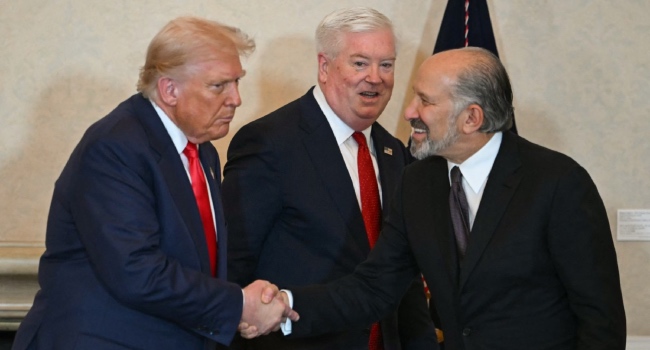
The United States has announced the first tranche of investments from Japan under a $550 billion trade commitment agreed with President Donald Trump, marking an early step in Tokyo’s pledge to boost American industries in exchange for reduced tariffs.
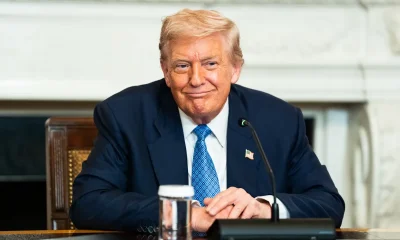
Trump revealed that $36 billion has been committed for three major infrastructure projects, describing the development as the first phase of Japan’s “$550 BILLION Dollar Commitment” to invest in the US.
Writing on Truth Social, he linked the scale of the projects to his tariff policy, calling it a key driver behind the agreement.
The announcement comes ahead of Japanese Prime Minister Sanae Takaichi’s scheduled visit to the White House next month, following Trump’s trip to Japan in October.
Takaichi said the investments would strengthen the Japan–US alliance and help both nations build resilient supply chains in strategically important sectors such as critical minerals, energy, and AI-driven data centers.
She described the initiative as mutually beneficial, enhancing economic security and growth for both countries.
US Trade Secretary Howard Lutnick hailed the projects as a “massive America First trade win,” underscoring their scale and strategic importance.
The three projects include a natural gas generation facility in Ohio, a deep-water oil export facility in the Gulf of Mexico, and a synthetic diamond manufacturing plant.
The gas facility, expected to generate 9.2 gigawatts of power, would rank among the largest in history and is intended to supply electricity to AI data centers and other high-demand industries.
The oil export facility is projected to generate between $20 billion and $30 billion annually in US crude exports, reinforcing America’s global energy dominance.
Meanwhile, the synthetic diamond plant aims to reduce US reliance on foreign imports, particularly from China, which currently dominates the sector.
Under the broader agreement announced in July, Tokyo pledged to invest $550 billion through 2029 to rebuild and expand core American industries.
In return, threatened US tariffs on Japanese imports were reduced from 25 percent to 15 percent.
However, Japanese Trade Minister Ryosei Akazawa has clarified that only a small portion, around one to two percent, will be direct capital investment, with the remainder structured as bonds, loans from the Japan Bank for International Cooperation, and publicly guaranteed credits.
Analysts note that while the initiative signals deepening economic ties, Japanese firms may remain cautious due to uncertainties surrounding US administrative procedures and labor shortages.


 Follow Us on Google Discover






Dr. Benjamins‑Laniyi urges media to amplify women’s leadership, adopt gender‑sensitive reporting

Pope Leo XIV set to leave hospital after lung cancer surgery

Gunmen kill four vigilantes in Plateau community

Tension as traditional ruler collapses, dies in Ondo

2027: Kwankwaso a goat in sheep’s clothing, secretly working for Tinubu – Atiku Campaign Council

DSS arrests Maina’s fugitive son in Abuja, hands him over to EFCC

2027: Step down if you are not working for Tinubu – Deji Adeyanju dares Obi, Kwankwaso

2027: ‘I wont join my Uncle to support Tinubu’ – Davido says

Enugu NYSC death: NAFDAC debunks claims linking corps members death to fake drugs

33 Governors cannot be wrong in supporting Tinubu – Bayo Onanuga

Security forces arrest five suspects over abduction of 20 NYSC members in Imo

Rugby star Hyron Andrews dies at 31 after accidental fall in South Africa

LAUTECH Resident Doctors halt 50-day strike as Makinde intervenes

House Officers, Nurses, Radiographers, Others wanted as DELSUTH opens recruitment – Apply Now

FG raises health fund allocation to N40.76bn, extends insurance to prison inmates

Erisco Foods announces 13 job openings across Nigeria – Apply Now
‘You Betrayed Osun People’ — Adeleke, Davido face backlash over support for Tinubu

Ex-Senator Bello Mandiya’s body found in Abuja home three days after he slipped, hit his head in the bathroom

Tinubu reappoints Bala Bila as INEC commissioner, nominates six others
House Officers, Nurses, Radiographers, Others wanted as DELSUTH opens recruitment – Apply Now

‘I love Islam, I’ve sent people to Mecca to pray for me, Nigeria for 25 years’ – Akpabio

Over 10 soldiers, four civilians feared dead as Boko Haram terrorists attack Borno military base
2027: Step down if you are not working for Tinubu – Deji Adeyanju dares Obi, Kwankwaso

Panic in Rivers community as pipeline explosion injures 20, razes over 50 houses

Umahi reopens first Niger bridge after emergency repairs, displays Tinubu’s photos

Elon Musk unveils Tesla’s ‘flying’ car in stunning demonstration

2027: Tinubu to miss rallies in over 20 States as APC releases campaign timetable

Tension mounts as NLC rejects FG’s response to 14-day ultimatum

INEC refutes claims of missing voters’ register in Lagos wards
