
National News
2027 polls: Senate adjusts notice period over Ramadan

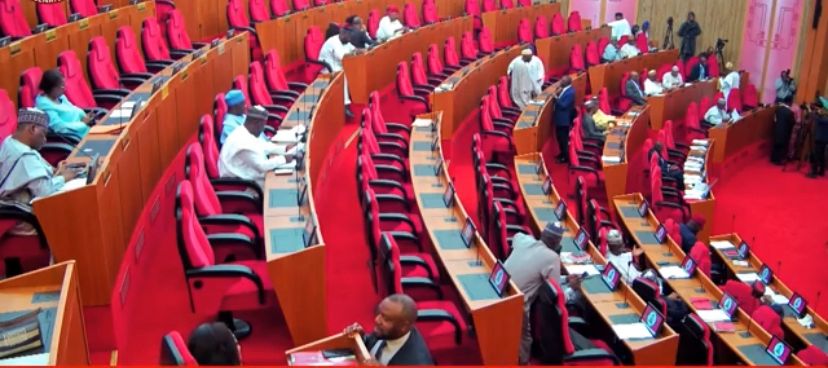
The Senate on Tuesday reconvened for an emergency plenary and dissolved into the Committee of the Whole to rescind and recommit the Electoral Act, 2022 (Repeal and Enactment) Bill, 2026, following the release of the 2027 general election timetable by the Independent National Electoral Commission (INEC).
INEC had fixed February 20, 2027, for the presidential and National Assembly elections, and March 6, 2027, for governorship and state Houses of Assembly polls. The timetable sparked concerns that the presidential and National Assembly elections could fall within the Ramadan period.
For the second time in one week, the Senate reworked the Electoral Act Amendment Bill, rescinding its earlier decision and amending Clause 28 to reduce the statutory notice period for elections from 360 days to 300 days. The adjustment gives INEC more flexibility to schedule elections between December 2026 and January 2027, thereby avoiding a clash with Ramadan. Lawmakers argued that holding elections during the fasting period could negatively affect voter turnout, logistics, stakeholder engagement and overall inclusiveness.
The rescission followed a motion sponsored by Senate Leader, Opeyemi Bamidele, who cited discrepancies in several clauses of the bill, including issues of cross-referencing, numbering and internal consistency. He relied on provisions of the Senate Standing Orders to justify reopening deliberations on a bill already passed.
During clause-by-clause consideration, proceedings turned rowdy at Clause 60, which deals with electronic transmission of election results. Senator Enyinnaya Abaribe called for a division, seeking the removal of the proviso that allows manual collation using Form EC8A where electronic transmission fails.
After heated exchanges, consultations and a closed-door session that lasted nearly an hour, the Senate proceeded to vote. In a division moderated by Senate President Godswill Akpabio, 55 senators voted to retain the proviso allowing manual transmission where network failure occurs, while 14 lawmakers mostly from the opposition, voted against it.
With the vote, the Senate again rejected mandatory real-time electronic transmission without manual fallback, maintaining that where technology fails, the signed Form EC8A will serve as the primary source of election results.


 Follow Us on Google Discover






2027: Kwankwaso a goat in sheep’s clothing, secretly working for Tinubu – Atiku Campaign Council

DSS arrests Maina’s fugitive son in Abuja, hands him over to EFCC

2027: Step down if you are not working for Tinubu – Deji Adeyanju dares Obi, Kwankwaso

2027: ‘I wont join my Uncle to support Tinubu’ – Davido says

Enugu NYSC death: NAFDAC debunks claims linking corps members death to fake drugs

33 Governors cannot be wrong in supporting Tinubu – Bayo Onanuga

Security forces arrest five suspects over abduction of 20 NYSC members in Imo

Rugby star Hyron Andrews dies at 31 after accidental fall in South Africa

LAUTECH Resident Doctors halt 50-day strike as Makinde intervenes

House Officers, Nurses, Radiographers, Others wanted as DELSUTH opens recruitment – Apply Now

FG raises health fund allocation to N40.76bn, extends insurance to prison inmates

Erisco Foods announces 13 job openings across Nigeria – Apply Now

Tinubu reappoints Bala Bila as INEC commissioner, nominates six others

2027: ‘Don’t trust your destiny to ‘kalokalo’ people’ – Wike warns Rivers voters against Atiku, Amaechi, Obi

BREAKING: Cross River PDP Chairman Venatius Ikem resigns, cites leadership crisis
Erisco Foods announces 13 job openings across Nigeria – Apply Now

2027: Atiku, Obi, Makinde, Adebayo, Duke hold talks with six opposition parties
‘You Betrayed Osun People’ — Adeleke, Davido face backlash over support for Tinubu

Ex-Senator Bello Mandiya’s body found in Abuja home three days after he slipped, hit his head in the bathroom
Tinubu reappoints Bala Bila as INEC commissioner, nominates six others

JUST IN: Finnish Appeal Court reduces Simon Ekpa’s jail term to four years, upholds terrorism conviction

Zamfara govt set to empower 36,176 residents with Dangote shares

Over 10 soldiers, four civilians feared dead as Boko Haram terrorists attack Borno military base

Umahi reopens first Niger bridge after emergency repairs, displays Tinubu’s photos

‘I love Islam, I’ve sent people to Mecca to pray for me, Nigeria for 25 years’ – Akpabio

Lagos govt announces 3-day traffic diversion on Independence bridge for emergency repairs

Elon Musk unveils Tesla’s ‘flying’ car in stunning demonstration

Panic in Rivers community as pipeline explosion injures 20, razes over 50 houses

Tension escalates as thugs attack NDC secretariat in Edo, destroy properties
