
Metro
420-Year-Old Tortoise, revered as Living Relic of Oyo Kingdom, dies

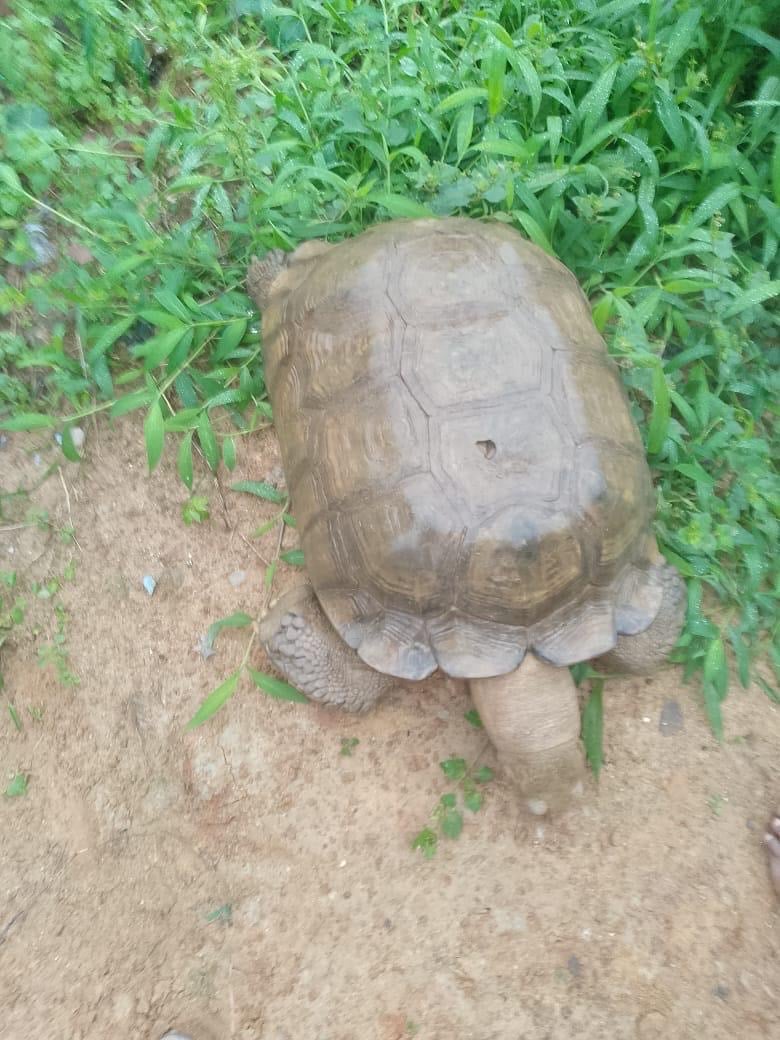
The ancient palace of the Alaafin of Oyo has lost one of its most revered relics, with the death of a 420-year-old tortoise popularly known as “Baba”.
Baba, believed by oral tradition to be one of the oldest living creatures in Yorubaland, died on Monday after reportedly falling ill for a short period. His remains have since been buried within the Alaafin’s palace.
The Director of Media and Publicity to the Alaafin of Oyo, Bode Durojaiye, confirmed the death, describing Baba as an important part of Oyo’s oral history and royal heritage.
According to Durojaiye, the tortoise stopped eating after falling ill on Monday and died a few hours later.
“In Oyo, Baba was regarded as the oldest indigene. It was the Alaafin’s most besotted pet. The incumbent paramount ruler met it in the palace, as Baba was nourished by a succession of kings, who inherited him as part of the relics of their ancestors.
“Baba was more than a tortoise in status. He represented a part of the oral history of the Yoruba race. Now, the Alaafin has lost an ageless companion,” he said.
Durojaiye added that Baba had been revered in the palace for generations and was treated more like an elder than an animal.
“On Monday, Baba fell ill, just a little sickness and couldn’t eat anymore. Then he died. Just like that,” he said.
The tortoise had also become a major attraction for visitors to the ancient palace, drawing tourists and historians who travelled to Oyo to see the centuries-old creature.
Durojaiye said Baba’s status in the palace was reflected in the name by which he was known.
“He was fondly called Baba because of his length of years. No one dared call him by his name, hence the adoption of Baba, indicating that he was regarded as a male elder,” he explained.
Oral accounts in the palace state that Baba was brought from Oyo-Ile, the ancient capital of the old Oyo Empire, to the present-day palace in Oyo town.
He subsequently outlived several Alaafins and was passed down from one reign to another as a living relic of the kingdom’s past.
Two palace officials were reportedly assigned specifically to care for Baba during his lifetime. His favourite foods were said to include watermelon, corn pap wrapped in leaves and grass.
His death has renewed attention on the cultural traditions surrounding the Alaafin’s palace and the historical continuity represented by its relics.
The story of Baba has also been linked to themes explored by Nobel Laureate, Professor Wole Soyinka, in his acclaimed play, Death and the King’s Horseman, which examines the relationship between the worlds of the living, the dead and the unborn.
The play, based on a real historical incident, depicts the traditional duty of Elesin Oba, the king’s horseman, to follow the deceased king into the afterlife through a ritual suicide, alongside the symbolic roles of the king’s horse and dog.
Unlike the horseman, horse and dog in Soyinka’s work, however, Baba survived successive generations of rulers and became a symbol of continuity within the Oyo Kingdom.
The palace said the Alaafin of Oyo, Oba Akeem Owoade I, who met Baba when he ascended the throne, is considering plans to preserve the remains of the ancient tortoise for future generations.
The proposed preservation is intended to ensure that Baba remains part of the palace’s historical heritage despite his death.


 Follow Us on Google Discover











‘American Eyes Dey Nigeria’ — Nigerians react as Nicki Minaj shares Obi’s post

‘Don’t mistake Nigerians’ patience for acceptance of hardship’ — Northern Elders warn Tinubu

420-Year-Old Tortoise, revered as Living Relic of Oyo Kingdom, dies

BREAKING: Obi-Kwankwaso Movement unveils 59-Member Presidential Campaign Council for 2027 (Full List)

‘Only lazy people are hungry in Nigeria’ — Apena of Egbaland

We will not allow you destroy our party like you did in PDP, Tinubu has settled you — APC chieftain warns Wike for calling Govs “lazy”, “419ners”

33 Suspected illegal miners die in NSCDC custody in Niger State

Anambra Borrowings: ‘The Evidence Is Clear, desist from deceiving Nigerians’ – Presidency knocks Peter Obi

Falconets thrash England 3-0, advance to U-20 Women’s World Cup Quarter-Finals

FAAC shares N2.338tn August revenue to FG, States, LGs

DSS re-arraigns five alleged Ansaru leaders over Oyo School kidnap, two deaths

Sanwo-Olu, Fashola, Ambode, Gbajabiamila named as Lagos APC unveils 2027 Campaign Council (Full List)

South African woman sentenced to 25 Years for smuggling Heroin into Nigeria

FCE Yola Recruitment: 48 Academic and Non-Academic vacancies open (How to Apply)

Moniepoint announces 2 job vacancies for qualified Nigerians (How to Apply)

Obi left N127.37bn external debt, he borrowed for Malaria, Erosion control, others – Anambra Govt
BREAKING: Obi-Kwankwaso Movement unveils 59-Member Presidential Campaign Council for 2027 (Full List)

BREAKING: Veteran Nollywood actor Olu Jacobs dies at 84
FCE Yola Recruitment: 48 Academic and Non-Academic vacancies open (How to Apply)
Moniepoint announces 2 job vacancies for qualified Nigerians (How to Apply)

Aisha Buhari visits Atiku as 2027 politics intensifies

KolaDaisi University opens recruitment for Engineers, Analysts, 7 others positions (How to Apply)

Now that Soludo has exposed you over N127.37bn debt, quit 2027 race — Presidency dares Obi

2027: Students across 19 Northern states, FCT endorse Tinubu for re-election
Atiku’s Suit: Tinubu denies submitting fake NYSC Certification to INEC

2027: Atiku secures Court order to serve Tinubu through APC

Only Six of Nineteen Northern Governors supported Tinubu in 2023, Shettima reveals

Nigerians now begging me to slow down because freezers are freezing due to constant power supply – Minister Tegbe

Lagos Assembly passes 2026 budget amendment bill
