Politics
Atiku’s lobbyist submits Tinubu’s US forfeiture case records to Trump, Congress

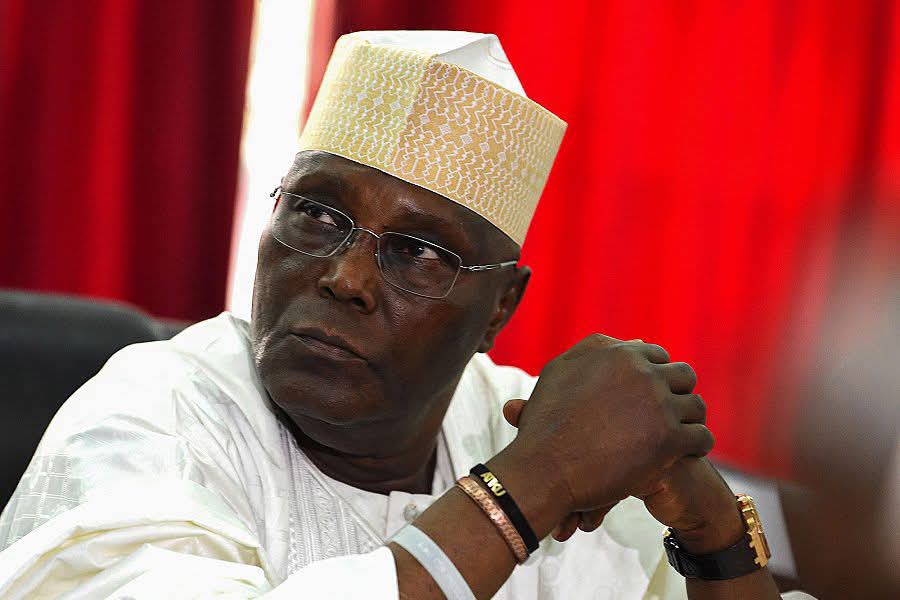
A Washington-based lobbying firm, Von Batten-Montague-York, L.C., says it has begun providing members of the Donald Trump administration, the United States Congress and senior congressional staff with U.S. Department of Justice (DOJ) records relating to historical drug trafficking allegations involving President Bola Ahmed Tinubu.
The firm was hired by the presidential candidate of the African Democratic Congress (ADC), Atiku Abubakar, in March under a 12-month lobbying contract reportedly worth $1.2 million to strengthen his reputation in the United States, facilitate engagements with U.S. officials and Congress, and counter what the agreement described as the Nigerian government’s lobbying efforts.
In a statement posted on X, the lobbying firm said many officials within the U.S. government were previously unaware of the DOJ’s historical allegations and that it intended to ensure President Donald Trump received the complete collection of court filings, supporting affidavits and related federal court decisions.
«”Following discussions with members of the @realDonaldTrump Administration, Congress, and senior congressional staff, we began providing more than 60 pages of @TheJusticeDept documents concerning the DOJ’s allegations of Nigerian President Bola Ahmed Tinubu’s (@officialABAT) alleged involvement in a heroin trafficking investigation spanning the late 1980s and early 1990s,” the firm said.»
The firm also released a document titled “Background and Chronology of the 1993 U.S. Department of Justice Heroin-Proceeds Forfeiture Case and the 2023 FOIA Litigation Concerning Alleged Heroin Trafficking from Nigeria to the United States Involving Bola Ahmed Tinubu.”
According to the document, the U.S. Department of Justice alleged that a heroin trafficking organisation operating between Nigeria and the United States imported heroin into America and distributed it through members and associates based in Chicago.
The document identified Bola Ahmed Tinubu, Adegboyega Mueez Akande, and Abiodun Agbele as individuals named in the 1993 civil forfeiture case, United States v. Funds in Account No. 263226700 et al.
It further stated that federal investigators examined the alleged trafficking network between 1988 and 1991, alleging that proceeds from the organisation were deposited into bank accounts owned or controlled by Tinubu in the United States.
The document also alleged that Tinubu operated multiple bank accounts through which the funds were received and transferred, while Akande was described as the alleged leader of the trafficking organisation and Agbele as an associate who later cooperated with investigators after his arrest.
According to the chronology, the DOJ filed a civil forfeiture action in 1993 seeking the forfeiture of funds it alleged were proceeds of heroin trafficking or involved in money laundering. The case ended in a negotiated civil settlement in which part of the funds was forfeited to the U.S. government.
The document also referenced a Freedom of Information Act (FOIA) lawsuit filed in 2023 by journalist Aaron Greenspan, seeking records relating to the historical investigation.
It stated that a U.S. District Court ruled in 2025 that certain federal agencies, including the FBI and the Drug Enforcement Administration (DEA), could not rely on a blanket refusal to confirm or deny the existence of responsive records and ordered them to process relevant documents under the FOIA. The litigation remains ongoing.
According to the lobbying firm, the chronology, court records and FOIA rulings are being shared with members of the White House and several House and Senate committees for what it described as “informational and oversight purposes,” particularly as Nigeria remains a strategic U.S. partner and amid reports that President Tinubu is seeking a meeting with President Trump during the forthcoming United Nations General Assembly.
The 1993 U.S. civil forfeiture case was also raised during litigation following Nigeria’s 2023 presidential election. Former presidential candidates Atiku Abubakar and Peter Obi argued before the Presidential Election Petition Court (PEPC) that Tinubu ought to have been disqualified over the forfeiture of $460,000 in the United States.
However, the PEPC ruled that the petitioners failed to prove that Tinubu had been convicted of any criminal offence in the United States.
The court further held that the forfeiture proceedings were civil—not criminal—in nature and that the evidence presented did not establish that Tinubu submitted false information to the Independent National Electoral Commission (INEC) regarding the forfeiture.


 Follow Us on Google Discover






‘Where is my house?’ – Ortom questions Alia over denial of ex-governor’s benefits

NCDC: FCT Ebola patient is a diplomat suffering multi-organ failure

AAC writes Tinubu, seeks approval to host presidential campaign council inauguration at Aso Rock

Reps pass bill to boost local drone manufacturing in Nigeria

10 injured in Third Mainland bridge crash as rescuers avert train collision in Lagos

Macron arrives in Saudi Arabia for surprise solidarity visit amid Houthi attacks

NDC rejects inclusion of C’River Chairman in APC campaign council

Gov Otu presents N987.8bn 2027 budget to Cross River Assembly

Fresh crisis hits Awka Anglican Diocese as Chancellor demands N5bn damages

Plateau Indigenous Youth Coalition defends DSS, Police, Operation Rainbow

Ebola: Senate urges FG to release emergency funds, enforce screening at entry points

Seven-year-old boy found dead after suspected kidnappers demand N2.5m ransom in Plateau

2027 Election: Court rejects suit to compel INEC to register new party

Cross River Assembly backs constitutional amendment for state police

Rivers Police arrest four suspected Robbers, kidnappers, recover rifles

Proten International opens 18 job positions across states in Nigeria

TeamAce announces 64 job openings across Nigeria, with salaries up to ₦2 Million – Apply Now

R & R recruitment announces 31 job openings across Nigeria – Apply Now

FG to introduce fuel taxes when economy stabilises, Oyedele says

BREAKING: DSS arraigns five suspects over abduction of 20 Prospective Corps Members in Imo

If Buhari a General could not end insecurity, you cannot blame Tinubu – Yari

Subsidy removal is here to stay, ‘we will never go back to Egypt’ – Tinubu
BREAKING: FG reports confirmed Ebola case in Abuja, identifies 44 contacts for tracing

Gregory University founder Gregory Ibe dies at 63

Sanwo-Olu reportedly demands LAWMA boss’ resignation over mounting refuse in Lagos

Petrol subsidy return could crash naira to N4,000/$ – Oyedele warns

Wike’s son Jordan dragged to EFCC over alleged $2.1m land fraud

NLC upholds two-week ultimatum to FG over petrol prices, wage talks

BREAKING: Tinubu extends tenure of NCoS, Immigration service chiefs until 2028
