
Politics
2027: I will review NELFUND, offer debt forgiveness to Nigerian students – Atiku vows

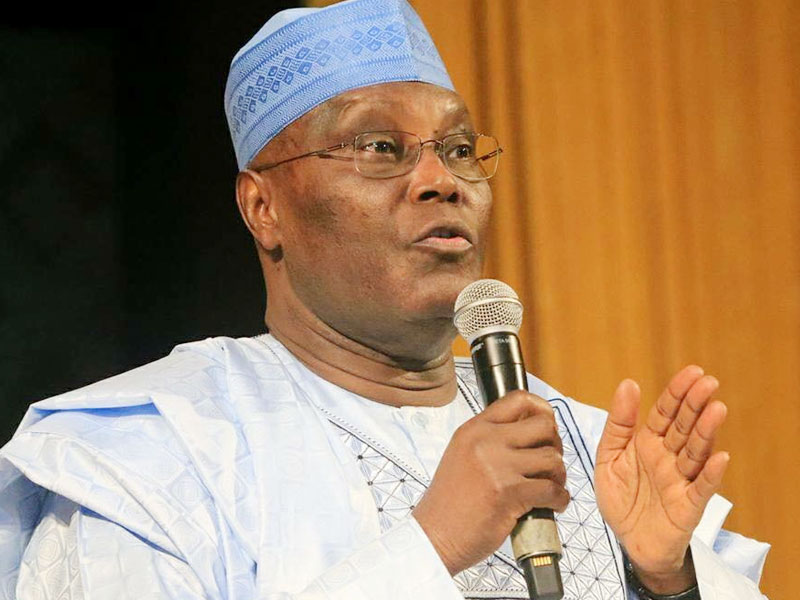
The presidential candidate of the African Democratic Congress (ADC), Atiku Abubakar, has promised to review the Nigerian Education Loan Fund (NELFUND) scheme and introduce debt forgiveness for qualifying Nigerian students if elected president in 2027.
Atiku’s Senior Special Assistant on Public Communication, Phrank Shaibu, disclosed this in a statement on Tuesday while reacting to President Bola Tinubu’s comments on the former vice president’s economic proposals.
Shaibu accused the Tinubu administration of being “dishonest” by presenting NELFUND as evidence that education had become more affordable, arguing that students were being offered loans after families had already been confronted with rising education costs.
“Celebrating NELFUND as proof that education has become affordable under your government is like setting school fees on fire and then boasting that you lent students a bucket of water,” Shaibu said.
He questioned the rationale behind increasing the cost of education and subsequently presenting loans as a solution to students struggling to meet the higher costs.
“You make education more expensive, lend students money to survive the increase, and then demand applause for the rescue. That is not affordability. It is witchcraft economics: create the burden with one hand, offer debt with the other, and demand applause for the intervention,” he said.
According to Shaibu, Atiku has reviewed the existing student-loan framework and believes young Nigerians should not be forced to begin their working lives with significant education debts.
He said an Atiku administration would focus on reducing the underlying cost of education and provide debt forgiveness for qualifying student loans.
“His approach will reduce the underlying cost of education and, after review, provide forgiveness for qualifying student debts so that young Nigerians can graduate with hope rather than repayment burdens. Education should open doors, not mortgage the future,” he said.
Shaibu also argued that NELFUND loans should not be equated with scholarships, saying the success of an education policy should ultimately be measured by whether ordinary families can afford to keep their children in school without borrowing.
He further challenged the Presidency to provide evidence for its suggestion that Atiku’s proposal to reduce energy costs could negatively affect NELFUND, workers’ salaries or the minimum wage.
“If your government has the arithmetic, Bola, publish it. Show Nigerians, line by line, how a transparently budgeted subsidy tied to Nigerian crude and domestic refining suddenly empties NELFUND or workers’ pay packets,” he said.
Shaibu maintained that Atiku’s proposal would instead seek to reduce the cost of living by lowering energy and transportation expenses.
According to him, cheaper energy would increase the purchasing power of workers’ salaries, while lower transport costs would leave workers with more disposable income.
“Reduce the cost of energy so that salaries buy more. Reduce transport costs so that less of a worker’s wage disappears merely getting to work,” he said.
He added that Nigerians should not be made to choose between affordable living costs and access to education financing.
“You cannot make life painfully expensive, push students towards debt to survive the consequences, and then frighten those same students that cheaper fuel will take their loans away,” Shaibu said.


 Follow Us on Google Discover



2027: Kwankwaso a goat in sheep’s clothing, secretly working for Tinubu – Atiku Campaign Council

DSS arrests Maina’s fugitive son in Abuja, hands him over to EFCC

2027: Step down if you are not working for Tinubu – Deji Adeyanju dares Obi, Kwankwaso

2027: ‘I wont join my Uncle to support Tinubu’ – Davido says

Enugu NYSC death: NAFDAC debunks claims linking corps members death to fake drugs

33 Governors cannot be wrong in supporting Tinubu – Bayo Onanuga

Security forces arrest five suspects over abduction of 20 NYSC members in Imo

Rugby star Hyron Andrews dies at 31 after accidental fall in South Africa

LAUTECH Resident Doctors halt 50-day strike as Makinde intervenes

House Officers, Nurses, Radiographers, Others wanted as DELSUTH opens recruitment – Apply Now

FG raises health fund allocation to N40.76bn, extends insurance to prison inmates

Erisco Foods announces 13 job openings across Nigeria – Apply Now

Tinubu reappoints Bala Bila as INEC commissioner, nominates six others

2027: ‘Don’t trust your destiny to ‘kalokalo’ people’ – Wike warns Rivers voters against Atiku, Amaechi, Obi

BREAKING: Cross River PDP Chairman Venatius Ikem resigns, cites leadership crisis
Erisco Foods announces 13 job openings across Nigeria – Apply Now

2027: Atiku, Obi, Makinde, Adebayo, Duke hold talks with six opposition parties
‘You Betrayed Osun People’ — Adeleke, Davido face backlash over support for Tinubu

Ex-Senator Bello Mandiya’s body found in Abuja home three days after he slipped, hit his head in the bathroom
Tinubu reappoints Bala Bila as INEC commissioner, nominates six others

JUST IN: Finnish Appeal Court reduces Simon Ekpa’s jail term to four years, upholds terrorism conviction

Over 10 soldiers, four civilians feared dead as Boko Haram terrorists attack Borno military base

‘I love Islam, I’ve sent people to Mecca to pray for me, Nigeria for 25 years’ – Akpabio

Zamfara govt set to empower 36,176 residents with Dangote shares

Umahi reopens first Niger bridge after emergency repairs, displays Tinubu’s photos
House Officers, Nurses, Radiographers, Others wanted as DELSUTH opens recruitment – Apply Now

Elon Musk unveils Tesla’s ‘flying’ car in stunning demonstration

Tension escalates as thugs attack NDC secretariat in Edo, destroy properties

Lagos govt announces 3-day traffic diversion on Independence bridge for emergency repairs
