National News
As a young student in Chicago, I was a taxi driverr, used the proceeds to fund my education – Tinubu

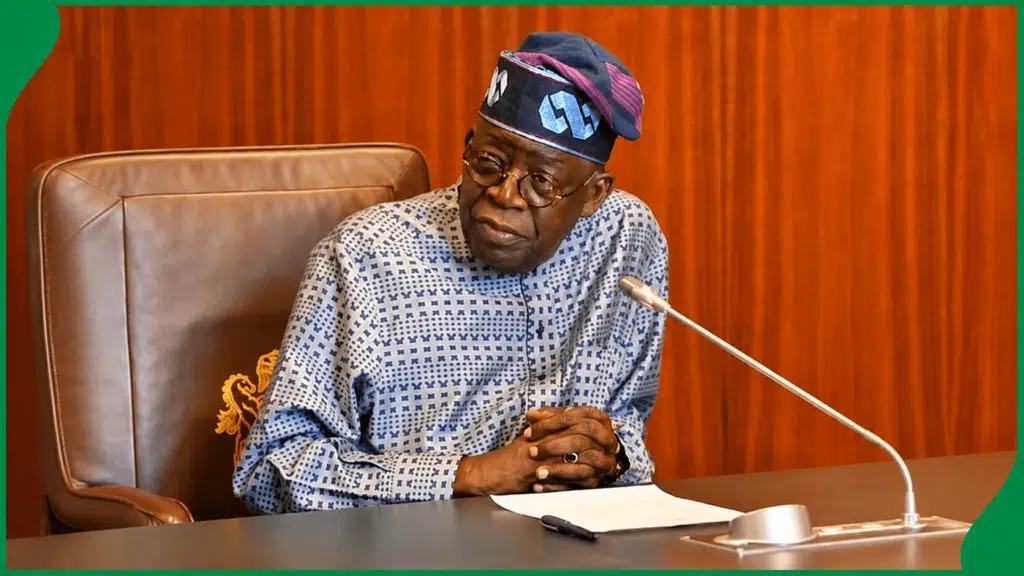
President Bola Tinubu has recalled how he worked as a taxi driver and took up other jobs in the United States to finance his university education, saying the experience shaped his commitment to expanding access to education in Nigeria.
The President said he had to delay starting his studies for several months after arriving in the US to save enough money to pay for his education.
Tinubu disclosed this in a post on his X handle on Wednesday while highlighting the achievements of his administration in the education sector.
“When I first arrived in the United States as a young man, I drove a taxi to earn money for my education. I even had to postpone starting school for several months to save enough.
“When I eventually got to Chicago, I worked different jobs to support myself and pay my way through university. I know what it means to worry about tuition, accommodation and how to make ends meet while pursuing an education.
“Those experiences have stayed with me. I know what education made possible in my own life, and I believe every Nigerian child deserves that same opportunity, regardless of where they are born or what their parents can afford,” he said.
Tinubu described education as a major priority of his administration, disclosing that the Nigerian Education Loan Fund (NELFUND) had provided more than N372bn in student loans to cover institutional fees and upkeep.
NELFUND was established under the Students Loans (Access to Higher Education) Act, 2024, which Tinubu signed into law in April 2024. The scheme provides interest-free financial assistance to eligible Nigerian students in public tertiary institutions.
It covers institutional charges and maintenance allowances, with approved fees paid directly to students’ institutions and upkeep funds transferred to beneficiaries’ bank accounts.
The law also removed the previous family income threshold and guarantor requirement, allowing eligible students to apply without their parents meeting a specified income level or providing guarantors.
Under the repayment arrangement, beneficiaries are expected to begin repaying their loans two years after completing the National Youth Service Corps programme. Repayment is linked to employment and income, with employed beneficiaries required to have 10 per cent of their monthly salaries deducted at source.
The President also said the government’s technical and vocational education programme had attracted more than 2.8 million applications, while 38 technical colleges had been rehabilitated.
According to him, students in federal and selected state technical colleges now benefit from free tuition, boarding, textbooks and uniforms.
On university education, Tinubu said his administration had reached a new agreement with the Academic Staff Union of Universities (ASUU), providing for a 40 per cent increase in academic staff remuneration and measures aimed at improving stability in the university system.
“A four-year course must take four years. Our young people deserve to complete their education on time and get on with their lives. Promise made, promise kept,” he said.
Tinubu further disclosed that the Federal Government was investing N110bn in the rehabilitation of 24 medical schools to strengthen medical education across the country.
He said annual nursing enrolment had increased from 28,000 to 115,000, while medical and dental enrolment had risen from 5,000 to 12,000.
“Nigeria needs more doctors, nurses and other healthcare professionals, and we must build the capacity to train them here at home,” he added.
The President also claimed that more than one million children who were previously out of school had returned to learning, while his administration was investing in teacher development and expanding educational opportunities for girls.
He said a new national curriculum was also being implemented to reintroduce Nigerian History into classrooms.
“Our children must know where we have come from, understand the country they belong to, and be prepared to take responsibility for its future,” he said.
Tinubu commended the Minister of Education, Dr Tunji Alausa; the Minister of State for Education, Professor Suwaiba Sa’id Ahmad; and other members of the education team for their contributions to the ongoing reforms.
He also announced the introduction of an interactive A–Z platform for the Nigeria Education Sector Renewal Initiative, which he said provides information on reforms, programmes, achievements and opportunities across the education system.
The President urged Nigerians to visit edu4pbat.ng to explore the initiative and submit feedback on challenges affecting education in their communities.
He encouraged parents to identify available educational opportunities for their children, students to explore programmes they could benefit from and teachers to find out what support was available to them.
Tinubu also called on Nigerians to report shortcomings in their communities, saying public feedback would help the government identify and address problems.
He maintained that a child’s circumstances at birth should not determine the limits of their ambition, insisting that every Nigerian child deserved a fair opportunity to fulfil their potential.


 Follow Us on Google Discover






‘I’ll dump my wife if she rules like Tinubu’, says Amaechi

Gunmen kill Pastor, three others in deadly attack on Benue community

2027: Mammoth crowd welcomes Obi, Kwankwaso to Calabar for Town Hall meeting

As a young student in Chicago, I was a taxi driverr, used the proceeds to fund my education – Tinubu

Step by step guide on how to download NIN slip using NIMC app

West Ham appoint former captain Scott Parker as new head coach

DSS counters Atiku, says two operatives hurt while protecting Sokoto ADC guber candidate; arrested, jailed man who threatened Obi

CRMI bets ₦3m on Youth Innovation to drive National resilience

ADC unveils Sokoto venue for presidential campaign flag-Off

US midterm elections: Democrats take control of Congress in major blow to Trump

Petrol rises to N1,370 per litre as depots increase prices

2027: Atiku heads to Sokoto for ADC Presidential campaign flag-off

Tinubu graduated with First-Class Degree in Accounting, I’ve met many of his classmates in Chicago — Education Minister Alausa

UCL: Man United complete 3-2 comeback against Roma as Bayern, Barcelona win

Gunmen raid Plateau community, kill vigilante member

FG begins N50,000 cash relief payments to vulnerable Nigerians

BREAKING: Sokoto Gov’t seals ADC Office, hours to presidential campaign rally

Nollywood actress Rachael Okonkwo gets engaged to billionaire lover Chukwudi Onuorah

Give Tinubu, Otu another another four years to deliver Bakassi seaport, coastal highway — Shettima tells Cross River residents

Six mourners kidnapped in Benue while transporting corpse for burial

Peter Obi’s wife is Godmother to one of my children – Soludo finally admits

Tinubu concludes Saudi visit after lesser hajj, prayer inside holy Kaaba

35-year-old miner dies as mining pit collapses in Plateau
UCL: Man United complete 3-2 comeback against Roma as Bayern, Barcelona win

Gwagwalada is burning up—and unchecked deforestation made it worse: by Oladosu Adebola Oluwaseun

2027: ‘Vote ADC to at all levels’ – El-Rufai orders supporters

Zamfara North: Kaura secures APC ticket after fresh primary election

Outrage as Catholic priest leads Church worshippers in song for Obi, Kwankwaso

FG plans to rename Federal Fire Service as Federal Fire and Rescue Service
