
World
Global concern as Tanzania shuts down internet, violence erupts post-election

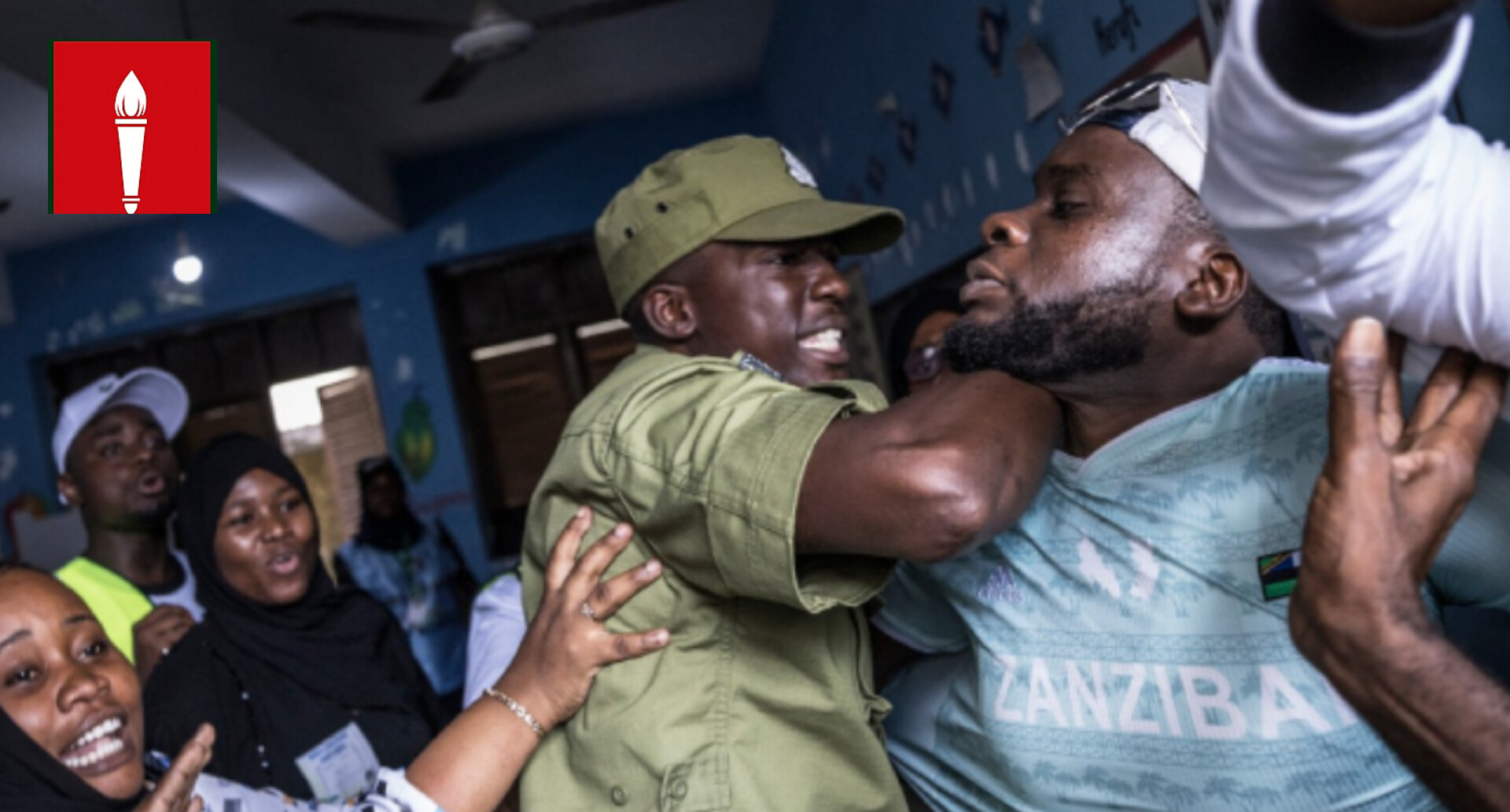
Tanzania was plunged into a total communication blackout on Thursday following violent unrest that erupted during Wednesday’s elections, with unconfirmed reports suggesting that dozens may have been killed.
The election, meant to strengthen President Samia Suluhu Hassan’s grip on power, quickly descended into chaos as hundreds of protesters took to the streets across major cities.
Most of Hassan’s challengers were either jailed or disqualified before the polls, leaving the ruling Chama Cha Mapinduzi (CCM) party with little competition.
An AFP correspondent reported seeing a police station set ablaze in Dar es Salaam, while several polling units were attacked and posters of the president were torn down in different parts of the country.
A diplomatic source disclosed that there were unverified reports of over 30 fatalities.
However, the nationwide internet blackout and restrictions on international calls made it nearly impossible to confirm the casualty figures.
Almost all foreign journalists were denied entry into Tanzania ahead of the election.
Local media outlets, operating under strict government control, have not updated their reports since Wednesday morning, and the government has issued no official statement on the situation.
Schools and government offices were shut on Thursday, and civil servants were told to work from home, as gunfire reportedly echoed through Dar es Salaam.
Rights groups had earlier warned of rising political tension, citing a “wave of terror” marked by kidnappings and intimidation of opposition supporters.
“It’s unprecedented… Where we go from here is unclear,” a foreign diplomat told AFP, describing President Hassan’s status as “uncertain.”
On the semi-autonomous island of Zanzibar, calm was reported, though ferry services to the mainland were suspended.
Tourists stranded at airports said they were unable to communicate or make payments due to the internet shutdown.
Much of the public outrage has been directed at President Hassan’s son, Abdul, who was reportedly leading an “informal task force” of security operatives during the elections.
The group is accused of orchestrating a surge in abductions of critics, including a popular influencer known as Niffer, who was detained after posting satirical videos that encouraged protests.
Since taking office in 2021 following the sudden death of her predecessor, John Magufuli, Hassan, Tanzania’s first female president, has faced resistance from within her own party and the military.
Although she initially relaxed restrictions on the media and opposition, rights groups now accuse her administration of orchestrating enforced disappearances, torture, and extrajudicial killings.
Her main rival, Tundu Lissu of the opposition party Chadema, is currently facing treason charges that could attract a death sentence, while another leading opposition figure, Luhaga Mpina of ACT-Wazalendo, was barred from contesting.
Read Also: “We’ve become timid before power” — Ndoma-Egba decries Nigeria’s weak institutions
Amnesty International has warned of a high risk of further violence and urged Tanzanian authorities to exercise restraint as the country faces one of its most turbulent political moments in recent history.


 Follow Us on Google Discover







Tension as traditional ruler collapses, dies in Ondo

2027: Kwankwaso a goat in sheep’s clothing, secretly working for Tinubu – Atiku Campaign Council

DSS arrests Maina’s fugitive son in Abuja, hands him over to EFCC

2027: Step down if you are not working for Tinubu – Deji Adeyanju dares Obi, Kwankwaso

2027: ‘I wont join my Uncle to support Tinubu’ – Davido says

Enugu NYSC death: NAFDAC debunks claims linking corps members death to fake drugs

33 Governors cannot be wrong in supporting Tinubu – Bayo Onanuga

Security forces arrest five suspects over abduction of 20 NYSC members in Imo

Rugby star Hyron Andrews dies at 31 after accidental fall in South Africa

LAUTECH Resident Doctors halt 50-day strike as Makinde intervenes

House Officers, Nurses, Radiographers, Others wanted as DELSUTH opens recruitment – Apply Now

FG raises health fund allocation to N40.76bn, extends insurance to prison inmates

Erisco Foods announces 13 job openings across Nigeria – Apply Now

Tinubu reappoints Bala Bila as INEC commissioner, nominates six others

2027: ‘Don’t trust your destiny to ‘kalokalo’ people’ – Wike warns Rivers voters against Atiku, Amaechi, Obi
Erisco Foods announces 13 job openings across Nigeria – Apply Now
‘You Betrayed Osun People’ — Adeleke, Davido face backlash over support for Tinubu

Ex-Senator Bello Mandiya’s body found in Abuja home three days after he slipped, hit his head in the bathroom
Tinubu reappoints Bala Bila as INEC commissioner, nominates six others

JUST IN: Finnish Appeal Court reduces Simon Ekpa’s jail term to four years, upholds terrorism conviction

Zamfara govt set to empower 36,176 residents with Dangote shares

Over 10 soldiers, four civilians feared dead as Boko Haram terrorists attack Borno military base

‘I love Islam, I’ve sent people to Mecca to pray for me, Nigeria for 25 years’ – Akpabio
House Officers, Nurses, Radiographers, Others wanted as DELSUTH opens recruitment – Apply Now

Umahi reopens first Niger bridge after emergency repairs, displays Tinubu’s photos

Lagos govt announces 3-day traffic diversion on Independence bridge for emergency repairs

Elon Musk unveils Tesla’s ‘flying’ car in stunning demonstration

Panic in Rivers community as pipeline explosion injures 20, razes over 50 houses

Tension escalates as thugs attack NDC secretariat in Edo, destroy properties
