News
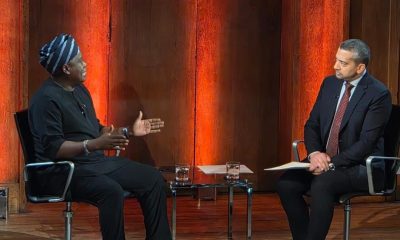
Tinubu’s Administration: Heated conversation between Al Jazeera journalist and Daniel Bwala (Video)

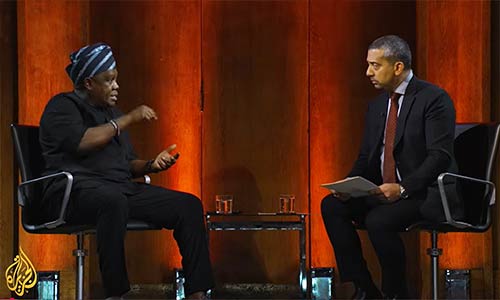
Special Adviser to President Bola Ahmed Tinubu and presidential spokesman Daniel Bwala has described claims of a Christian genocide in Nigeria as a “hoax,” while defending a controversial joint military operation involving Nigeria and the United States.
Bwala made the remarks during a heated appearance on Head to Head on Al Jazeera hosted by journalist Mehdi Hasan.
During the interview, Bwala was questioned about insecurity in Nigeria, corruption allegations surrounding President Tinubu, and his own political shift from a vocal critic of the administration to its official spokesperson.
Responding to questions about why Nigeria allowed the United States to carry out strikes in the country on Christmas Day, Bwala insisted the operation was conducted jointly and based on intelligence cooperation between both governments.
“The United States government did not bomb our country. The decision by the U.S. government was anchored on intelligence sharing between Nigeria and the United States and the agreement on the operation,” he said.
According to him, the decision to strike was communicated through diplomatic channels, noting that U.S. Secretary of State Marco Rubio contacted Nigeria’s foreign affairs minister before the matter was relayed to the president.
Bwala also pushed back against claims by former U.S. President Donald Trump that Christians are being targeted in a genocide in Nigeria.
“We both disagree as to whether the so-called genocide in Nigeria was against Christians. We believe that it is targeted killing by insurgents, Boko Haram, bandits and other criminal elements against Nigerians — Christians, Muslims and those who have not identified with any religion,” he said.
When asked whether Trump was lying about the issue, Bwala described the claim as a “half-truth,” acknowledging that Christians had been affected but insisting that Muslims and others have also been victims of violence.
“It’s a half-truth in the sense that, yes, Christians have been affected, but the whole truth is that both Christians and Muslims have been affected. He’s butchering it. That’s his opinion. Everybody’s entitled to it,” Bwala added.
Hasan confronted Bwala with reports of civilian casualties from the strikes, including testimony from a Nigerian woman who said a missile struck her apartment building.
Bwala rejected the claim, insisting that the operation was aimed strictly at terrorist targets.
“I am saying that the military operation that was conducted on that day was targeted at terrorists and we hit them,” he said.
During the interview, Hasan also cited data showing that more than 11,000 people were killed in conflict in Nigeria in 2025, compared with about 8,700 in 2023, suggesting a worsening security situation under the current administration.
Bwala acknowledged the scale of the security challenge but said the government was working aggressively to address it.
“It’s awful. And we’re fighting hard day and night. That’s one of the reasons why the president travelled to Turkey where we had bilateral agreements to deal with insecurity,” he said.
The discussion also turned to corruption allegations involving a Lagos-based consulting firm, Alpha Beta Consulting LLP, which critics claim is linked to Tinubu and receives a percentage of tax collections in Lagos State.
Bwala dismissed the allegation, saying the president has repeatedly denied ownership of the company.
The interview further revisited past controversies surrounding Tinubu, including questions about his academic records at Chicago State University and a U.S. civil forfeiture case involving $460,000 linked to drug trafficking investigations in the 1990s.
Bwala maintained that the president was never charged with any crime.
“The president was not charged because Mr Tinubu committed no crime. Under American jurisprudence, you can only allege after an indictment,” he said.
Hasan also pressed Bwala on his previous statements attacking Tinubu before joining the administration.
Before becoming spokesman, Bwala had accused Tinubu of promoting a climate of fear and described him as a “godfather of corruption.”
Responding, Bwala said his views changed after observing the president’s reforms.
“Politics is dynamic. It is anchored on both national interests and personal interests. Facts can change opinion, and in this case facts changed my opinion,” he said.
Bwala also defended the administration’s removal of petrol subsidies, a policy he had earlier criticised, arguing that the decision was necessary for economic growth.
“Subsidy removal was necessary for the growth of Nigeria’s economy,” he said, adding that the country’s growth rate had risen to about 3.7 percent from roughly 2.7 percent previously.
However, when confronted with data suggesting that about 70 percent of Nigerians struggle to afford food, Bwala described the hardship as an unintended consequence of the reform.
The programme featured a panel of commentators including journalist Anu Adeoye, development expert Ayesha Osori and APC UK chairman Tunde Doherty, who challenged the government’s human rights and economic record.
Responding to criticism over judicial independence and governance issues, Bwala insisted Nigeria remains a functioning democracy with strong institutions.
On the country’s electricity challenges, he said the government is working with private sector partners and promised that visible improvements would emerge before the end of Tinubu’s first term.
“By the end of this first term you would have seen very obvious change that you’ll be happy,” Bwala said.


 Follow Us on Google Discover




Macky Sall quits race for UN Secretary-General position

Buhari backed Osinbajo’s presidential ambition four times, Akande tells Babachir Lawal

Dr. Benjamins‑Laniyi urges media to amplify women’s leadership, adopt gender‑sensitive reporting

Pope Leo XIV set to leave hospital after lung cancer surgery

Gunmen kill four vigilantes in Plateau community

Tension as traditional ruler collapses, dies in Ondo

2027: Kwankwaso a goat in sheep’s clothing, secretly working for Tinubu – Atiku Campaign Council

DSS arrests Maina’s fugitive son in Abuja, hands him over to EFCC

2027: Step down if you are not working for Tinubu – Deji Adeyanju dares Obi, Kwankwaso

2027: ‘I wont join my Uncle to support Tinubu’ – Davido says

Enugu NYSC death: NAFDAC debunks claims linking corps members death to fake drugs

33 Governors cannot be wrong in supporting Tinubu – Bayo Onanuga

Security forces arrest five suspects over abduction of 20 NYSC members in Imo

Rugby star Hyron Andrews dies at 31 after accidental fall in South Africa

LAUTECH Resident Doctors halt 50-day strike as Makinde intervenes

Erisco Foods announces 13 job openings across Nigeria – Apply Now

Ex-Senator Bello Mandiya’s body found in Abuja home three days after he slipped, hit his head in the bathroom
‘You Betrayed Osun People’ — Adeleke, Davido face backlash over support for Tinubu

Tinubu reappoints Bala Bila as INEC commissioner, nominates six others

House Officers, Nurses, Radiographers, Others wanted as DELSUTH opens recruitment – Apply Now

‘I love Islam, I’ve sent people to Mecca to pray for me, Nigeria for 25 years’ – Akpabio
2027: Step down if you are not working for Tinubu – Deji Adeyanju dares Obi, Kwankwaso

Umahi reopens first Niger bridge after emergency repairs, displays Tinubu’s photos

Panic in Rivers community as pipeline explosion injures 20, razes over 50 houses

Elon Musk unveils Tesla’s ‘flying’ car in stunning demonstration

2027: Tinubu to miss rallies in over 20 States as APC releases campaign timetable

‘No plan to raise electricity tariff’ – FG assures Nigerians

Former NPA Managing Director Aminu Dabo resigns from APC

INEC refutes claims of missing voters’ register in Lagos wards